


Serological surveillance reveals a high exposure to SARS-CoV-2 and altered immune response among COVID-19 unvaccinated Cameroonian individuals
- PMID: 38346064
- PMCID: PMC10861046
- DOI: 10.1371/journal.pgph.0002380
Serological surveillance reveals a high exposure to SARS-CoV-2 and altered immune response among COVID-19 unvaccinated Cameroonian individuals
Abstract
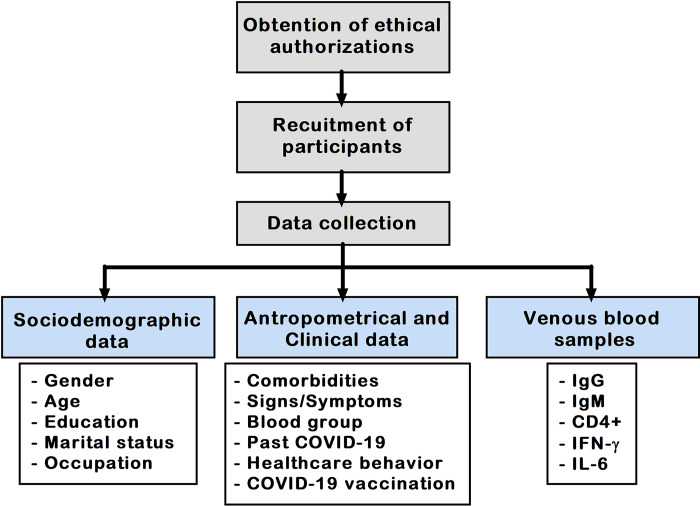
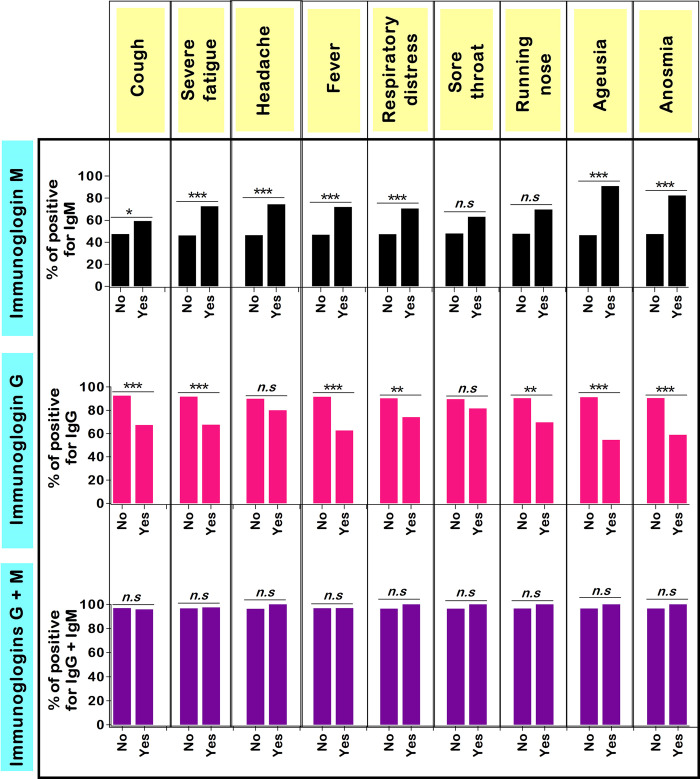
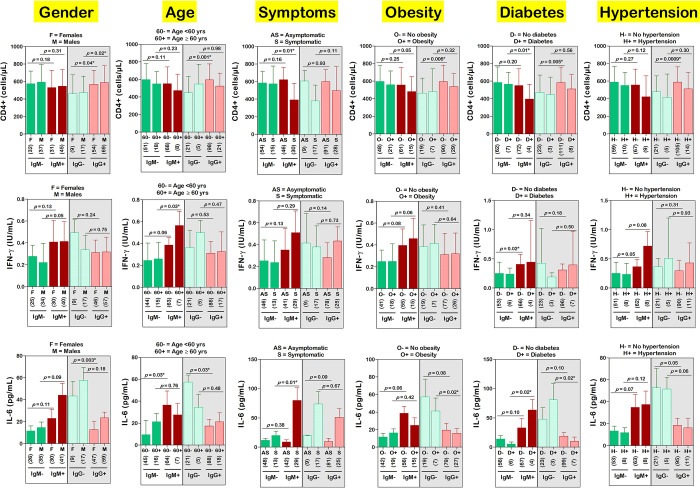
Surveillance of COVID-19/SARS-CoV-2 dynamics is crucial to understanding natural history and providing insights into the population's exposure risk and specific susceptibilities. This study investigated the seroprevalence of SARS-CoV-2 antibodies, its predictors, and immunological status among unvaccinated patients in Cameroon. A multicentre cross-sectional study was conducted between January and September 2022 in the town of Douala. Patients were consecutively recruited, and data of interest were collected using a questionnaire. Blood samples were collected to determine Immunoglobin titres (IgM and IgG), interferon gamma (IFN- γ) and interleukin-6 (IL-6) by ELISA, and CD4+ cells by flow cytometry. A total of 342 patients aged 41.5 ± 13.9 years were included. Most participants (75.8%) were asymptomatic. The overall crude prevalence of IgM and IgG was 49.1% and 88.9%, respectively. After adjustment, the seroprevalence values were 51% for IgM and 93% for IgM. Ageusia and anosmia have displayed the highest positive predictive values (90.9% and 82.4%) and specificity (98.9% and 98.3%). The predictors of IgM seropositivity were being diabetic (aOR = 0.23, p = 0.01), frequently seeking healthcare (aOR = 1.97, p = 0.03), and diagnosed with ageusia (aOR = 20.63, p = 0.005), whereas those of IgG seropositivity included health facility (aOR = 0.15, p = 0.01), age of 40-50 years (aOR = 8.78, p = 0.01), married (aOR = 0.21, p = 0.02), fever (aOR = 0.08, p = 0.01), and ageusia (aOR = 0.08, p = 0.01). CD4+, IFN-γ, and IL-6 were impaired in seropositive individuals, with a confounding role of socio-demographic factors or comorbidities. Although the WHO declared the end of COVID-19 as a public health emergency, the findings of this study indicate the need for continuous surveillance to adequately control the disease in Cameroon.
Copyright: © 2024 Moguem Soubgui et al. This is an open access article distributed under the terms of the Creative Commons Attribution License, which permits unrestricted use, distribution, and reproduction in any medium, provided the original author and source are credited.
Conflict of interest statement
The authors have declared that no competing interests exist.
Figures

References
LinkOut - more resources
Full Text Sources
Research Materials
Miscellaneous