


Recovery of 1887 metagenome-assembled genomes from the South China Sea
- PMID: 38351104
- PMCID: PMC10864278
- DOI: 10.1038/s41597-024-03050-4
Recovery of 1887 metagenome-assembled genomes from the South China Sea
Abstract
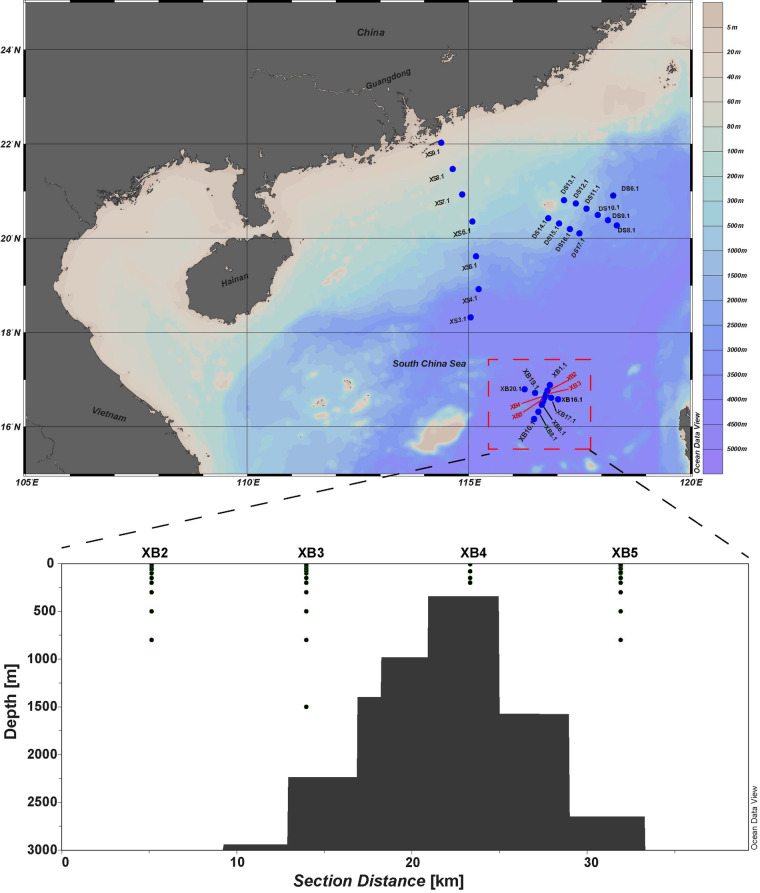
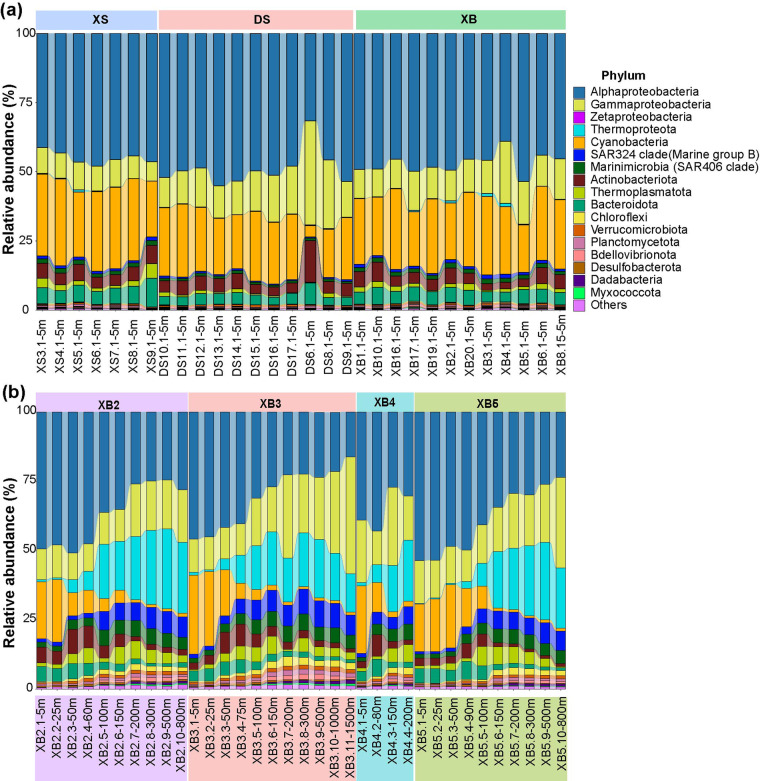
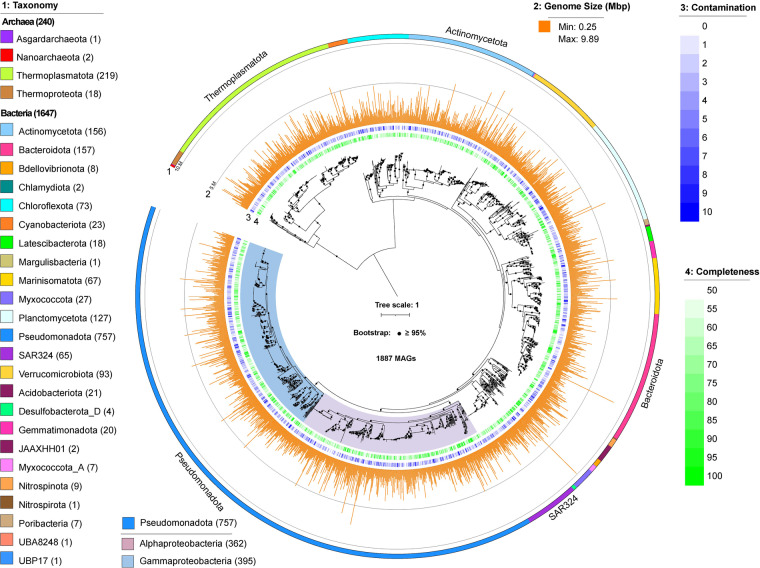
The South China Sea (SCS) is a marginal sea characterized by strong land-sea biogeochemical interactions. SCS has a distinctive landscape with a multitude of seamounts in its basin. Seamounts create "seamount effects" that influence the diversity and distribution of planktonic microorganisms in the surrounding oligotrophic waters. Although the vertical distribution and community structure of marine microorganisms have been explored in certain regions of the global ocean, there is a lack of comprehensive microbial genomic surveys for uncultured microorganisms in SCS, particularly in the seamount regions. Here, we employed a metagenomic approach to study the uncultured microbial communities sampled from the Xianbei seamount region to the North Coast waters of SCS. A total of 1887 non-redundant prokaryotic metagenome-assembled genomes (MAGs) were reconstructed, of which, 153 MAGs were classified as high-quality MAGs based on the MIMAG standards. The community structure and genomic information provided by this dataset could be used to analyze microbial distribution and metabolism in the SCS.
© 2024. The Author(s).
Conflict of interest statement
The authors declare no competing interests.
Figures
References
-
- Ning, X. et al. Physical-biological oceanographic coupling influencing phytoplankton and primary production in the South China Sea. J. Geophys. Res. Oceans109, (2004).
-
- Tian J, Qu T. Advances in research on the deep South China Sea circulation. Chin. Sci. Bull. 2012;57:3115–3120. doi: 10.1007/s11434-012-5269-x. - DOI
Publication types
MeSH terms
Grants and funding
- 42276163/National Natural Science Foundation of China (National Science Foundation of China)
- 92051117/National Natural Science Foundation of China (National Science Foundation of China)
- 32170108/National Natural Science Foundation of China (National Science Foundation of China)
- 42188102/National Natural Science Foundation of China (National Science Foundation of China)
- JCYJ20220530115401003/Shenzhen Science and Technology Innovation Commission
LinkOut - more resources
Full Text Sources
