


The Impact and Implications of Regenerative Medicine in Urology
- PMID: 38352111
- PMCID: PMC10863929
- DOI: 10.7759/cureus.52264
The Impact and Implications of Regenerative Medicine in Urology
Abstract
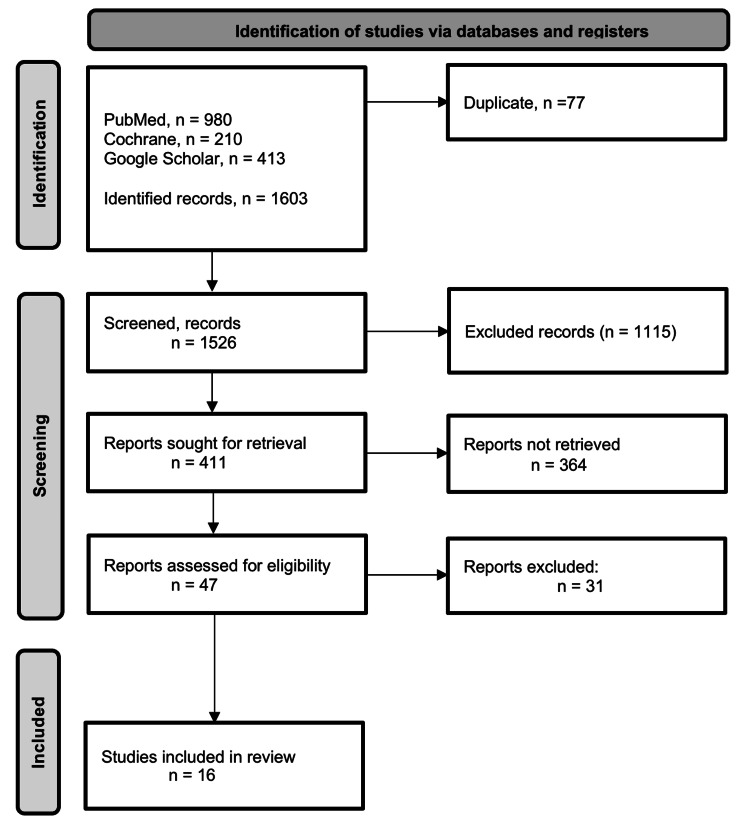
Urology focuses on the treatment of genitourinary disorders through therapies ranging from lifestyle changes to advanced surgeries; the field has recently incorporated robotic and minimally invasive technologies that have improved patient outcomes and reduced hospital stays and complications. However, these methods still have certain limitations. Regenerative medicine, focusing on natural repair abilities, can be an effective and safer alternative. This review aims to examine the impact of regenerative medicine in urology. We adopted a systematic review design by following the Preferred Reporting Items for Systematic Reviews and Meta-Analyses (PRISMA) guidelines. An exhaustive online literature search involving the databases PubMed, the Cochrane Central Register of Controlled Trials (CENTRAL), and Google Scholar was conducted spanning the period between January 2010 and October 2023. Data were extracted from studies on regenerative medicine in urology with a special focus on efficacy and safety. Data from 16 studies were analyzed, which showed that cell therapy, biological materials, and tissue engineering are generally used in the field of urinary diseases. The main applications include the regeneration of urinary tissue, the correction of urinary incontinence, the treatment of erectile dysfunction, the reconstruction of ureteric defects, and the formation of bladder tissue. The study findings generally lack definitive conclusions on effectiveness and safety. While our results indicate that regenerative medicine is successful on a subjective level, more clinical trials are needed to establish its effectiveness and safety.
Keywords: efficacy; genitourinary surgery.; regenerative medicine; safety; urology.
Copyright © 2024, Abuharb et al.
Conflict of interest statement
The authors have declared that no competing interests exist.
Figures
References
-
- The role of antibiotics in the treatment of chronic prostatitis: a consensus statement. Bjerklund Johansen TE, Grüneberg RN, Guibert J, et al. Eur Urol. 1998;34:457–466. - PubMed
-
- Treatment of urethral stricture disease by internal urethrotomy, dilation, or stenting. [ Nov; 2023 ];Djordjevic ML. Eur Urol Suppl. 2016 15:7–12.
-
- Engineered tissue grafts: opportunities and challenges in regenerative medicine. Feinberg AW. Wiley Interdiscip Rev Syst Biol Med. 2012;4:207–220. - PubMed
Publication types
LinkOut - more resources
Full Text Sources