Hyaluronic acid turnover controls the severity of cerebral cavernous malformations in bioengineered human micro-vessels
- PMID: 38352162
- PMCID: PMC10864035
- DOI: 10.1063/5.0159330
Hyaluronic acid turnover controls the severity of cerebral cavernous malformations in bioengineered human micro-vessels
Abstract
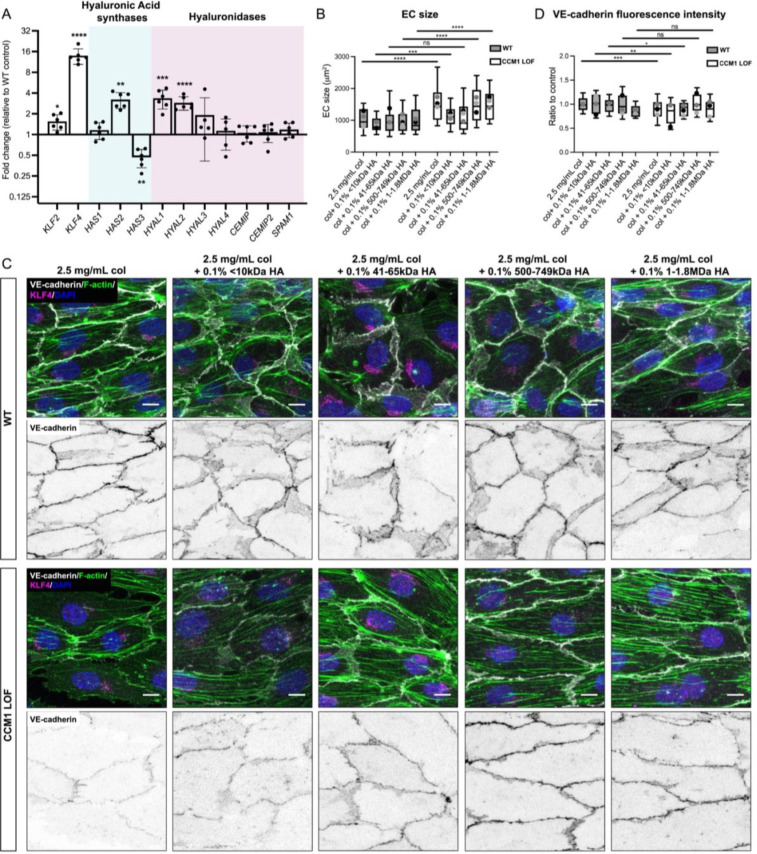
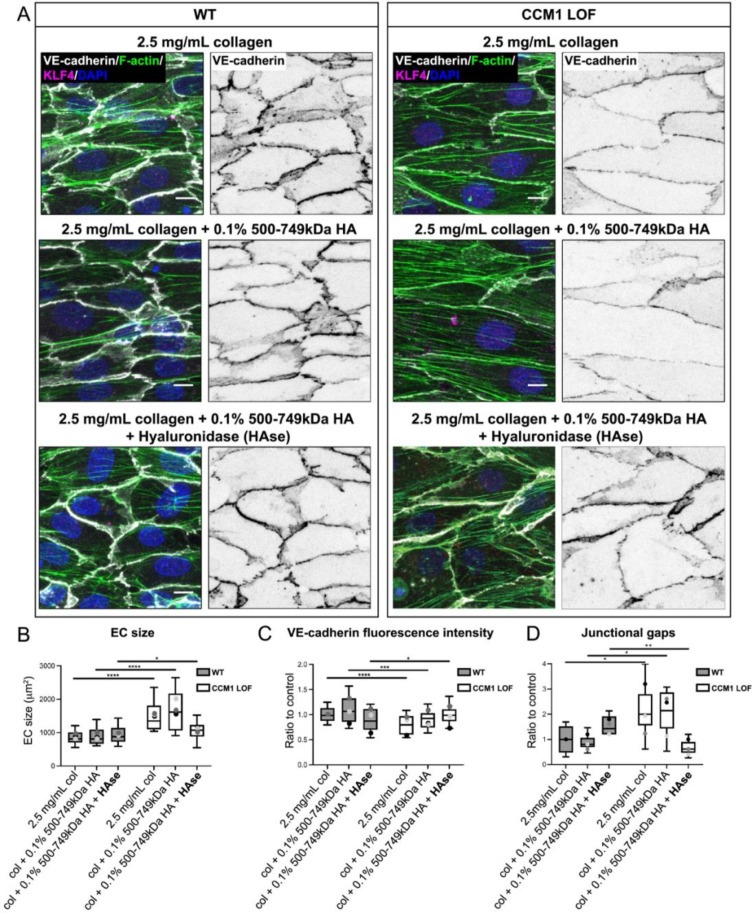
Cerebral cavernous malformations (CCMs) are vascular lesions that predominantly form in blood vessels of the central nervous system upon loss of the CCM multimeric protein complex. The endothelial cells within CCM lesions are characterized by overactive MEKK3 kinase and KLF2/4 transcription factor signaling, leading to pathological changes such as increased endothelial cell spreading and reduced junctional integrity. Concomitant to aberrant endothelial cell signaling, non-autonomous signals from the extracellular matrix (ECM) have also been implicated in CCM lesion growth and these factors might explain why CCM lesions mainly develop in the central nervous system. Here, we adapted a three-dimensional microfluidic system to examine CCM1 deficient human micro-vessels in distinctive extracellular matrices. We validate that pathological hallmarks are maintained in this model. We further show that key genes responsible for homeostasis of hyaluronic acid, a major extracellular matrix component of the central nervous system, are dysregulated in CCM. Supplementing the matrix in our model with distinct forms of hyaluronic acid inhibits pathological cell spreading and rescues barrier function. Hyaluronic acid acts by dampening cell-matrix adhesion signaling in CCM, either downstream or in parallel of KLF2/4. This study provides a proof-of-principle that ECM embedded 3D microfluidic models are ideally suited to identify how changes in ECM structure and signaling impact vascular malformations.
© 2024 Author(s).
Conflict of interest statement
The authors have no conflicts to disclose.
Figures



References
LinkOut - more resources
Full Text Sources
Miscellaneous