


Efficacy of virtual reality for pain relief in medical procedures: a systematic review and meta-analysis
- PMID: 38355563
- PMCID: PMC10865524
- DOI: 10.1186/s12916-024-03266-6
Efficacy of virtual reality for pain relief in medical procedures: a systematic review and meta-analysis
Abstract
Background: Effective pain control is crucial to optimise the success of medical procedures. Immersive virtual reality (VR) technology could offer an effective non-invasive, non-pharmacological option to distract patients and reduce their experience of pain. We aimed to evaluate the efficacy of Immersive virtual reality (VR) technology in reducing patient's pain perception during various medical procedures by conducting a systematic review and meta-analysis.
Methods: We searched MEDLINE, EMBASE, CENTRAL, CINAHL, and SIGLE until December 2022 for all randomised clinical trials (RCT) evaluating any type of VR in patients undergoing any medical procedure. We conducted a random effect meta-analysis summarising standardised mean differences (SMD) with 95% confidence intervals (CI). We evaluated heterogeneity using I 2 and explored it using subgroup and meta-regression analyses.
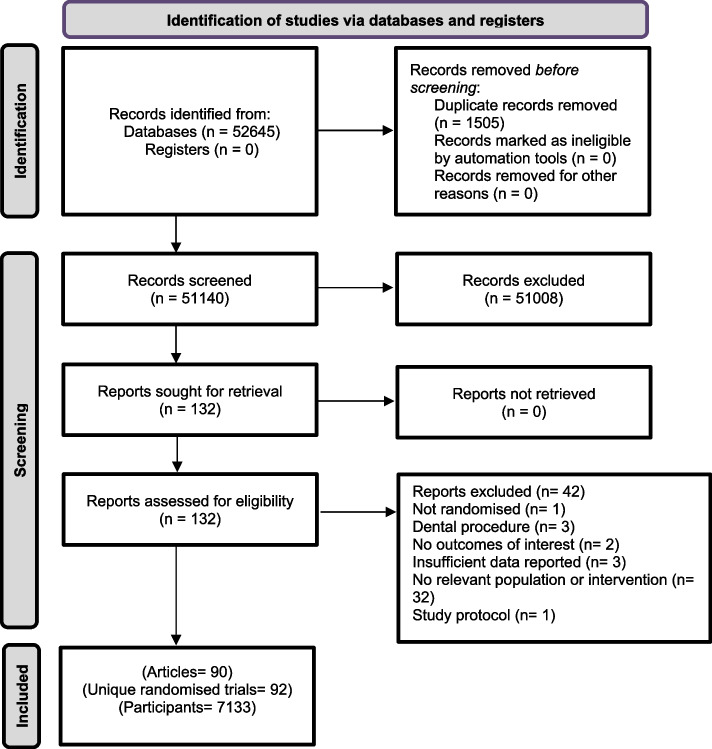
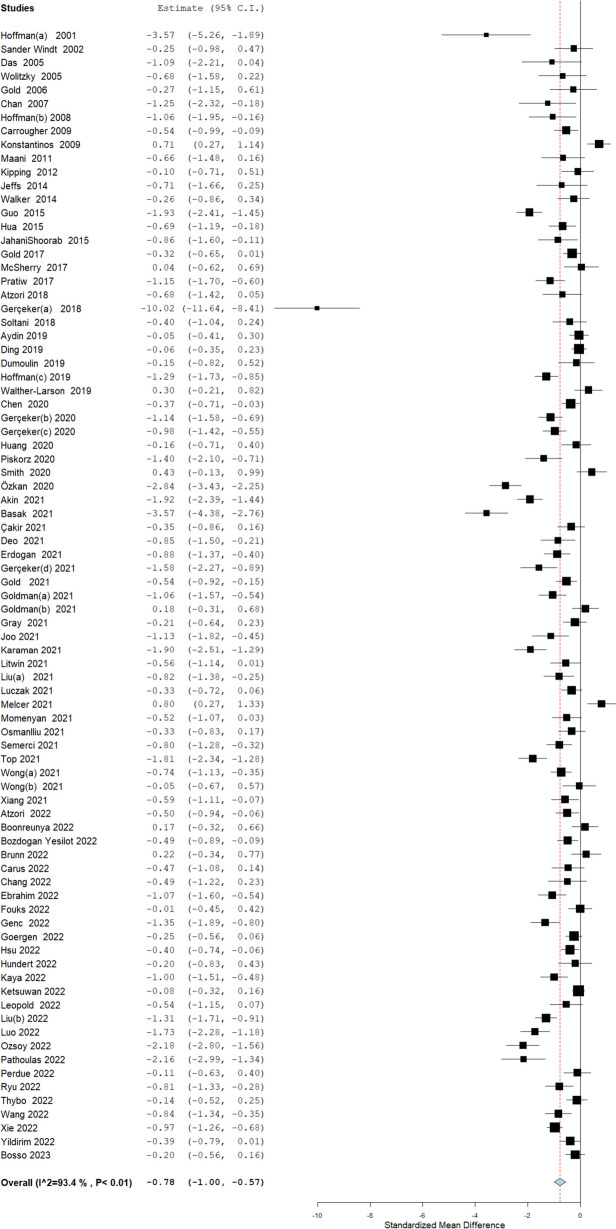
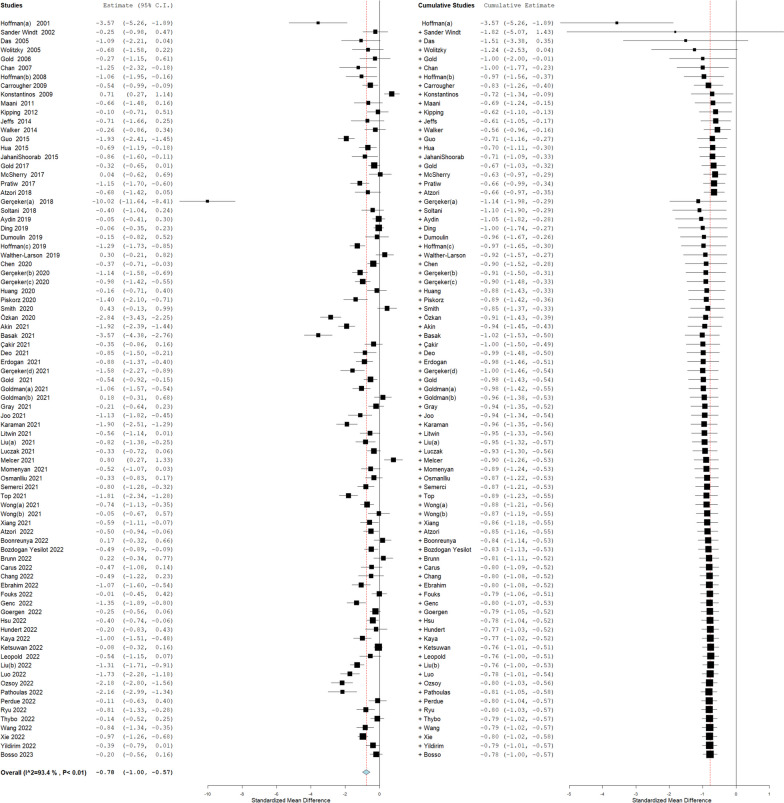
Results: In total, we included 92 RCTs (n = 7133 participants). There was a significant reduction in pain scores with VR across all medical procedures (n = 83, SMD - 0.78, 95% CI - 1.00 to - 0.57, I 2 = 93%, p = < 0.01). Subgroup analysis showed varied reduction in pain scores across trial designs [crossover (n = 13, SMD - 0.86, 95% CI - 1.23 to - 0.49, I 2 = 72%, p = < 0.01) vs parallel RCTs (n = 70, SMD - 0.77, 95% CI - 1.01 to - 0.52, I 2 = 90%, p = < 0.01)]; participant age groups [paediatric (n = 43, SMD - 0.91, 95% CI - 1.26 to - 0.56, I 2 = 87%, p = < 0.01) vs adults (n = 40, SMD - 0.66, 95% CI - 0.94 to - 0.39, I 2 = 89%, p = < 0.01)] or procedures [venepuncture (n = 32, SMD - 0.99, 95% CI - 1.52 to - 0.46, I 2 = 90%, p = < 0.01) vs childbirth (n = 7, SMD - 0.99, 95% CI - 1.59 to - 0.38, I 2 = 88%, p = < 0.01) vs minimally invasive medical procedures (n = 25, SMD - 0.51, 95% CI - 0.79 to - 0.23, I 2 = 85%, p = < 0.01) vs dressing changes in burn patients (n = 19, SMD - 0.8, 95% CI - 1.16 to - 0.45, I 2 = 87%, p = < 0.01)]. We explored heterogeneity using meta-regression which showed no significant impact of different covariates including crossover trials (p = 0.53), minimally invasive procedures (p = 0.37), and among paediatric participants (p = 0.27). Cumulative meta-analysis showed no change in overall effect estimates with the additional RCTs since 2018.
Conclusions: Immersive VR technology offers effective pain control across various medical procedures, albeit statistical heterogeneity. Further research is needed to inform the safe adoption of this technology across different medical disciplines.
Keywords: Analgesia; Pain; Systematic review; Virtual reality.
© 2024. The Author(s).
Conflict of interest statement
The authors declare that they have no competing interests.
Figures
References
-
- Akbar N, Teo SP, Artini Hj-Abdul-Rahman HN, et al. Barriers and solutions for improving pain management practices in acute hospital settings: perspectives of healthcare practitioners for a pain-free hospital initiative. Ann Geriatr Med Res. 2019;23(4):190–196. doi: 10.4235/agmr.19.0037. - DOI - PMC - PubMed
Publication types
MeSH terms
Grants and funding
LinkOut - more resources
Full Text Sources
Medical
