


Detection and Management of Elevated Intracranial Pressure in the Treatment of Acute Community-Acquired Bacterial Meningitis: A Systematic Review
- PMID: 38356077
- PMCID: PMC11335864
- DOI: 10.1007/s12028-023-01937-5
Detection and Management of Elevated Intracranial Pressure in the Treatment of Acute Community-Acquired Bacterial Meningitis: A Systematic Review
Abstract
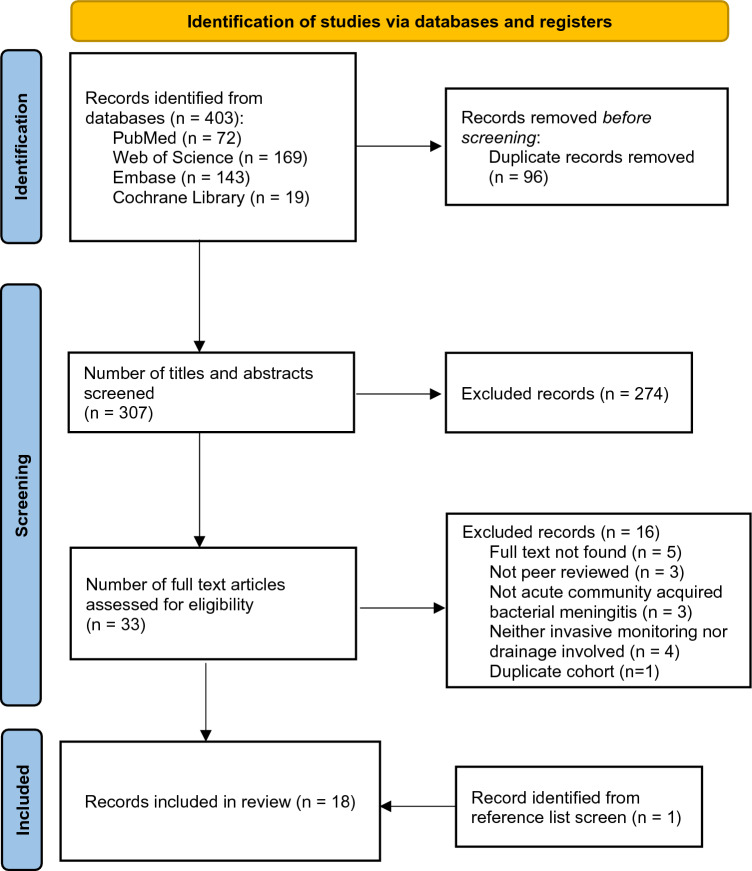
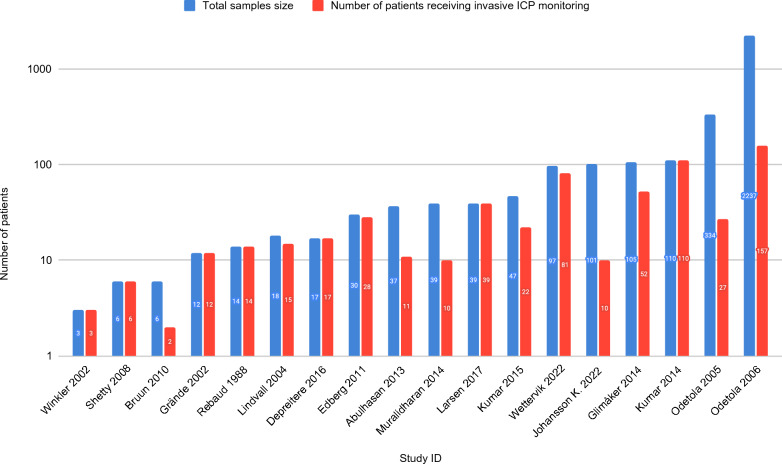
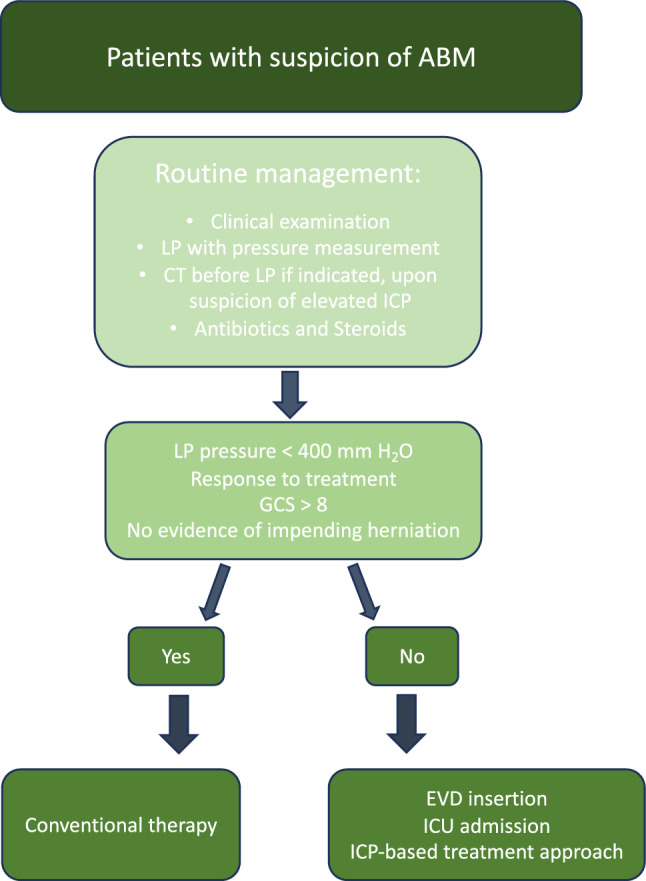
Acute bacterial meningitis (ABM) is associated with severe morbidity and mortality. The most prevalent pathogens in community-acquired ABM are Streptococcus pneumoniae, Neisseria meningitidis, and Haemophilus influenzae. Other pathogens may affect specific patient groups, such as newborns, older patients, or immunocompromised patients. It is well established that ABM is associated with elevated intracranial pressure (ICP). However, the role of ICP monitoring and management in the treatment of ABM has been poorly described.An electronic search was performed in four electronic databases: PubMed, Web of Science, Embase, and the Cochrane Library. The search strategy chosen for this review used the following terms: Intracranial Pressure AND (management OR monitoring) AND bacterial meningitis. The search yielded a total of 403 studies, of which 18 were selected for inclusion. Eighteen studies were finally included in this review. Only one study was a randomized controlled trial. All studies employed invasive ICP monitoring techniques, whereas some also relied on assessment of ICP-based on clinical and/or radiological observations. The most commonly used invasive tools were external ventricular drains, which were used both to monitor and treat elevated ICP. Results from the included studies revealed a clear association between elevated ICP and mortality, and possibly improved outcomes when invasive ICP monitoring and management were used. Finally, the review highlights the absence of clear standardized protocols for the monitoring and management of ICP in patients with ABM. This review provides an insight into the role of invasive ICP monitoring and ICP-based management in the treatment of ABM. Despite weak evidence certainty, the present literature points toward enhanced patient outcomes in ABM with the use of treatment strategies aiming to normalize ICP using continuous invasive monitoring and cerebrospinal fluid diversion techniques. Continued research is needed to define when and how to employ these strategies to best improve outcomes in ABM.
Keywords: Acute bacterial meningitis; External ventricular drain; Intracranial hypertension management; Intracranial pressure monitoring; Outcomes.
© 2024. The Author(s).
Conflict of interest statement
None of the authors report any relevant conflict of interest.
Figures
Comment in
-
ICP Monitoring for Bacterial Meningitis: Is This Just One of the Blind Spots in Neurocritical Care?Neurocrit Care. 2024 Aug;41(1):11-12. doi: 10.1007/s12028-024-01940-4. Epub 2024 Feb 17. Neurocrit Care. 2024. PMID: 38366278 No abstract available.
References
Publication types
MeSH terms
LinkOut - more resources
Full Text Sources
