


Association of region-specific hippocampal reduction of neurogranin with inflammasome proteins in post mortem brains of Alzheimer's disease
- PMID: 38356472
- PMCID: PMC10865487
- DOI: 10.1002/trc2.12444
Association of region-specific hippocampal reduction of neurogranin with inflammasome proteins in post mortem brains of Alzheimer's disease
Abstract
Introduction: Neurogranin (Ng) is considered a biomarker for synaptic dysfunction in Alzheimer's disease (AD). In contrast, the inflammasome complex has been shown to exacerbate AD pathology.
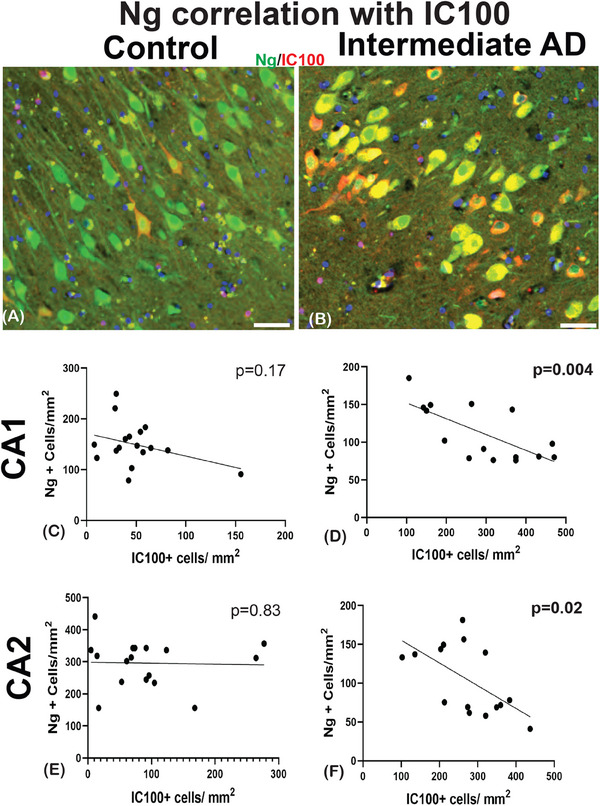
Methods: We investigated the protein expression, morphological differences of Ng, and correlated Ng to hyperphosphorylated tau in the post mortem brains of 17 AD cases and 17 age- and sex-matched controls. In addition, we correlated the Ng expression with two different epitopes of apoptosis-associated speck-like protein containing a caspase recruitment domain (ASC).
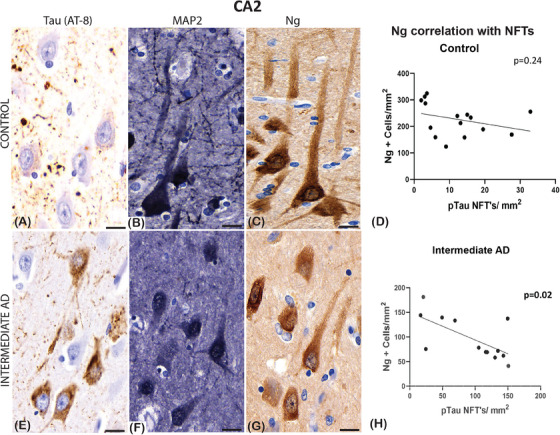
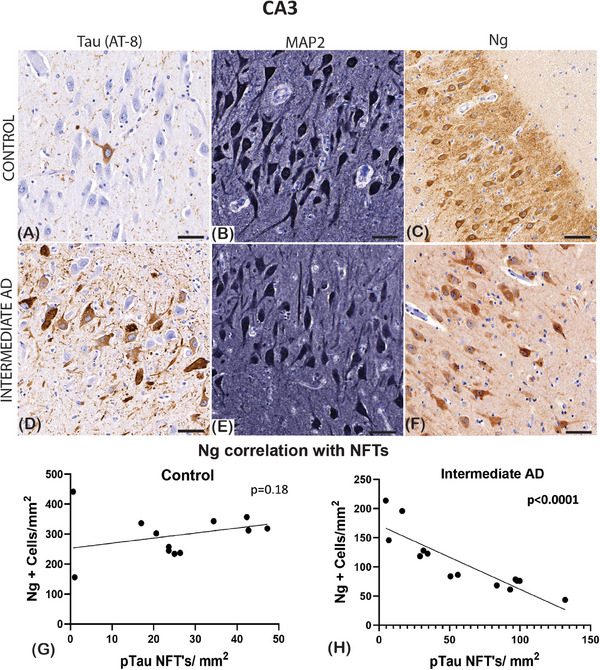
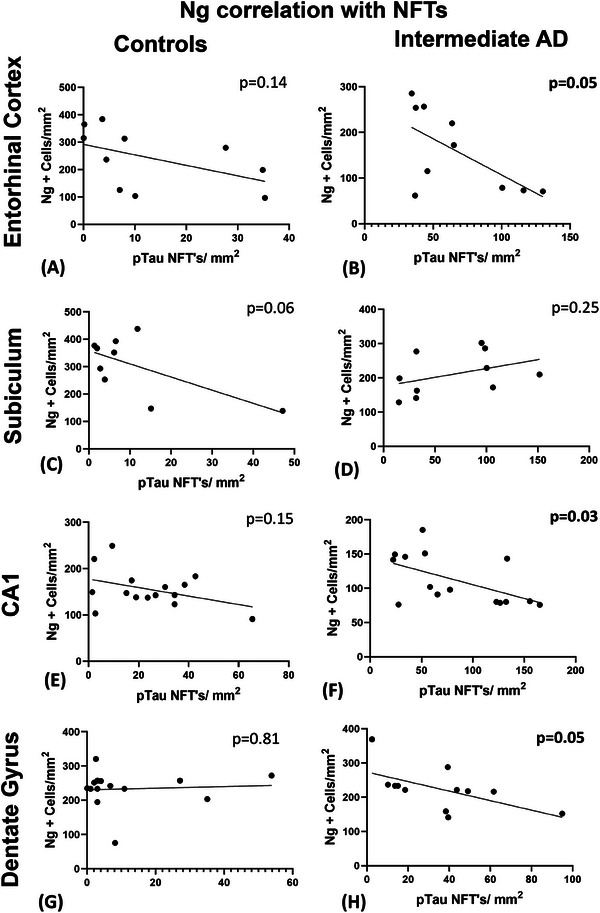
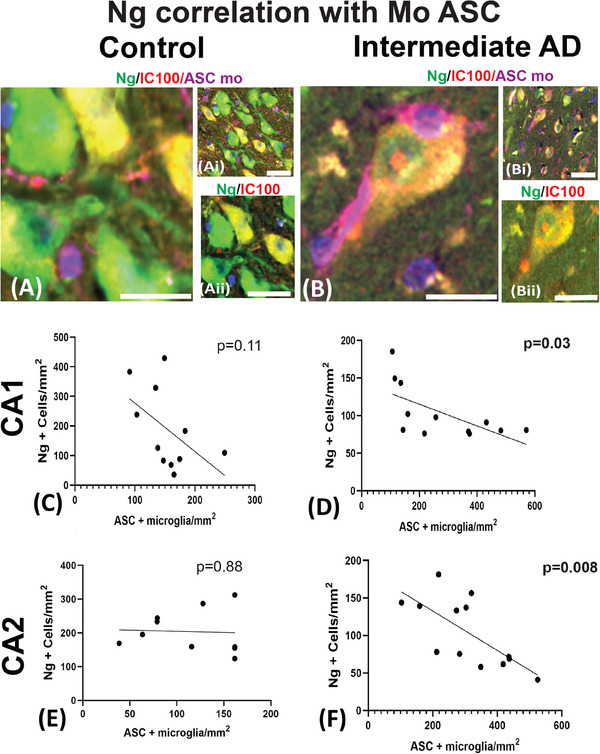
Results: We show a reduction of Ng immunopositive neurons and morphological differences in AD compared to controls. Ng immunostaining was negatively correlated with neurofibrillary tangles, humanized anti-ASC (IC100) positive neurons and anti-ASC positive microglia, in AD.
Discussion: The finding of a negative correlation between Ng and ASC speck protein expression in post mortem brains of AD suggests that the activation of inflammasome/ASC speck pathway may play an important role in synaptic degeneration in AD.
Highlights: We show the role that neurogranin plays on post-synaptic signaling in specific hippocampal regions.We demonstrate that there could be clinical implications of using neurogranin as a biomarker for dementia.We describe the loss of plasticity and neuronal scaffolding proteins in the present of AD pathology.We show the response of neuroinflammation when tau proteins phosphorylate in hippocampal neurons.We show that there is a potential therapeutic target for the inflammasome, and future studies may show that IC100, a humanized monoclonal antibody directed against ASC, may slow the progression of neurodegeneration.
Keywords: Alzheimer's disease; axon; inflammasome; microglia; neurogranin.
© 2024 The Authors. Alzheimer's & Dementia: Translational Research & Clinical Interventions published by Wiley Periodicals LLC on behalf of Alzheimer's Association.
Conflict of interest statement
KB and HZ have served on scientific advisory boards and/or as consultants for Abbvie, Acumen, Alector, Alzinova, ALZPath, Annexon, Apellis, Artery Therapeutics, AZTherapies, Cognito Therapeutics, CogRx, Denali, Eisai, Nervgen, Novo Nordisk, Optoceutics, Passage Bio, Pinteon Therapeutics, Prothena, Red Abbey Labs, reMYND, Roche, Samumed, Siemens Healthineers, Triplet Therapeutics, and Wave, have given lectures in symposia sponsored by Cellectricon, Fujirebio, Alzecure, Biogen, and Roche, and are co‐founders of Brain Biomarker Solutions in Gothenburg AB (BBS), which is a part of the GU Ventures Incubator Program (outside submitted work).JPdRV, HMB, RWK, and WDD are co‐founders and managing members of InflamaCORE, LLC and have licensed patents on inflammasome proteins as biomarkers of injury and disease as well as on targeting inflammasome proteins for therapeutic purposes. JPdRV, HMB, RWK, and WDD are Scientific Advisory Board Members of ZyVersa Therapeutics. The other authors declare no conflicts of interest. Author disclosures are available in the supporting information.
Figures
References
Grants and funding
LinkOut - more resources
Full Text Sources
Miscellaneous