


Young Adults' Knowledge and Perceptions of Permanent Noise-Induced Tinnitus and its Influence on Behavioural Intentions
- PMID: 38358239
- PMCID: PMC10849014
- DOI: 10.4103/nah.nah_17_23
Young Adults' Knowledge and Perceptions of Permanent Noise-Induced Tinnitus and its Influence on Behavioural Intentions
Abstract
Objective: Young adults' music-listening behaviours may put them at risk of developing permanent hearing loss and tinnitus. This study aimed to assess knowledge of permanent tinnitus and whether this knowledge may influence listening behaviours to a greater degree than knowledge of hearing loss.
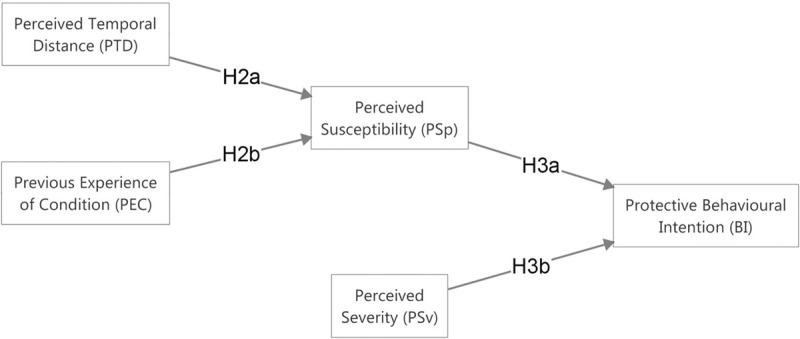
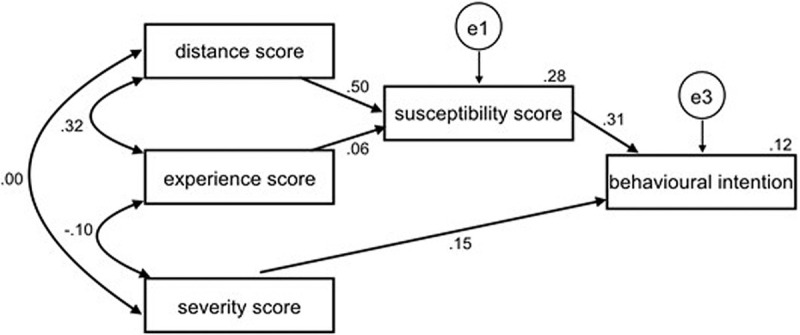
Materials and methods: A two-group (between subjects), randomised post-test only, single-factor experimental design was used to determine the effects of health message focus (permanent tinnitus vs. permanent hearing loss) on the main outcome measure of protective behavioural intention. The sample included 109 male and 287 female adults, aged 18 to 25 years, living in the United Kingdom. The young adults' existing knowledge of either permanent hearing loss or permanent tinnitus was measured, and after exposure to a health message, their perceptions and resultant behavioural intentions were assessed and compared. The pooled data were used to test a proposed model of factors influencing hearing protective behavioural intention using path analysis.
Results: Whilst 83% knew about the link with hearing loss, only 75% knew that loud music may cause permanent tinnitus. The participants viewed tinnitus as closer temporally than hearing loss, perceived themselves as equally susceptible to both, but perceived hearing loss as more severe. There was no significant difference in behavioural intention between the groups.
Conclusion: Perceived susceptibility and severity have a positive effect on behavioural intentions. In light of these results, recommendations for future noise-damage prevention campaigns are made.
Keywords: behavioural intentions; hearing; leisure noise exposure; perceptions; tinnitus; young adults.
Conflict of interest statement
There are no conflicts of interest.
Figures

References
-
- Møller AR. Introduction. In: Møller AR, Kleinjung T, Langguth B, Ridder D, editors. Textbook of Tinnitus. New York: Springer; 2011. pp. 3–9.
-
- Henry JA, Griest S, Austin D, et al. Tinnitus screener: results from the first 100 participants in an epidemiology study. Am J Audiol. 2016;25:153–60. - PubMed
-
- Koops EA, Husain FT, van Dijk P. Profiling intermittent tinnitus: a retrospective review. Int J Audiol. 2019;58:434–40. - PubMed
-
- Roberts L. The prevention of tinnitus and noise-induced hearing loss. In: Møller AR, Kleinjung T, Langguth B, Ridder D, editors. Textbook of Tinnitus. New York: Springer; 2011. pp. 527–34.
MeSH terms
LinkOut - more resources
Full Text Sources
Medical
