


Complex roles for sulfation in the toxicities of polychlorinated biphenyls
- PMID: 38363552
- PMCID: PMC11067068
- DOI: 10.1080/10408444.2024.2311270
Complex roles for sulfation in the toxicities of polychlorinated biphenyls
Abstract
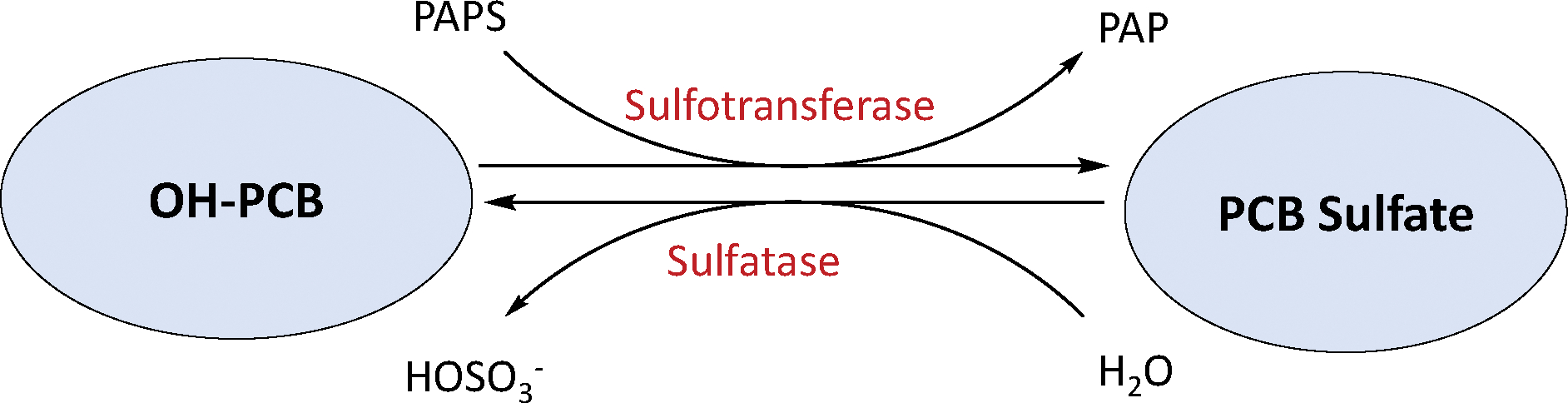
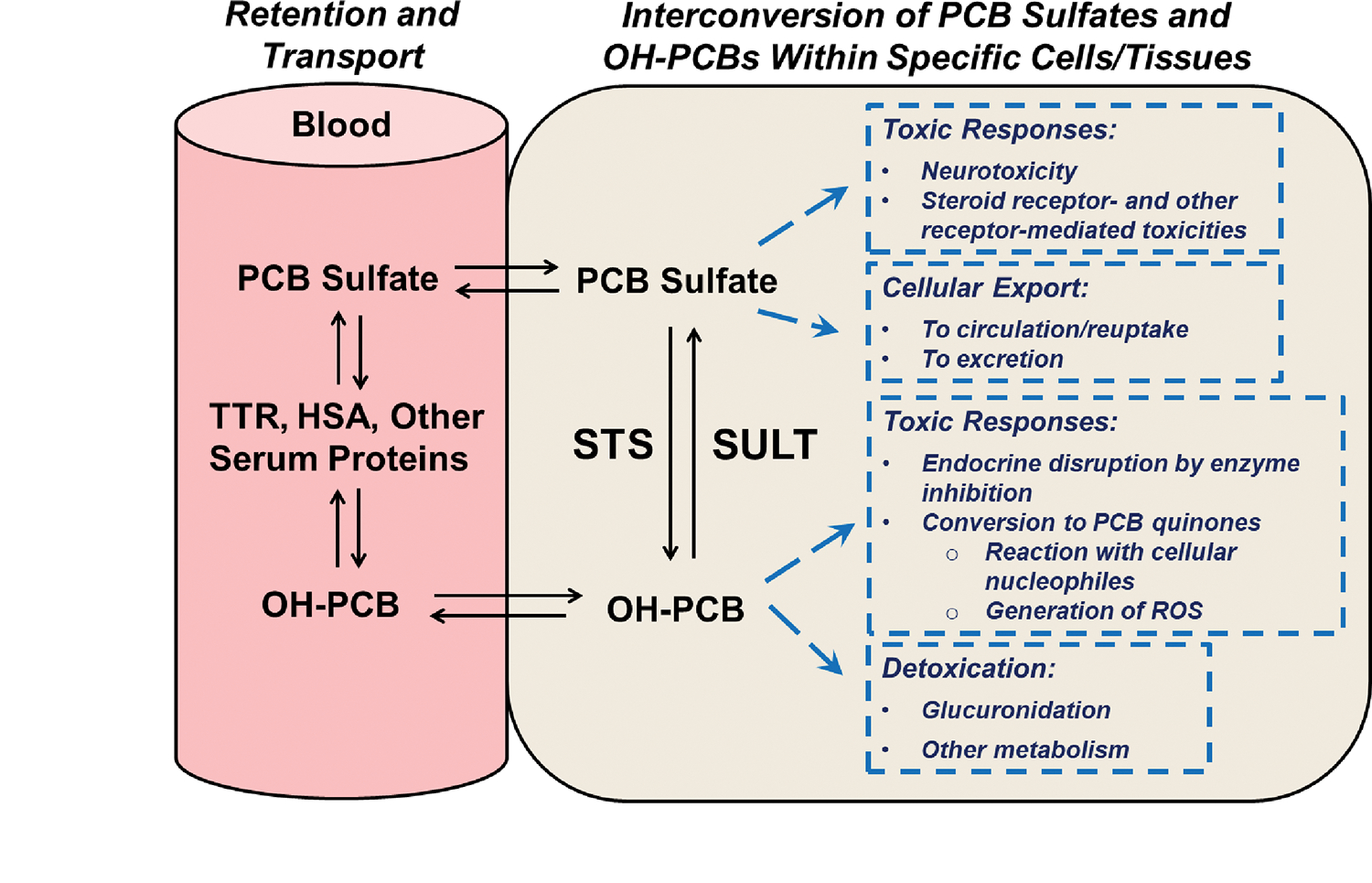
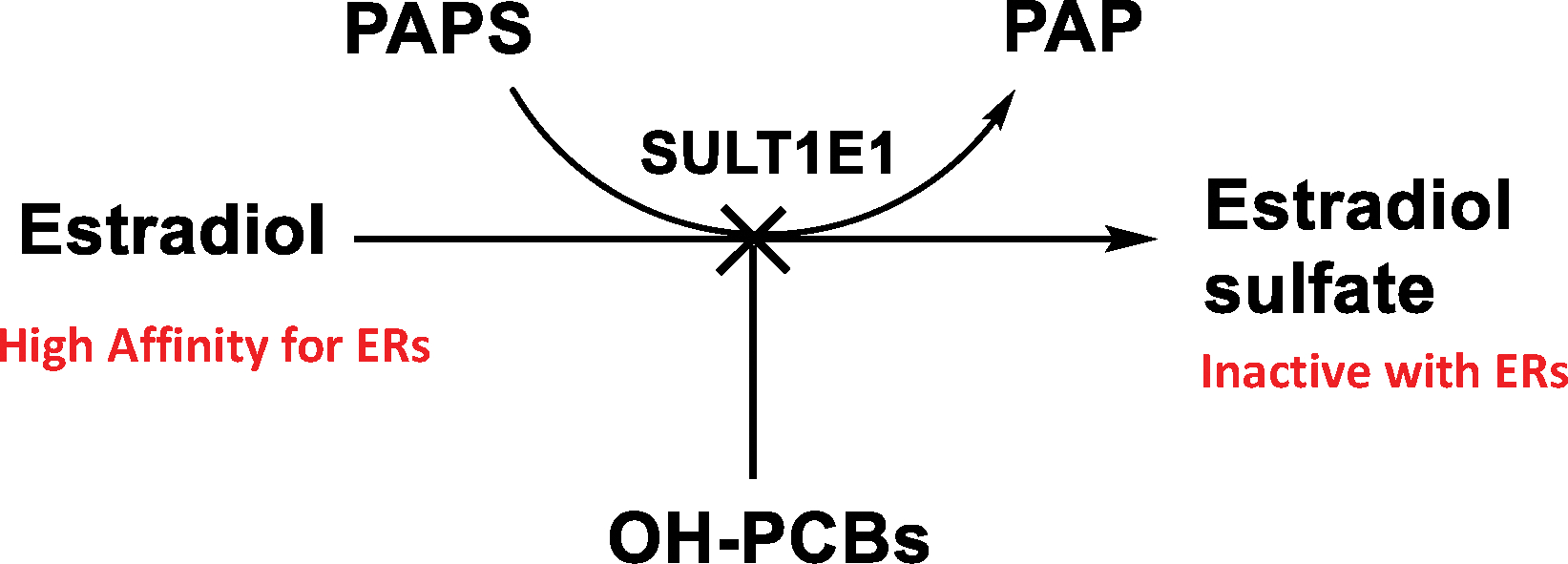
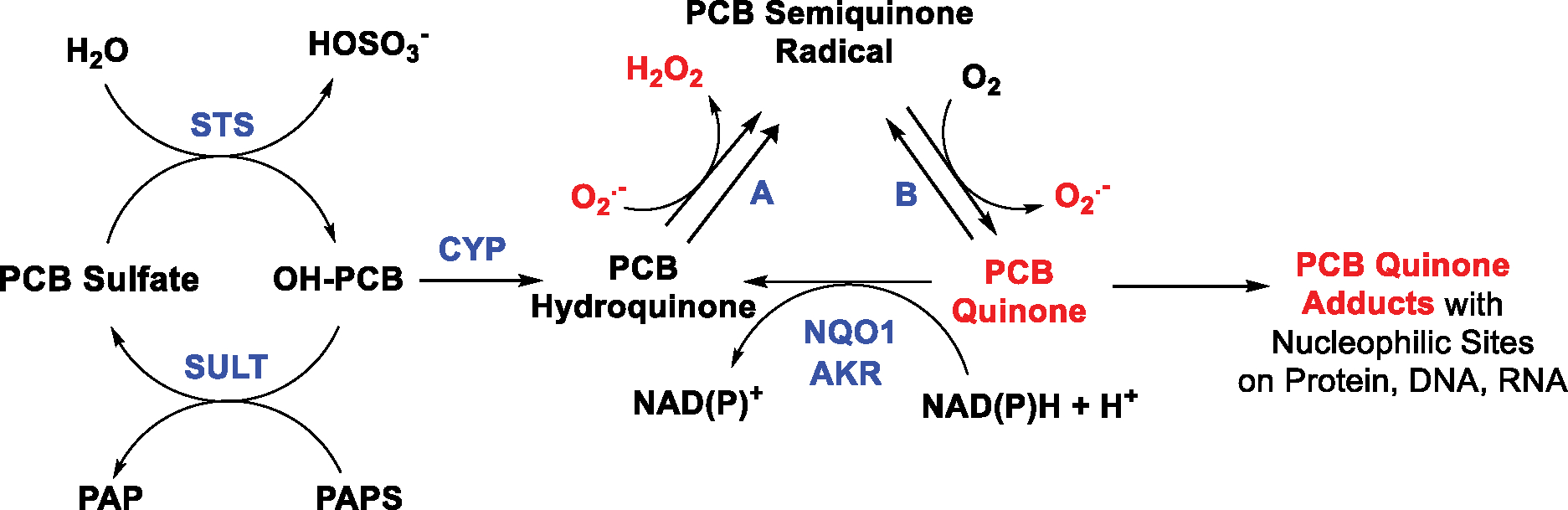
Polychlorinated biphenyls (PCBs) are persistent organic toxicants derived from legacy pollution sources and their formation as inadvertent byproducts of some current manufacturing processes. Metabolism of PCBs is often a critical component in their toxicity, and relevant metabolic pathways usually include their initial oxidation to form hydroxylated polychlorinated biphenyls (OH-PCBs). Subsequent sulfation of OH-PCBs was originally thought to be primarily a means of detoxication; however, there is strong evidence that it may also contribute to toxicities associated with PCBs and OH-PCBs. These contributions include either the direct interaction of PCB sulfates with receptors or their serving as a localized precursor for OH-PCBs. The formation of PCB sulfates is catalyzed by cytosolic sulfotransferases, and, when transported into the serum, these metabolites may be retained, taken up by other tissues, and subjected to hydrolysis catalyzed by intracellular sulfatase(s) to regenerate OH-PCBs. Dynamic cycling between PCB sulfates and OH-PCBs may lead to further metabolic activation of the resulting OH-PCBs. Ultimate toxic endpoints of such processes may include endocrine disruption, neurotoxicities, and many others that are associated with exposures to PCBs and OH-PCBs. This review highlights the current understanding of the complex roles that PCB sulfates can have in the toxicities of PCBs and OH-PCBs and research on the varied mechanisms that control these roles.
Keywords: OH-PCB; PCB; PCB sulfate; STS; SULT; Sulfation; detoxication; endocrine disruption; inhibition; metabolic activation; neurotoxicity; polychlorinated biphenyl; sulfatase; sulfotransferase; toxicity.
Conflict of interest statement
Declaration of Interest
The authors report no conflict of interest.
Figures
References
-
- Alshehri B, D’Souza DG, Lee JY, Petratos S, Richardson SJ. 2015. The diversity of mechanisms influenced by transthyretin in neurobiology: development, disease and endocrine disruption. J Neuroendocrinol. 27(5):303–323. - PubMed
-
- Amaro AR, Oakley GG, Bauer U, Spielmann HP, Robertson LW. 1996. Metabolic activation of PCBs to quinones: reactivity toward nitrogen and sulfur nucleophiles and influence of superoxide dismutase. Chem Res Toxicol. 9(3):623–629. - PubMed
-
- Anezaki K, Nakano T. 2014. Concentration levels and congener profiles of polychlorinated biphenyls, pentachlorobenzene, and hexachlorobenzene in commercial pigments. Environ Sci Pollut Res Int. 21(2):998–1009. - PubMed
Publication types
MeSH terms
Substances
Grants and funding
LinkOut - more resources
Full Text Sources
