


Ripple-locked coactivity of stimulus-specific neurons and human associative memory
- PMID: 38366143
- PMCID: PMC10917673
- DOI: 10.1038/s41593-023-01550-x
Ripple-locked coactivity of stimulus-specific neurons and human associative memory
Abstract
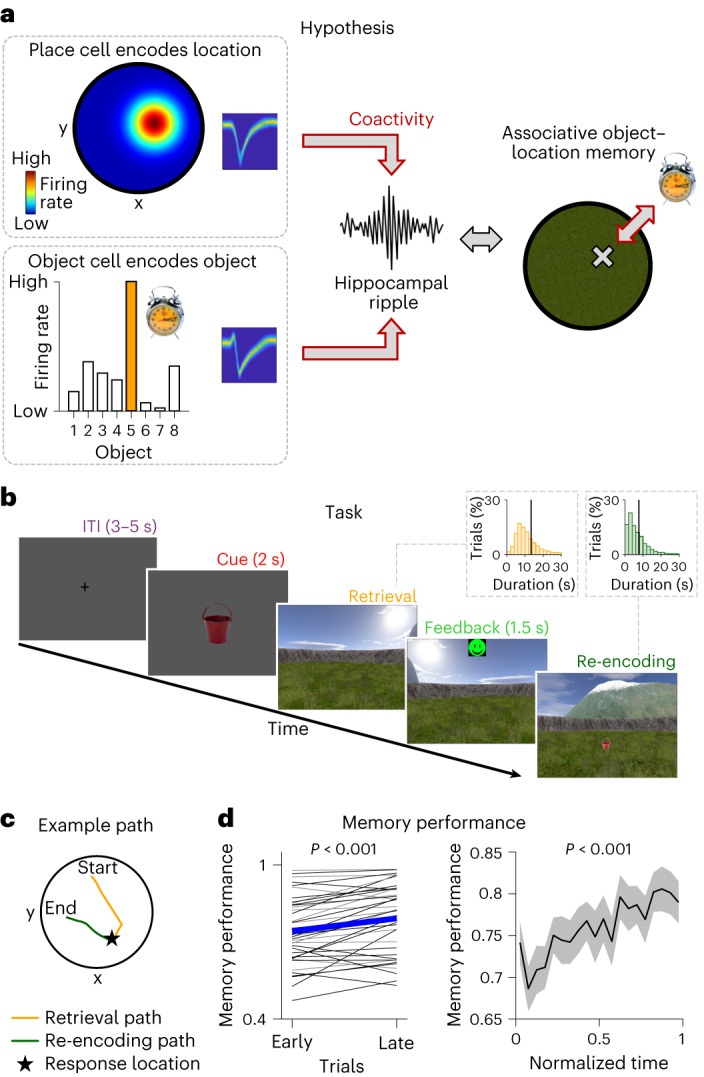
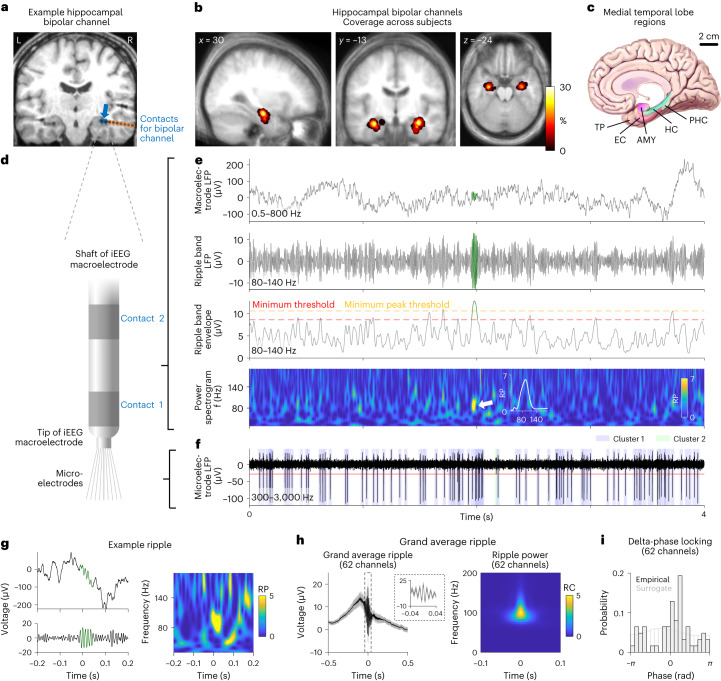
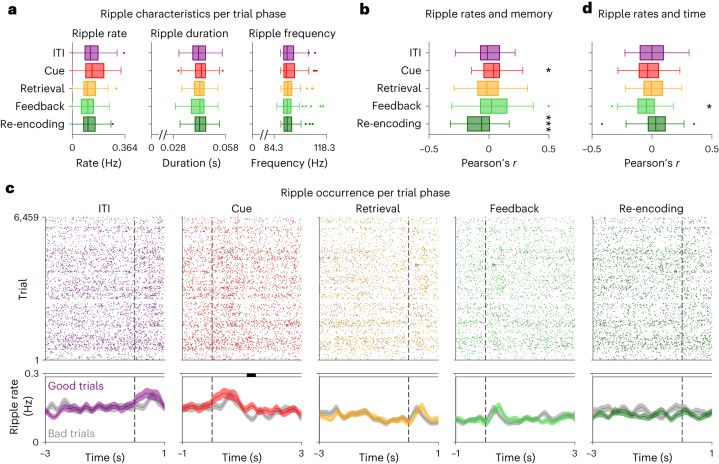
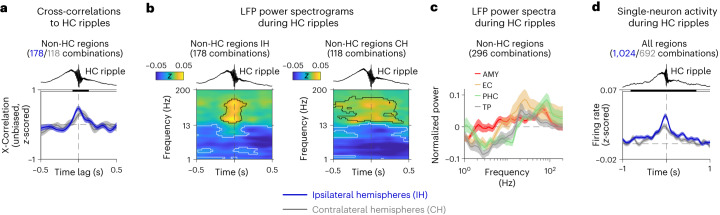
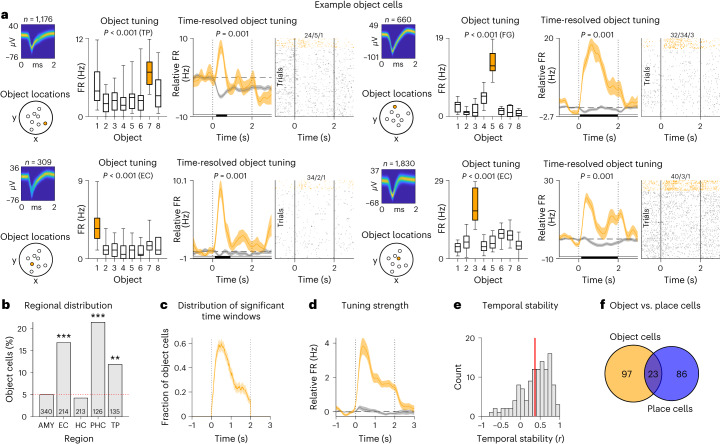
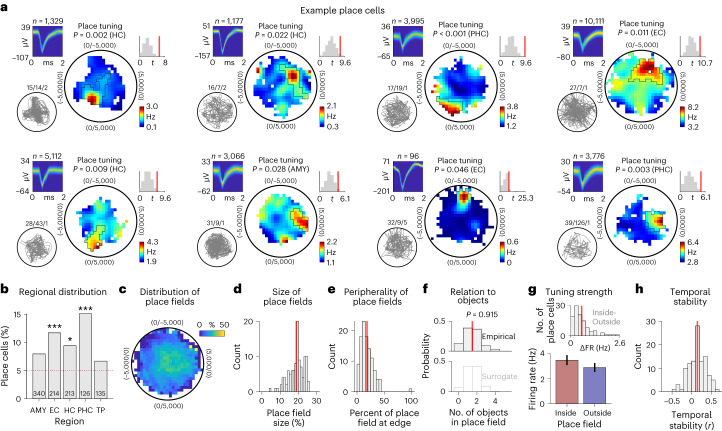
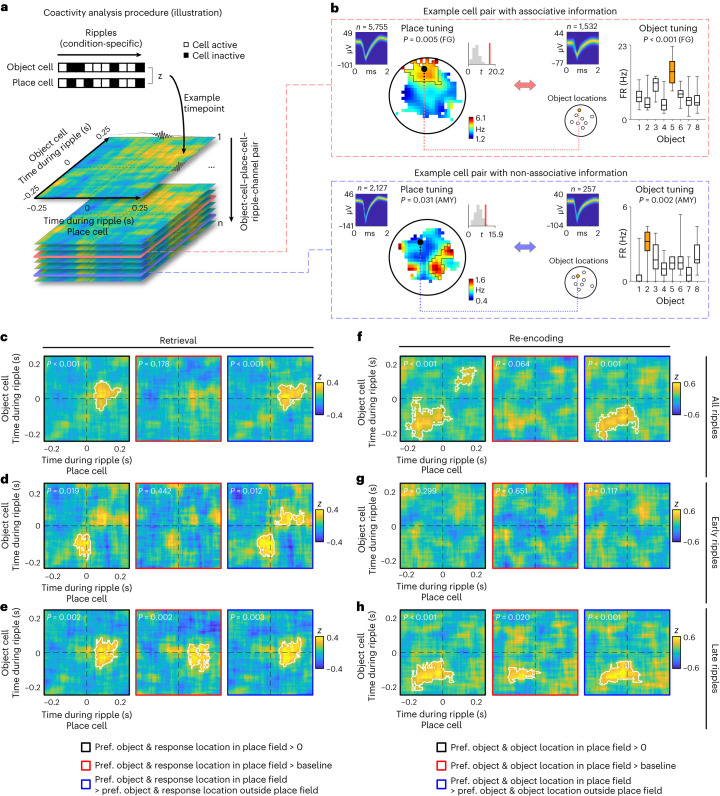
Associative memory enables the encoding and retrieval of relations between different stimuli. To better understand its neural basis, we investigated whether associative memory involves temporally correlated spiking of medial temporal lobe (MTL) neurons that exhibit stimulus-specific tuning. Using single-neuron recordings from patients with epilepsy performing an associative object-location memory task, we identified the object-specific and place-specific neurons that represented the separate elements of each memory. When patients encoded and retrieved particular memories, the relevant object-specific and place-specific neurons activated together during hippocampal ripples. This ripple-locked coactivity of stimulus-specific neurons emerged over time as the patients' associative learning progressed. Between encoding and retrieval, the ripple-locked timing of coactivity shifted, suggesting flexibility in the interaction between MTL neurons and hippocampal ripples according to behavioral demands. Our results are consistent with a cellular account of associative memory, in which hippocampal ripples coordinate the activity of specialized cellular populations to facilitate links between stimuli.
© 2024. The Author(s).
Conflict of interest statement
The authors declare no competing interests.
Figures
References
-
- Kahana, M. J. Foundations of Human Memory (Oxford Univ. Press, 2014).
-
- Naveh-Benjamin M. Adult age differences in memory performance: tests of an associative deficit hypothesis. J. Exp. Psychol. Learn. Mem. Cogn. 2000;26:1170–1187. - PubMed
-
- Squire LR, Stark CEL, Clark RE. The medial temporal lobe. Annu. Rev. Neurosci. 2004;27:279–306. - PubMed
-
- Neves G, Cooke SF, Bliss TVP. Synaptic plasticity, memory and the hippocampus: a neural network approach to causality. Nat. Rev. Neurosci. 2008;9:65–75. - PubMed
MeSH terms
Grants and funding
LinkOut - more resources
Full Text Sources
