


Household food insecurity and associated factors among postpartum women in southern Ethiopia: a community based cross sectional study
- PMID: 38369577
- PMCID: PMC10874939
- DOI: 10.1038/s41598-024-54666-w
Household food insecurity and associated factors among postpartum women in southern Ethiopia: a community based cross sectional study
Abstract
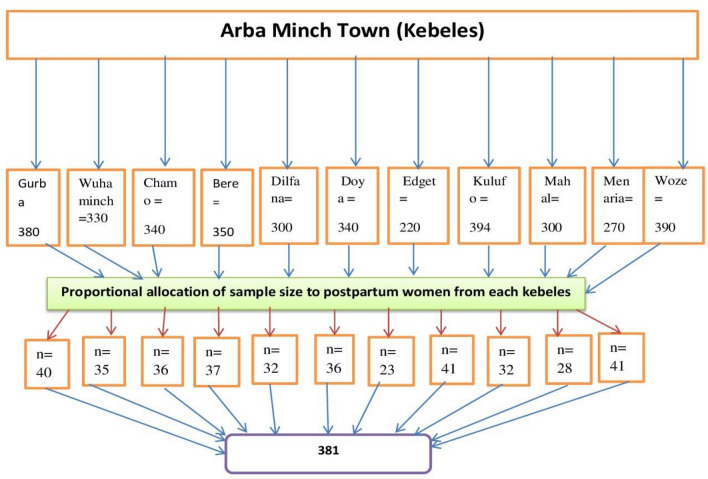
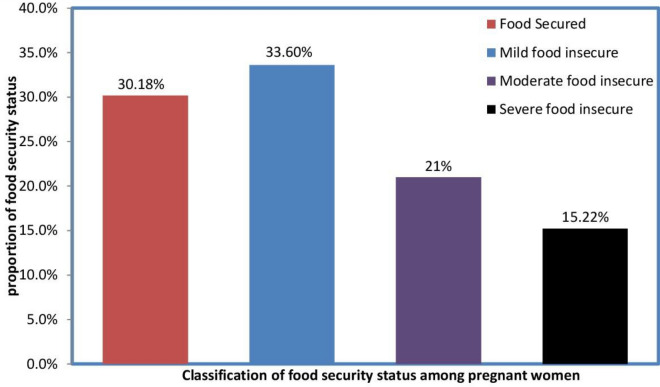
Approximately two billion individuals, or 26.4% of the global population, live in moderate- to severely food-insecure circumstances. It was discovered that not receiving all recommended antenatal care throughout one's pregnancy is one of the effects of household insecurity. The majority of women in Ethiopia, one of the most food-insecure countries in the world, with 10% of the population facing food poverty, devote more of their time to household duties, making food insecurity in the home the primary effect of poor prenatal care utilization. The main objective this study was to assess the status of household food insecurity among postpartum women at Arba Minch town, southern Ethiopia. A community-based cross-sectional study was conducted among 381 mothers who were enrolled from December 1, 2022, to January 30, 2023. The total sample size was allocated proportionately to the number of postpartum women living in each kebeles taking from the town registry of health extension workers for immunization. Thus, systematic sampling was applied. Kobo Toolbox was used for data collection and cleaning, which was then analyzed using the statistical package of Social Science Version 26 (SPSS). In this study, the prevalence of food insecurity was 30.2% (95% CI 25.5-34.5). The associated factors with household food-insecurity were maternal occupation (AOR = 0.5, 95% CI 0.27, 0.90), late antenatal care initiation (AOR = 3.5, 95% CI 2.13, 5.91), and low monthly income (AOR = 3.1, 95% CI 1.38, 6.93). Food insecurity among postpartum mothers in the study area is high. Families who are severely food insecure require quick assistance to lower poor maternal and neonate's outcomes. Furthermore, enhancing the occupation of mothers is crucial in reducing the morbidities and mortality of food insecure mothers, such as delayed prenatal care services, anemia, low birth weight, and stillbirth.
Keywords: Antenatal care; Arba Minch town; Food insecurity; Postpartum; Southern Ethiopia.
© 2024. The Author(s).
Conflict of interest statement
The authors declare no competing interests.
Figures
References
-
- Ali D, Saha KK, Nguyen PH, Diressie MT, Ruel MT, Menon P, et al. Household food insecurity is associated with higher child undernutrition in Bangladesh, Ethiopia, and Vietnam, but the effect is not mediated by child dietary diversity. J. Nutr. 2013;143(12):2015–2021. doi: 10.3945/jn.113.175182. - DOI - PubMed
-
- Broz, J.L. Are Coping Strategies Used by Households During Times of Food Insecurity Associated with Nutritional Status for Children Under 5 in Lao PDR? 2014.
-
- Ghattas, H. Food Security and Nutrition in the context of the Global Nutrition Transition. Food and Agriculture Organization: Rome, Italy. 2014.
-
- Ehebhamen O, Obayelu A, Vaughan I, Afolabi W. Rural households' food security status and coping strategies in Edo State Nigeria. Int. Food Res. J. 2017;24(1):92.
-
- Organization WH. The state of food security and nutrition in the world 2019: safeguarding against economic slowdowns and downturns: Food & Agriculture Org.; 2019.
MeSH terms
LinkOut - more resources
Full Text Sources
