


Hepatitis E outbreak in the health district of Bocaranga-Koui, Central African Republic, 2018-2019
- PMID: 38374096
- PMCID: PMC10875899
- DOI: 10.1186/s12879-024-09116-3
Hepatitis E outbreak in the health district of Bocaranga-Koui, Central African Republic, 2018-2019
Abstract
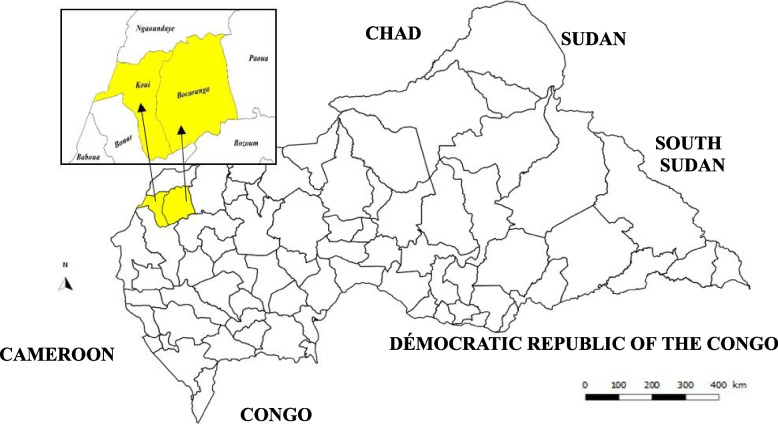
Background: Hepatitis E virus (HEV) is a major public health disease causing large outbreaks and sporadic cases of acute hepatitis. We investigated an outbreak of HEV infection that occurred in September 2018 in the health district (HD) of Bocaranga-Koui, located in the northwestern part of Central African Republic (CAR).
Methods: Blood samples were collected from 352 patients aged 0-85 years suspected to be infected with yellow fever (YF), according to the World Health Organization YF case definition. The notification forms from recorded cases were used. Water consumed in the HD were also collected. Human samples found negative for anti-YF IgM were then tested by ELISA for anti-HEV IgM and IgG antibodies. Positive anti-HEV (IgM and/or IgG) samples and collected water were then subjected to molecular biology tests using a real time RT-PCR assay, followed by a nested RT-PCR assay for sequencing and phylogenetic analysis.
Results: Of the 352 icterus patients included, anti-HEV IgM was found in 142 people (40.3%) and anti-HEV IgG in 175 (49.7%). Although HEV infection was detected in all age groups, there was a significant difference between the 0-10 age groups and others age groups (P = 0.001). Elevated levels of serum aminotransferase were observed in anti-HEV IgM-positive subjects. Phylogenetic analysis showed HEV genotype 1e in infected patients as well as in the contaminated water.
Conclusion: This epidemic showed that CAR remains an HEV-endemic area. The genotype 1e strain was responsible for the HEV outbreak in Bocaranga-Koui HD. It is necessary to implement basic conditions of hygiene and sanitation to prevent further outbreaks of a HEV epidemics, to facilitate access to clean drinking water for the population, to launch intensive health education for basic hygiene measures, to sett up targeted hygiene promotion activities and, finally, to ensure that formal health care is available.
Keywords: Bocaranga-Koui health district; Central African Republic; Hepatitis E outbreak; Molecular characterization.
© 2024. The Author(s).
Conflict of interest statement
The authors declare no competing interests.
Figures


 and from the water well sample by a blue triangle
 . HEV genotype 1e sequences obtained in the present study were deposited in the NCBI GenBank database on the accession numbers MN901844 to MN901869 and MW258967 to MW258978. Bootstrap values are indicated when > 70% as a percentage obtained from 1000 re-samplings of the data
References
-
- Purdy MA, Drexler JF, Meng XJ, Norder H, Okamoto H, Van der Poel WHM et al. ICTV Virus taxonomy profile: Hepeviridae 2022. J Gen Virol. 2022;103(9). 10.1099/jgv.0.001778. - PubMed
MeSH terms
Substances
Grants and funding
LinkOut - more resources
Full Text Sources
Medical
