


Skin secretions of Leptodactylidae (Anura) and their potential applications
- PMID: 38374940
- PMCID: PMC10876013
- DOI: 10.1590/1678-9199-JVATITD-2023-0042
Skin secretions of Leptodactylidae (Anura) and their potential applications
Abstract
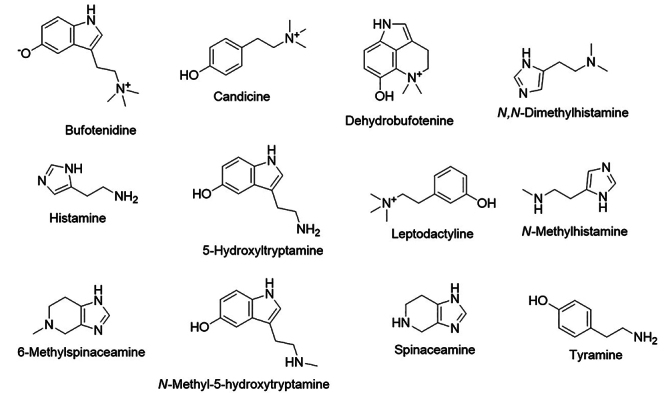
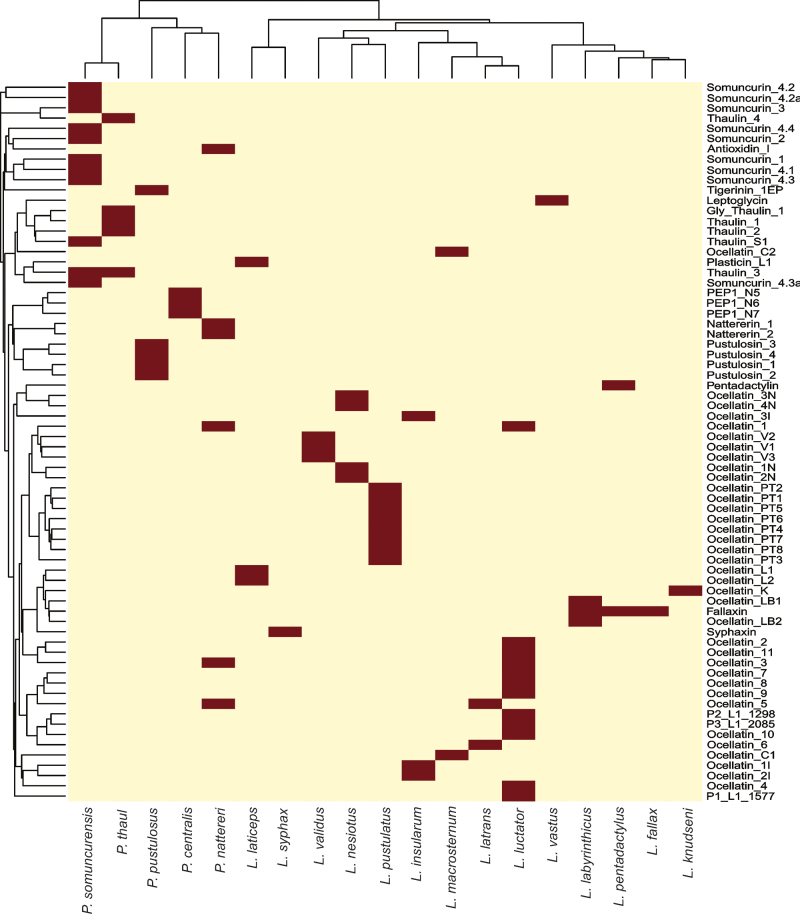
The skin of anuran species is a protective barrier against predators and pathogens, showing also chemical defense by substances that represent a potential source for bioactive substances. This review describes the current chemical and biological knowledge from the skin secretions of Leptodactylidae species, one of the most diverse neotropical frog families. These skin secretions reveal a variety of substances such as amines (12), neuropeptides (16), and antimicrobial peptides (72). The amines include histamine and its methylated derivatives, tryptamine derivatives and quaternary amines. The peptides of Leptodactylidae species show molecular weight up to 3364 Da and ocellatins are the most reported. The peptides exhibit commonly glycine (G) or glycine-valine (GV) as C-terminal amino acids, and the most common N-terminal amino acids are glutamic acid (E), lysine (K), and valine (V). The substances from Leptodactylidae species have been evaluated against pathogenic microorganisms, particularly Escherichia coli and Staphylococcus aureus, and the most active peptides showed MIC of 1-15 µM. Furthermore, some compounds showed also pharmacological properties such as immunomodulation, treatment of degenerative diseases, anticancer, and antioxidant. Currently, only 9% of the species in this family have been properly studied, highlighting a large number of unstudied species such as an entire subfamily (Paratelmatobiinae). The ecological context, functions, and evolution of peptides and amines in this family are poorly understood and represent a large field for further exploration.
Keywords: Amines; Antibiotic resistance; Antimicrobial peptides; Peptides.
Conflict of interest statement
Competing interests: The authors declare that they have no competing interests.
Figures
References
-
- Clarke BT. The natural history of amphibian skin secretions, their normal functioning and potential medical applications. Biol Ver Camb Philos Soc. 1997;72(3):365–379. - PubMed
-
- Barbosa EA, Oliveira A, Plácido A, Socodato R, Portugal CC, Mafud AC, Ombredane AS, Moreira DC, Vale N, Bessa LJ, Joanitti GA, Alves C, Gomes P, Delerue-Matos C, Mascarenhas YP, Marani MM, Relvas JB, Pintado M, Leite JRSA. Structure and function of a novel antioxidant peptide from the skin of tropical frogs. Free Radic Biol Med. 2018;115:68–79. - PubMed
-
- Prates I, Antoniazzi MM, Sciani JM, Pimenta DC, Toledo LF, Haddad CFB, Jaret C. Skin glands, poison and mimicry in dendrobatid and leptodactylid amphibians. J Morphol. 2012;273(3):279–390. - PubMed
-
- Mailho-Fontana PL, Antoniazzi MM, Rodrigues I, Sciani JM, Pimenta DC, Brodie ED, Rodrigues MT, Jared C. Parotoid, radial, and tibial macroglands of the frog Odontophrynus cultripes: Differences and similarities with toads. Toxicon. 2017;129:123–133. - PubMed
Publication types
LinkOut - more resources
Full Text Sources
Molecular Biology Databases