


Global prevalence of functional dyspepsia according to Rome criteria, 1990-2020: a systematic review and meta-analysis
- PMID: 38378941
- PMCID: PMC10879214
- DOI: 10.1038/s41598-024-54716-3
Global prevalence of functional dyspepsia according to Rome criteria, 1990-2020: a systematic review and meta-analysis
Abstract
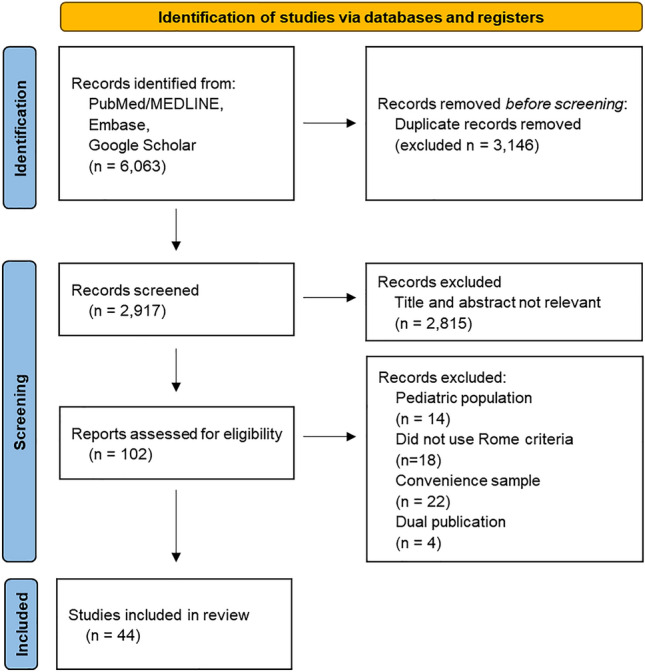
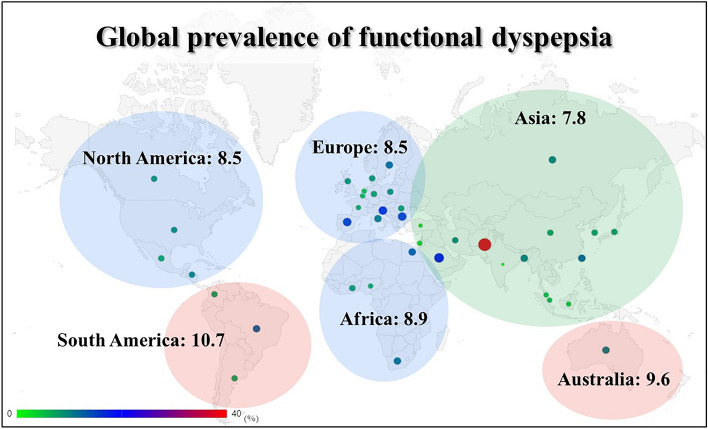
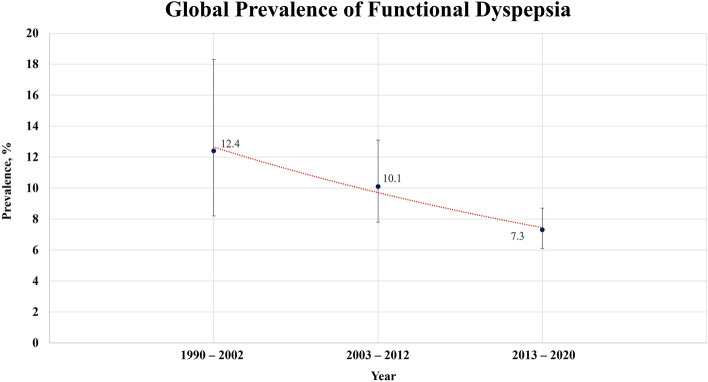
Although functional dyspepsia (FD) is a common functional gastroduodenal disorder with a high socioeconomic burden, little is known about its global prevalence. Thus, we performed a comprehensive study to estimate long-term trends in the prevalence of FD. We searched PubMed/MEDLINE, Embase, and Google Scholar from 1990 to 2022 for population-based studies that reported the prevalence of FD in adults (≥ 18 years old) according to Rome I, II, III, or IV criteria. The prevalence of FD was extracted from included studies to obtain pooled prevalence with 95% confidence intervals (CI) and 95% prediction intervals. Subgroup analysis was performed according to certain characteristics, including geographic region. A total of 44 studies met the eligibility criteria, including 256,915 participants from 40 countries across six continents. The overall global pooled prevalence of FD was 8.4% (95% CI 7.4-.9.5). The prevalence was the highest in Rome I (11.9%; 95% CI 5.1-25.4) and lowest in Rome IV (6.8%; 95% CI 5.8-7.9). Developing countries showed a higher prevalence than developed countries (9.1% versus 8.0%), and prevalence was higher in women, irrespective of the definition used (9.0% versus 7.0%). The pooled prevalence gradually decreased from 1990 to 2020 (12.4% [8.2-18.3] in 1990-2002 versus 7.3% [6.1-8.7] in 2013-2020). The prevalence of FD differs by country, economic status, geographical region, and sex, and the global prevalence has been gradually declining. Despite the heterogeneity of sample population, our study estimates the current global burden of FD and provides information to heath care policy decisions.
Keywords: Dyspepsia; Epidemiology; Functional gastrointestinal disorders; Helicobacter pylori; Prevalence.
© 2024. The Author(s).
Conflict of interest statement
The authors declare no competing interests.
Figures
References
Publication types
MeSH terms
Grants and funding
LinkOut - more resources
Full Text Sources
Medical
Miscellaneous
