Adults' perceived health promotion needs in the prediabetes stage: a meta-synthesis study
- PMID: 38379738
- PMCID: PMC10876036
- DOI: 10.15167/2421-4248/jpmh2023.64.4.3152
Adults' perceived health promotion needs in the prediabetes stage: a meta-synthesis study
Abstract
Introduction: One of the methods to promote pre-diabetic patients' adherence to preventive behaviors and improving their lifestyle is to pay attention to their needs in the designed educational programs. Therefore, this study was conducted with the aim of identifying the needs of individuals with prediabetes.
Methodology: Three databases, including ISI/Web of Sciences, PubMed, Scopus were searched without time limitation until August 2022. The quality of the included studies was assessed using the Critical Appraisal Skills Programme tool. This study was reported according to the Enhancing Transparency in Reporting the Synthesis of Qualitative Research guidelines and to achieve the research goal, Sandelowski and Barroso's seven-step meta-synthesis method (2007) was used. Thematic synthesis was used to analyses the data.
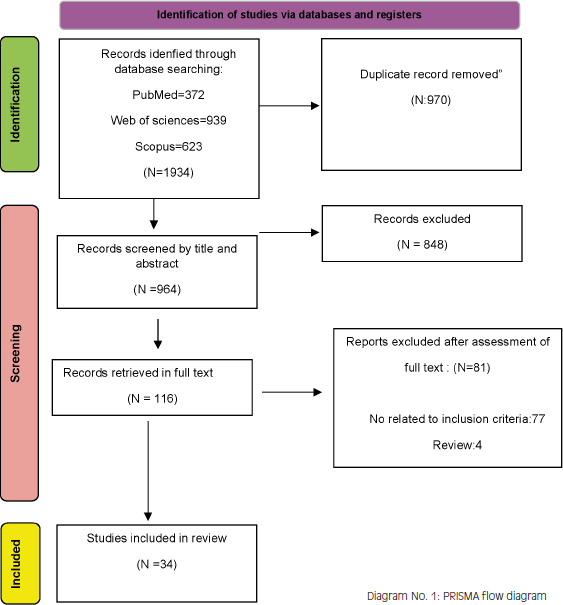
Results: Out of the 1934 studies obtained, 34 studies were finally examined and 805 codes were recorded based on the extracted data. Through synthesizing and analyzing the primary studies, 8 main themes were extracted regarding individuals' needs in the prediabetes stage: Information needs, Cultural needs, psychological needs, Social support needs, Education needs, Financial needs, Service needs and Skill needs.
Discussion and conclusions: The perceived needs and their types in each of the dimensions in detail can be a proper guide for designing educational programs and various interventions to control the prediabetes condition, leading to a reduction in the prevalence of type 2 diabetes in the society.
Keywords: Health Promotion; Iran; Meta-Synthesis; Needs Assessment; Prediabetes; Systematic review.
©2024 Pacini Editore SRL, Pisa, Italy.
Conflict of interest statement
The authors declare no competing interests.
References
-
- Kong AP, Luk AO, Chan JC. Detecting people at high risk of type 2 diabetes- How do we find them and who should be treated? Best Pract Res Clin Endocrinol Metab 2016;30:345-55. https://doi.org/10.1016/j.beem.2016.06.003 10.1016/j.beem.2016.06.003 - DOI - PubMed
-
- Hostalek U. Global epidemiology of prediabetes - present and future perspectives. Clin Diabetes Endocrinol 2019;5:5. https://doi.org/10.1186/s40842-019-0080-0 10.1186/s40842-019-0080-0 - DOI - PMC - PubMed
-
- Katibeh M, Hosseini S, Soleimanizad R, Manaviat MR, Kheiri B, Khabazkhoob M, Daftarian N, Dehghan MH. Prevalence and risk factors of diabetes mellitus in a central district in Islamic Republic of Iran: a population-based study on adults aged 40-80 years. East Mediterr Health J 2015;21:412-9. https://doi.org/10.26719/2015.21.412 10.26719/2015.21.412 - DOI - PubMed
-
- Zand A, Ibrahim K, Patham B. Prediabetes: why should we care? Methodist Debakey Cardiovasc J 2018;14:289-97. https://doi.org/10.14797/mdcj-14-4-289 10.14797/mdcj-14-4-289 - DOI - PMC - PubMed
-
- Ogurtsova K, da Rocha Fernandes JD, Huang Y, Linnenkamp U, Guariguata L, Cho NH, Cavan D, Shaw JE, Makaroff LE. IDF Diabetes Atlas: global estimates for the prevalence of diabetes for 2015 and 2040. Diabetes Res Clin Pract 2017;128:40-50. https://doi.org/10.1016/j.diabres.2017.03.024 10.1016/j.diabres.2017.03.024 - DOI - PubMed
MeSH terms
LinkOut - more resources
Full Text Sources
Medical