


Silver nanoparticles biogenically synthesised using Maclurodendron porteri extract and their bioactivities
- PMID: 38379964
- PMCID: PMC10877187
- DOI: 10.1016/j.heliyon.2024.e25454
Silver nanoparticles biogenically synthesised using Maclurodendron porteri extract and their bioactivities
Abstract
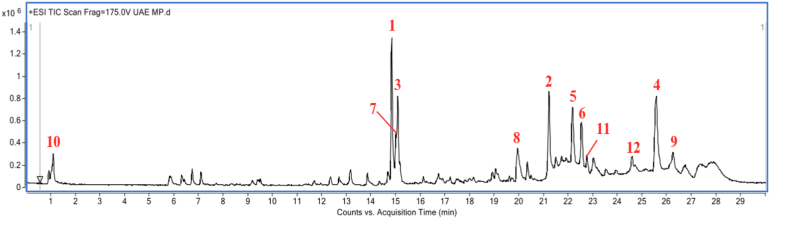
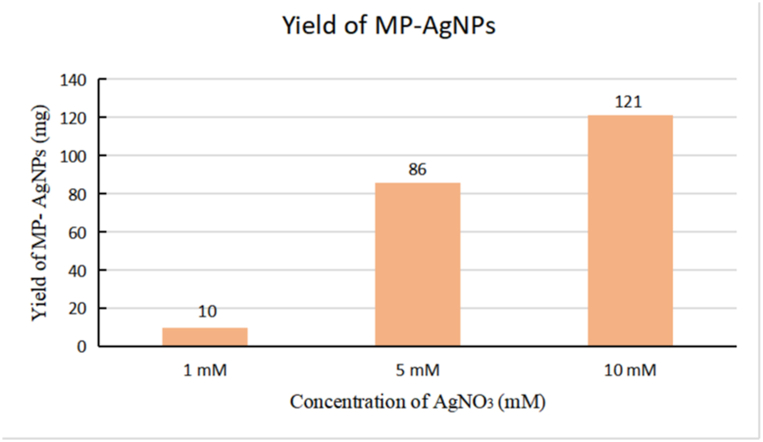
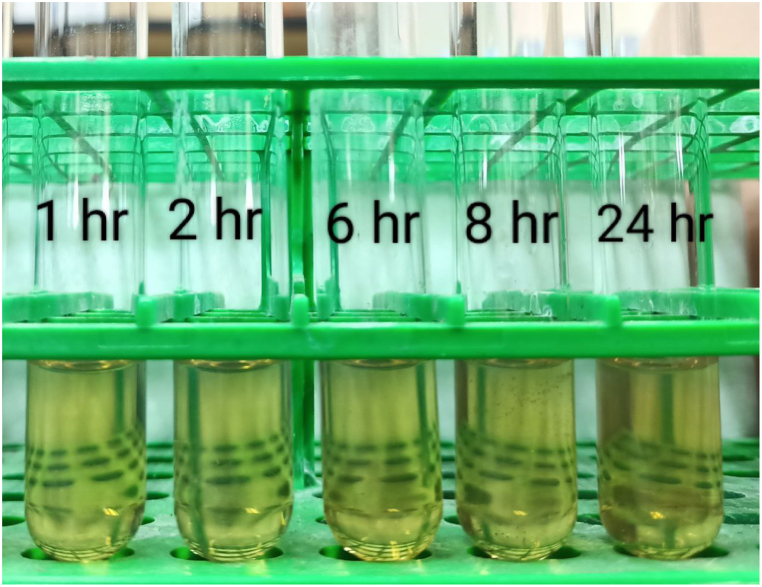
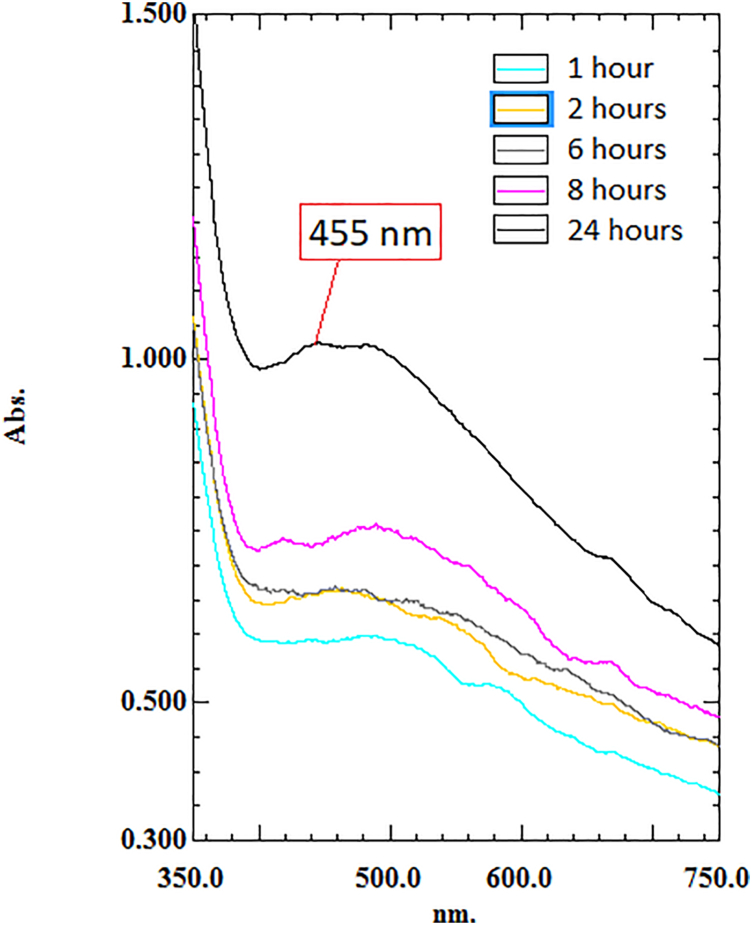
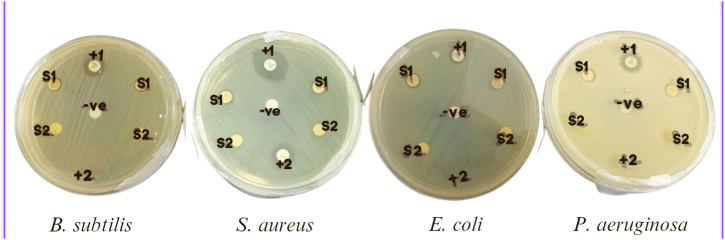
Silver nanoparticle is widely used in various field including medical, cosmetic, food and industrial purposes due to their unique properties in electrical conductivity, thermal, and biological activities. In the medical field, silver nanoparticles (AgNPs) have been reported to have strong antimicrobial and cytotoxic activities. This study aimed to synthesize and characterize silver nanoparticles (AgNPs) using Maclurodendron porteri (MP) extract and to evaluate the antimicrobial and cytotoxic activities of the synthesised MP-AgNPs. Green method of Ultrasound Assisted Extraction (UAE) was used to extract the leaves of M. porter. Liquid Chromatography -Mass Spectrometry/Quadrupole time-of-flight (LC-MS/QTOF) was used to identify the compounds in the leaf extract of M. porteri. Characterisation of the synthesised nanoparticles involved ultraviolet-visible (UV-Vis), Fourier Transform Infrared (FTIR), scanning electromagnetic microscopy (SEM), Zeta potential Analyzer and Particle Size Analyzer. The cytotoxic assay was conducted on MCF-7 and Caco-2 cell lines by MTT assay. Antimicrobial activity was tested on Gram-negative and Gram-positive bacteria using the disc diffusion method. Based on LC-MS/QTOF analysis, 430 compounds were found. The identified major compounds consist of amino acids, polyphenols, steroids, terpenoids and heterocyclic compounds which possibly act as reducing agents. 1 mM, 5 mM and 10 mM of silver nitrate solution were mixed with the leaf extract to form silver nanoparticles. 1.2 mg/ml of MP-AgNPs were found to have antibacterial activity against B. subtilis, S. aureus, E. coli, and P. aeruginosa with inhibitory zones of 8.0 ± 0.36 mm, 8.5 ± 0.45 mm, 7.5 ± 0.36 mm, and 9.0 ± 0.40 mm respectively. MP-AgNPs showed no cytotoxic activity against Caco-2 and MCF-7 cells. In conclusion, the presence of major amine compounds such as 10,11-dihydro-10,11-dihydroxyprotriptyline and harderoporphyrin in the extract facilitated the synthesis of AgNPs and the nanoparticle showed weak bioactivities in the assay conducted.
Keywords: Antibacterial activity; Cytotoxic activity; Green synthesis; Maclurodendron porteri; Silver nanoparticles.
© 2024 The Authors.
Conflict of interest statement
The authors declare the following financial interests/personal relationships which may be considered as potential competing interests: The authors declare no conflict of interest. Muhammad Taher reports administrative support was provided by 10.13039/501100007297International Islamic University Malaysia. If there are other authors, they declare that they have no known competing financial interests or personal relationships that could have appeared to influence the work reported in this paper.
Figures
References
-
- Shankar Pr. Book review: tackling drug-resistant infections globally. Arch Pharma Pract. 2016;7:110. doi: 10.4103/2045-080X.186181. - DOI
-
- Alyami N.M., Alyami H.M., Almeer R. Using green biosynthesized kaempferol-coated sliver nanoparticles to inhibit cancer cells growth: an in vitro study using hepatocellular carcinoma (HepG2) Cancer Nano. 2022;13:26. doi: 10.1186/s12645-022-00132-z. - DOI
-
- Anbumani D., Dhandapani K.V., Manoharan J., Babujanarthanam R., Bashir A.K.H., Muthusamy K., Alfarhan A., Kanimozhi K. Green synthesis and antimicrobial efficacy of titanium dioxide nanoparticles using Luffa acutangula leaf extract. J. King Saud Univ. Sci. 2022;34 doi: 10.1016/j.jksus.2022.101896. - DOI
LinkOut - more resources
Full Text Sources
Molecular Biology Databases
