. 2024 Feb 21;9(1):40.
doi: 10.1038/s41541-024-00830-2.

Immunogenicity phase II study evaluating booster capacity of nonadjuvanted AKS-452 SARS-Cov-2 RBD Fc vaccine

Affiliations

Immunogenicity phase II study evaluating booster capacity of nonadjuvanted AKS-452 SARS-Cov-2 RBD Fc vaccine

David G Alleva et al. NPJ Vaccines. .

Abstract

AKS-452, a subunit vaccine comprising an Fc fusion of the ancestral wild-type (WT) SARS-CoV-2 virus spike protein receptor binding domain (SP/RBD), was evaluated without adjuvant in a single cohort, non-randomized, open-labelled phase II study (NCT05124483) at a single site in The Netherlands for safety and immunogenicity. A single 90 µg subcutaneous booster dose of AKS-452 was administered to 71 adults previously primed with a registered mRNA- or adenovirus-based vaccine and evaluated for 273 days. All AEs were mild and no SAEs were attributable to AKS-452. While all subjects showed pre-existing SP/RBD binding and ACE2-inhibitory IgG titers, 60-68% responded to AKS-452 via ≥2-fold increase from days 28 to 90 and progressively decreased back to baseline by day 180 (days 28 and 90 mean fold-increases, 14.7 ± 6.3 and 8.0 ± 2.2). Similar response kinetics against RBD mutant proteins (including omicrons) were observed but with slightly reduced titers relative to WT. There was an expected strong inverse correlation between day-0 titers and the fold-increase in titers at day 28. AKS-452 enhanced neutralization potency against live virus, consistent with IgG titers. Nucleocapsid protein (Np) titers suggested infection occurred in 66% (46 of 70) of subjects, in which only 20 reported mild symptomatic COVID-19. These favorable safety and immunogenicity profiles support booster evaluation in a planned phase III universal booster study of this room-temperature stable vaccine that can be rapidly and inexpensively manufactured to serve vaccination at a global scale without the need of a complex distribution or cold chain.


Conflict of interest statement

The following authors declare the following financial interests/personal relationships which may be considered as potential competing interests: the following authors were employed by and received monetary compensation from Akston Biosciences, Inc.: DGA, ARD, MMS, SM, RR, EKG, TS, SK, JRH, NJS, VR, SN, TML, TZ. No other authors were personally compensated by Akston Biosciences.

Figures

Fig. 1
Fig. 1. ACT-BOOSTER clinical study design.
71 healthy subjects 18–64 years of age were enrolled in this ACT-Booster study who had completed dosing regimens of a regulatory-approved/-authorized vaccination at least 3 months prior to enrollment (median days, 300 days; range, 113–399 days). Each subject received a single s.c. booster dose of 90 µg of non-adjuvanted AKS-452 and assessed for immunogenicity and safety on days 28, 56, 90, 180, and 273. One subject was lost to follow-up prior to the day-56 visit and therefore was excluded from immunogenicity analyses.
Fig. 2
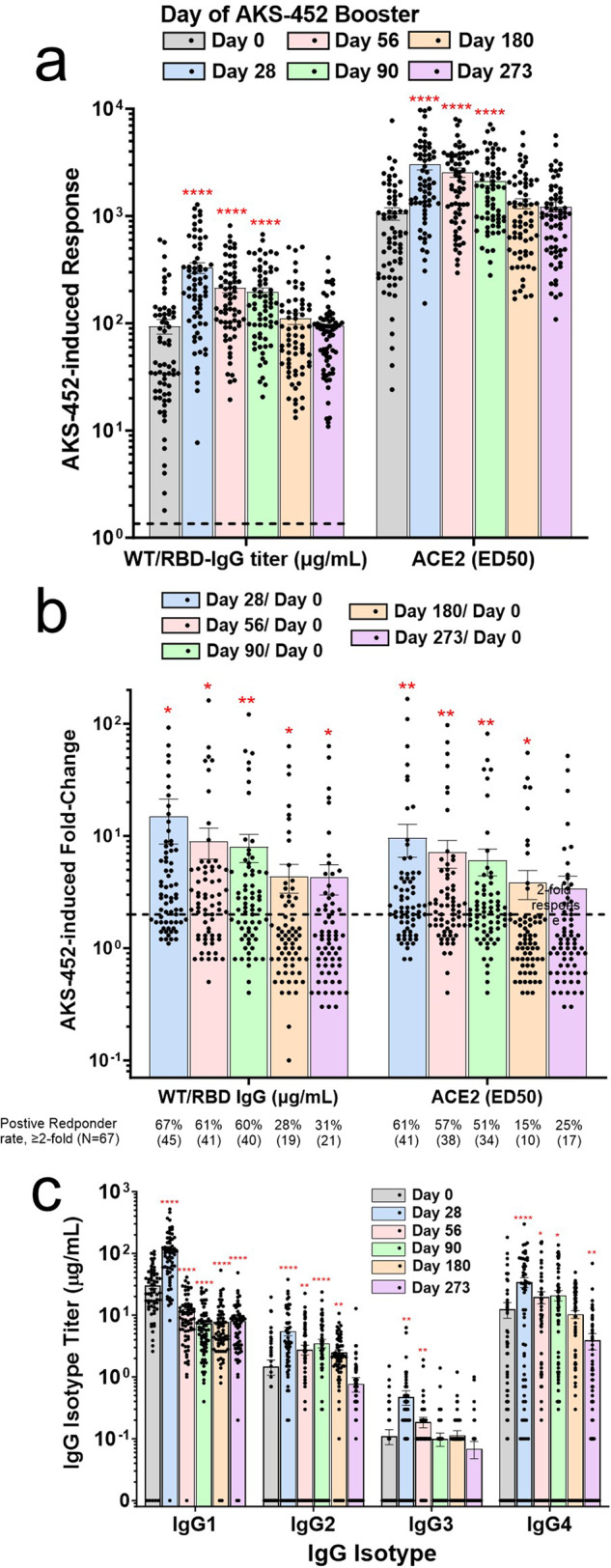
Fig. 2. AKS-452 immunogenicity: WT-SP/RBD IgG titers.
Serum samples were obtained from 67 subjects on days 0, 28, 56, 90, 180, and 273 after receiving a 90 µg s.c. dose of AKS-452 administered ≥3 months after completion of regulatory–approved vaccinations with Comirnaty (N = 52), Spikevax (N = 1), Ad26.COV2.S (N = 10), or Vaxzevria (N = 4) and assessed for anti-WT-SP/RBD IgG binding titers (via ELISA) and inhibitory potency (ED50) (via ACE2-RBD ELISA) (a) and presented as fold-change per subject (b). Seroconversion was defined as >1.44 µg/mL IgG (dotted line in panel a; Note that all subjects had titers above the cut-off on day 0 prior to receiving the AKS-452 booster dose). A positive responder was defined as having at least a 2-fold increase in titer from day 0 (b). Anti-WT-SP/RBD IgG isotype titers were assessed via ELISAs (c). Statistical comparisons between mean values of each post-dose day to those prior to dosing (day 0) were performed using the t Test equal variance, one-tailed; *, p < 0.05; **, p < 0.01; ***; p < 0.001, ****; p < 0.0001. The mean ± stand error of the mean (s.e.m) are shown in each panel.
Fig. 3
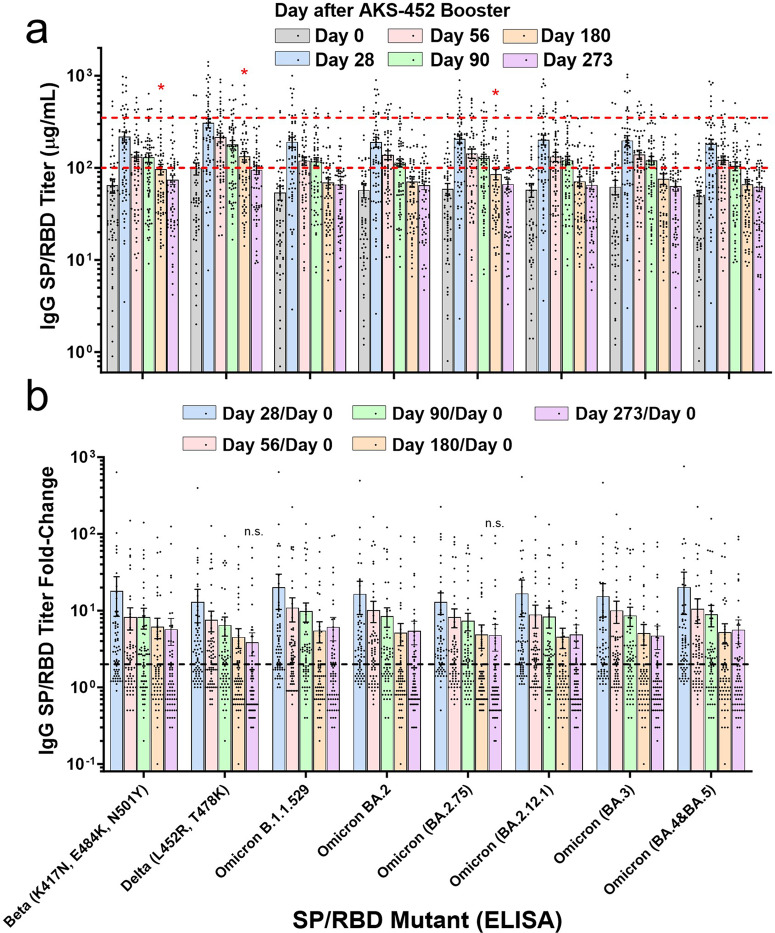
Fig. 3. AKS-452 immunogenicity: mutant SP/RBD IgG titers.
Serum samples were obtained from 67 subjects on days 0, 28, 56, 90, 180, and 273 after receiving a 90 µg s.c. dose of AKS-452 ≥ 3 months after completing regimens of regulatory–approved vaccines and assessed for IgG binding titers against different mutant SP/RBD antigens via ELISA (a, dotted red lines are references of day 0 and day 28 WT means) and presented as fold-change per subject (b; dotted black line denotes a 2-fold change). a All day-28, -56, and -90 mean values (p < 0.0001) and some day-180 values (*, p < 0.05) were significantly different from respective day-0 mean values (t Test equal variance, one-tailed). b All geometric mean values of the fold-change response on day 28, 56, 90, 180, and 273 were significantly greater than 2.0 (p < 0.05), except those designated not significant (n.s.). The mean ± s.e.m. are shown in each panel.
Fig. 4
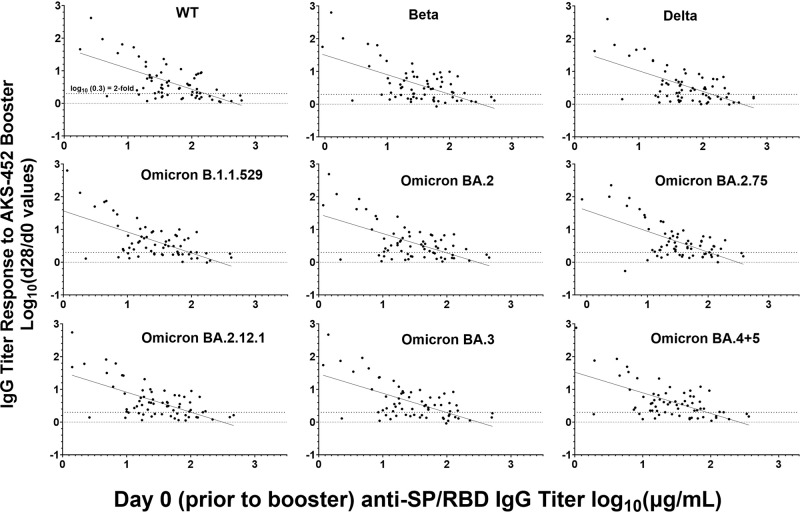
Fig. 4. Negative correlation between WT and mutant SP/RBD IgG titers at day 0 vs. the fold-change in titer at day 28.
Serum samples were obtained from 67 subjects on days 0 and 28 after receiving the AKS-452 booster dose (90 µg, s.c.) and assessed for IgG binding titers against different mutant SP/RBD antigens via ELISA (x axis) vs. the fold-change in titer per subject at day 28 (y axis). The dotted lines delineate no response (i.e., y = 0) and a 2-fold response (y = 0.3), respectively. For each variant, a bivariate normal distribution fit to X and Y variables was conducted with Log10(day-0 titers) vs. Log10(day-28/day-0 Ratios), respectively. Correlations within each variant data set were significantly different from 0 (p < 0.0001) with a range of correlation coefficients of −0.599 to −0.647.
Fig. 5
Fig. 5. AKS-452-induced immune serum neutralization of live WT, Delta, and Omicron BA.1 virus PRNT.
Serum samples were obtained from 67 subjects on days 0, 28, 56, 90, 180, and 273 after receiving a 90 µg s.c. dose of AKS-452 ≥ 3 months after completing regimens of regulatory–approved vaccines. Serial dilutions of sera were assessed for % neutralization of the WT, Delta, and Omicron BA.1 live virus strains to infect live VERO E6 cells via the PRNT. The effective dilution 50% (ED50) (a) and 99% (ED99) (c) values were determined for each sample using non-linear regression log(agonist) vs. response analysis (i.e., represented as 1/dilution) and the group mean ± s.e.m. are presented. *, p < 0.05; **, p < 0.01; ***, p < 0.001; ****, P < 0.0001; geometric mean values were significantly different from the respective day-0 values (t test, equal variance, one-tailed). The fold-change of ED50 values on days 28, 56, 90, and 180 relative to the respective day-0 values for each sample were determined in which a positive responder sample was defined as ≥2-fold increase (dotted line) and presented as the number (and % of total) positive (b; significantly greater than 2-fold; *, p < 0.05; **, p < 0.01; ***; p < 0.001, ****; p < 0.0001.). In addition to the regression-generated ED99 value, a sample was scored in a binary manner for whether it achieved 100% viral neutralization at ≥1:40 dilution (c).
Fig. 6
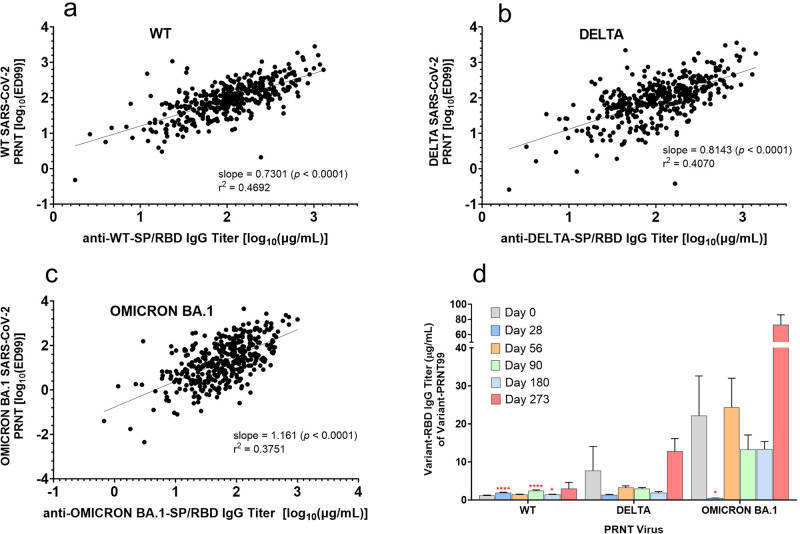
Fig. 6. Relationship between anti-SP/RBD IgG titer (ELISA) and PRNT neutralization potency (ED99) among WT, Delta, and Omicron BA.1 variants.
Serum samples were obtained from 67 subjects on days 0, 28, 56, 90, 180, and 273 after receiving a 90 µg s.c. dose of AKS-452 ≥ 3 months after completing regimens of regulatory–approved vaccines. Anti-SP/RBD titers and the ED99 values were determined for WT (a), Delta (b), and Omicron BA.1 (c) variants and linear regression analyses were performed on log10 values. For each variant, a bivariate normal distribution fit to x and y variables was conducted with log10(IgG titer) vs. log10(ED99), respectively, in which correlations within each variant data set were significantly different from 0 (p values of slope) with correlation coefficients for WT, Delta, and Omicron of 0.730, 0.644, and 0.610, respectively. d The concentration of anti-SP/RBD IgG (ELISA) at which 99% neutralization occurred (PRNT ED99) was determined as the “specific potency of neutralization” ([IgG µg/mL]/ED99; note that decreasing values correlate with increasing potency). *, p < 0.05; ****, p < 0.0001; geometric mean values (± s.e.m.) were significantly different from the respective day-0 values (t test, equal variance, one-tailed).
Fig. 7
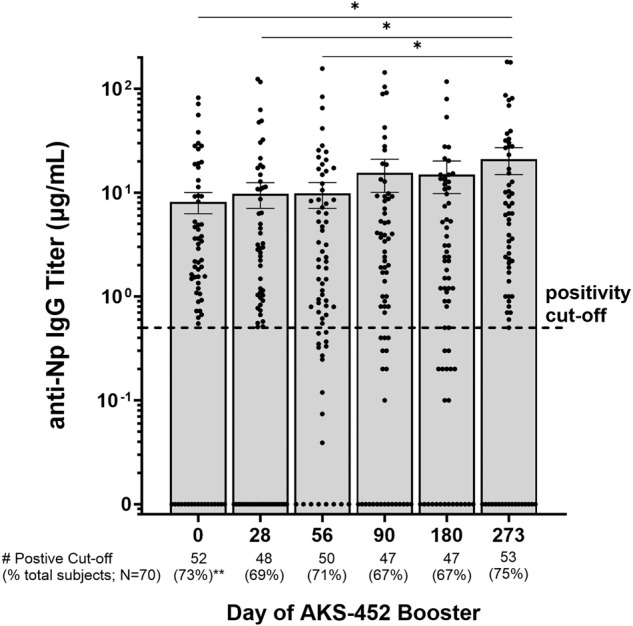
Fig. 7. Nucleocapsid Protein (Np) IgG titers.
Serum samples were obtained from 70 subjects on days 0, 28, 56, 90, 180, and 273 after receiving a 90 µg s.c. dose of AKS-452 administered ≥3 months after completion of regulatory–approved vaccinations and assessed for anti-Np IgG binding titers via ELISA of which a positive cut-off was 0.5 µg/mL, dotted line (geometric mean ± s.e.m.). *, p < 0.05; geometric mean values were significantly different from the respective day-0 values (t test, equal variance, one-tailed). ** N = 71 subjects (includes 1 dropout subject).

References

    1. Zheng C, et al. Real-world effectiveness of COVID-19 vaccines: A literature review and meta-analysis. Int. J. Infect. Dis. 2022;114:252–260. doi: 10.1016/j.ijid.2021.11.009. - DOI - PMC - PubMed
    1. Shao W, et al. Effectiveness of COVID-19 vaccines against SARS-CoV-2 variants of concern in real-world: a literature review and meta-analysis. Emerg Microbes Infect. 2022;11:2383–2392. doi: 10.1080/22221751.2022.2122582. - DOI - PMC - PubMed
    1. Barateau V, et al. Prior SARS-CoV-2 infection enhances and reshapes spike protein-specific memory induced by vaccination. Sci. Transl. Med. 2023;15:eade0550. doi: 10.1126/scitranslmed.ade0550. - DOI - PubMed
    1. Burnett DL, Bull RA. Total recall? Understanding the effect of antigenic distance on original antigenic sin. Immunol Cell Biol. 2023 doi: 10.1111/imcb.12638. - DOI - PubMed
    1. Chemaitelly H, et al. Long-term COVID-19 booster effectiveness by infection history and clinical vulnerability and immune imprinting: a retrospective population-based cohort study. Lancet Infect Dis. 2023 doi: 10.1016/S1473-3099(23)00058-0. - DOI - PMC - PubMed