


High diversity, close genetic relatedness, and favorable living conditions benefit species co-occurrence of gut microbiota in Brandt's vole
- PMID: 38384265
- PMCID: PMC10879610
- DOI: 10.3389/fmicb.2024.1337402
High diversity, close genetic relatedness, and favorable living conditions benefit species co-occurrence of gut microbiota in Brandt's vole
Abstract
Introduction: Revealing factors and mechanisms in determining species co-existence are crucial to community ecology, but studies using gut microbiota data are still lacking.
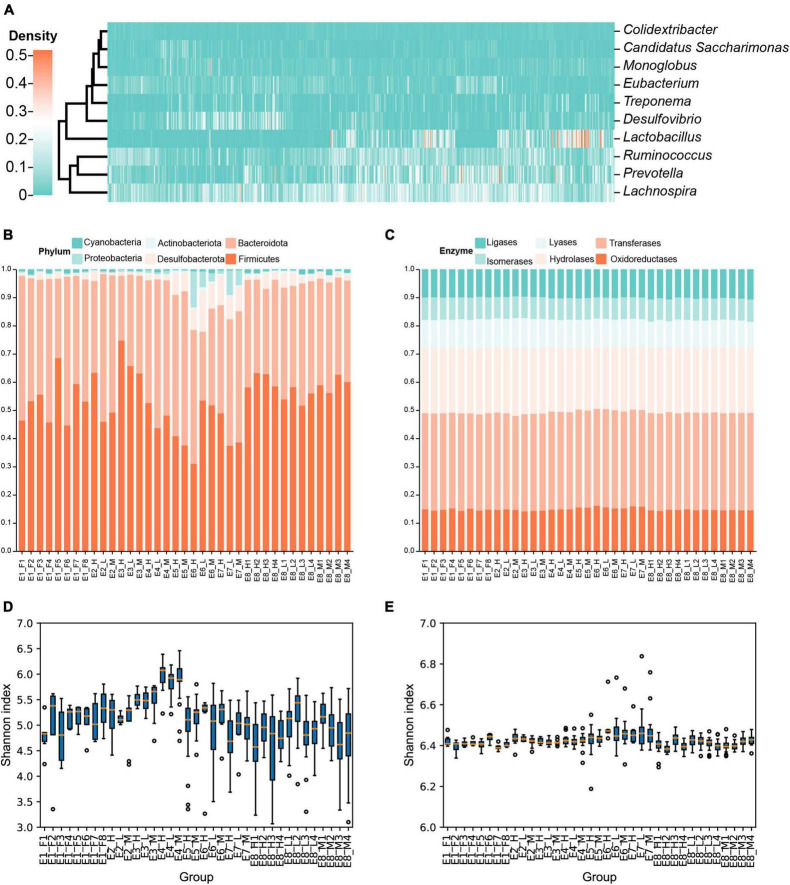
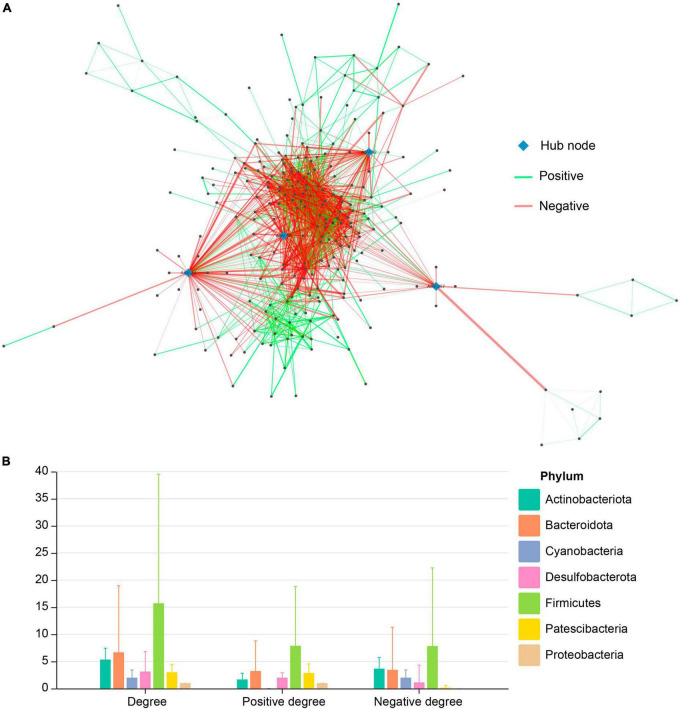
Methods: Using gut microbiota data of 556 Brandt's voles from 37 treatments in eight experiments, we examined the relationship of species co-occurrence of gut microbiota in Brandt's voles (Lasiopodomys brandtii) with genetic distance (or genetic relatedness), community diversity, and several environmental variables.
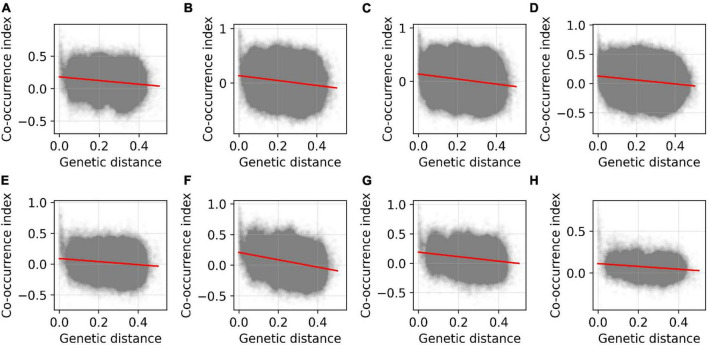
Results: We found that the species co-occurrence index (a larger index indicates a higher co-occurrence probability) of gut microbiota in Brandt's voles was negatively associated with the genetic distance between paired ASVs and the number of cohabitating voles in the experimental space (a larger number represents more crowding social stress), but positively with Shannon diversity index, grass diets (representing natural foods), and non-physical contact within an experimental space (representing less stress).
Discussion: Our study demonstrated that high diversity, close genetic relatedness, and favorable living conditions would benefit species co-occurrence of gut microbiota in hosts. Our results provide novel insights into factors and mechanisms that shape the community structure and function of gut microbiota and highlight the significance of preserving the biodiversity of gut microbiota.
Keywords: biodiversity; density dependency; phylogenetic relatedness; social stress; species co-occurrence.
Copyright © 2024 Cheng, Li, Yang, Zhao, Liu, Zheng and Zhang.
Conflict of interest statement
The authors declare that the research was conducted in the absence of any commercial or financial relationships that could be construed as a potential conflict of interest.
Figures
References
-
- Batsuren E., Zhang X., Song M., Wan X., Li G., Liu J., et al. (2022). Density-dependent changes of mating system and family structure in Brandt’s voles (Lasiopodomys brandtii). Ecol. Evol. 12:e9199. 10.1002/ece3.9199 - DOI
LinkOut - more resources
Full Text Sources
