


SOX9 switch links regeneration to fibrosis at the single-cell level in mammalian kidneys
- PMID: 38386758
- PMCID: PMC11345873
- DOI: 10.1126/science.add6371
SOX9 switch links regeneration to fibrosis at the single-cell level in mammalian kidneys
Abstract
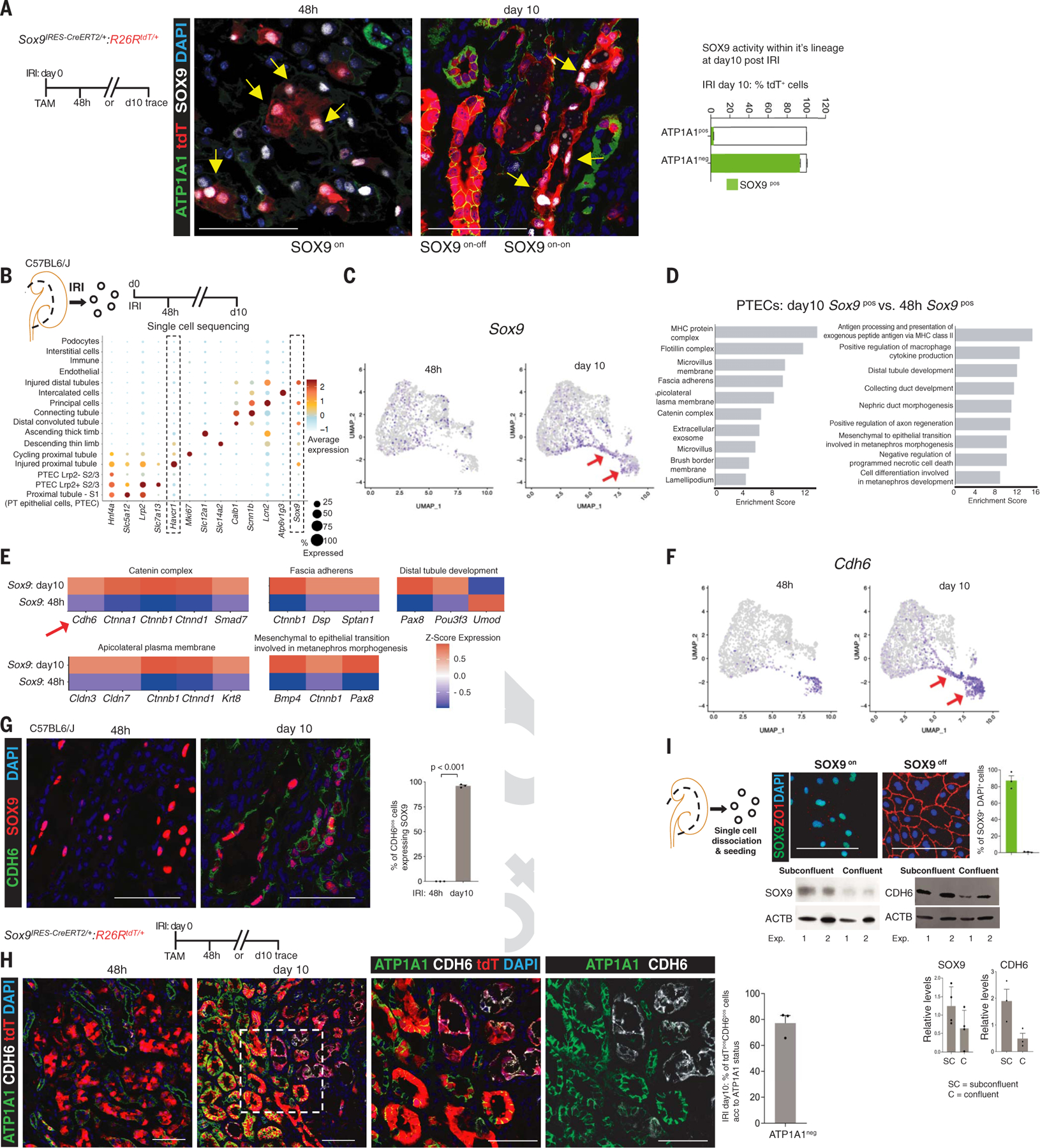
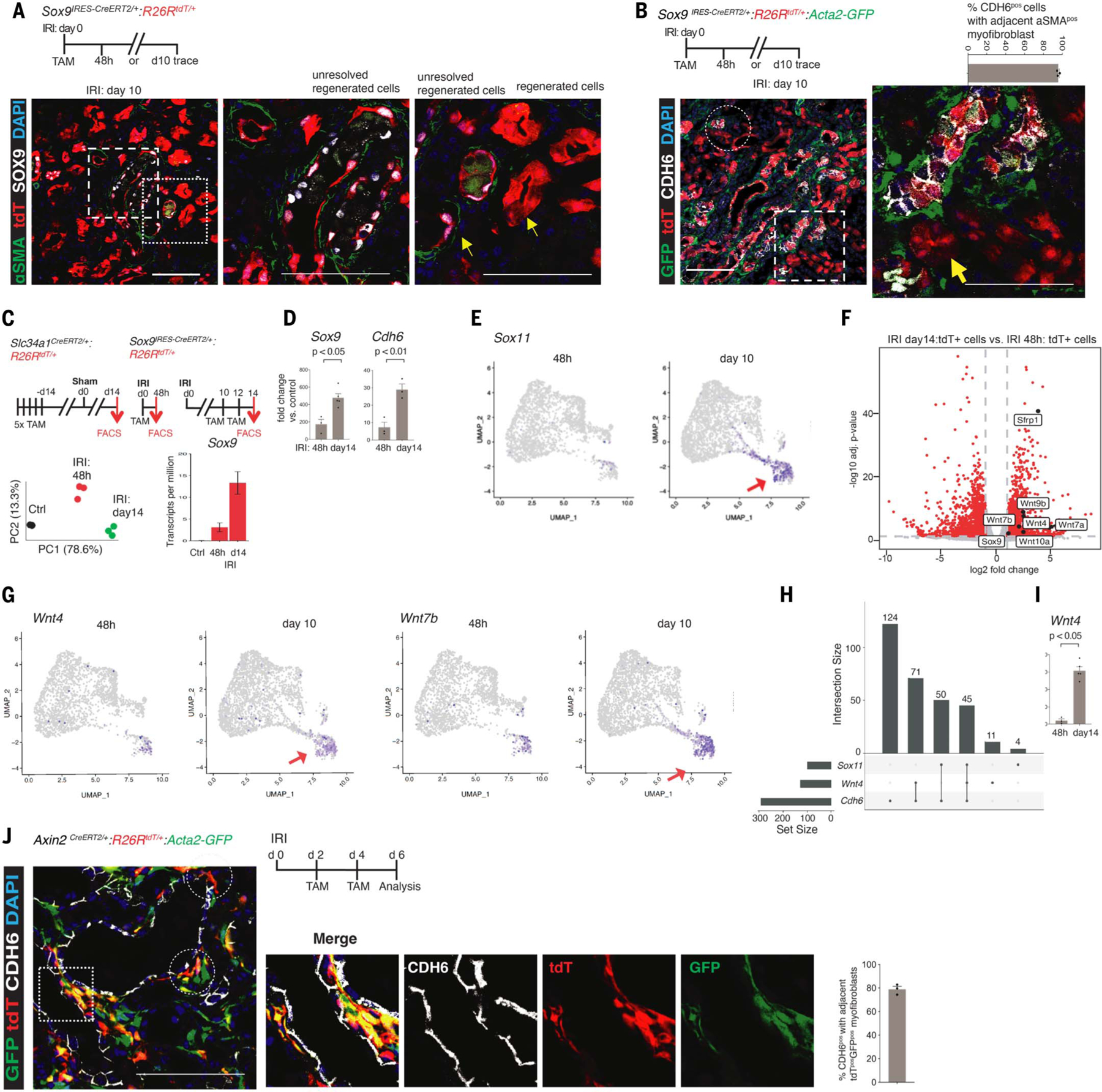
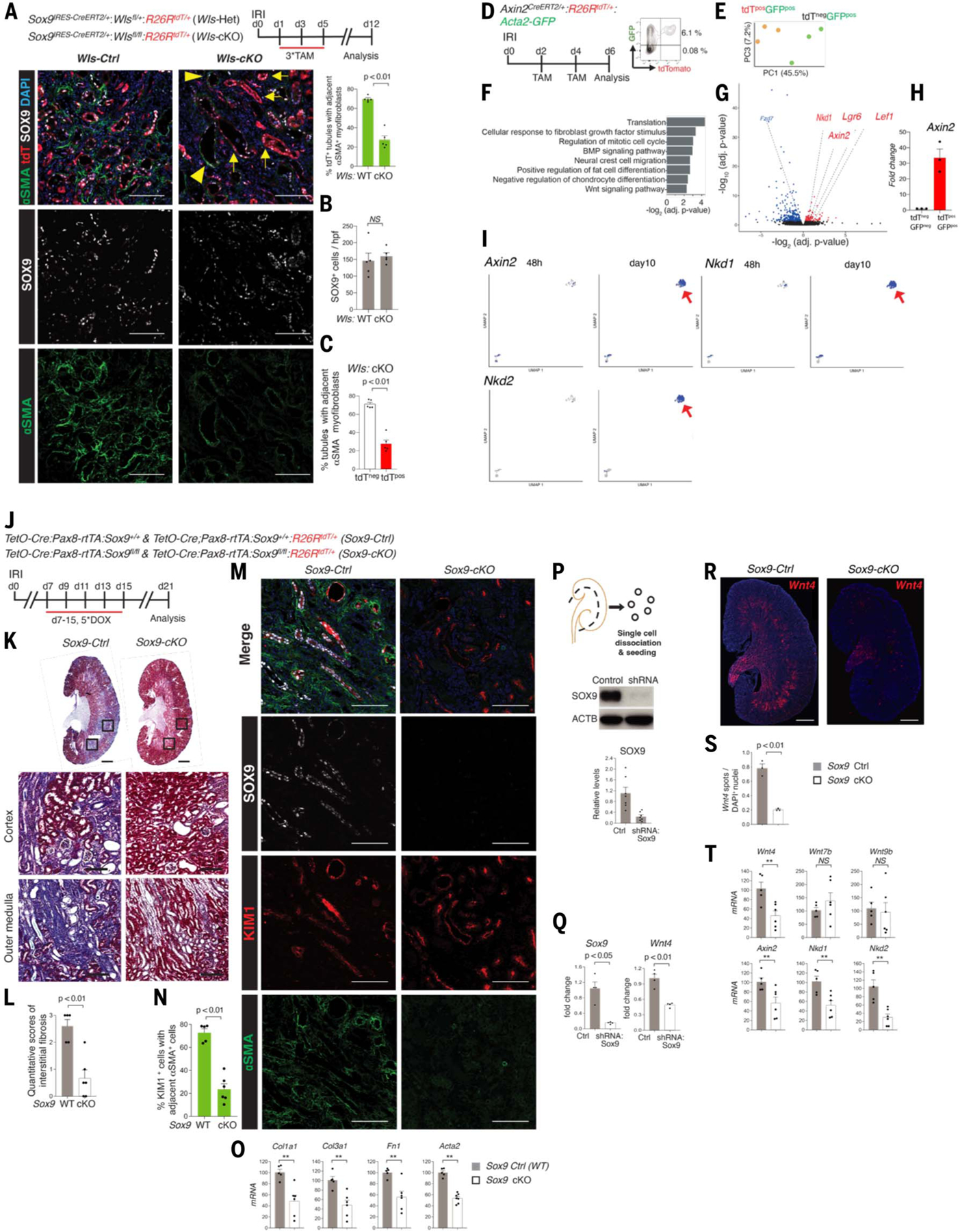
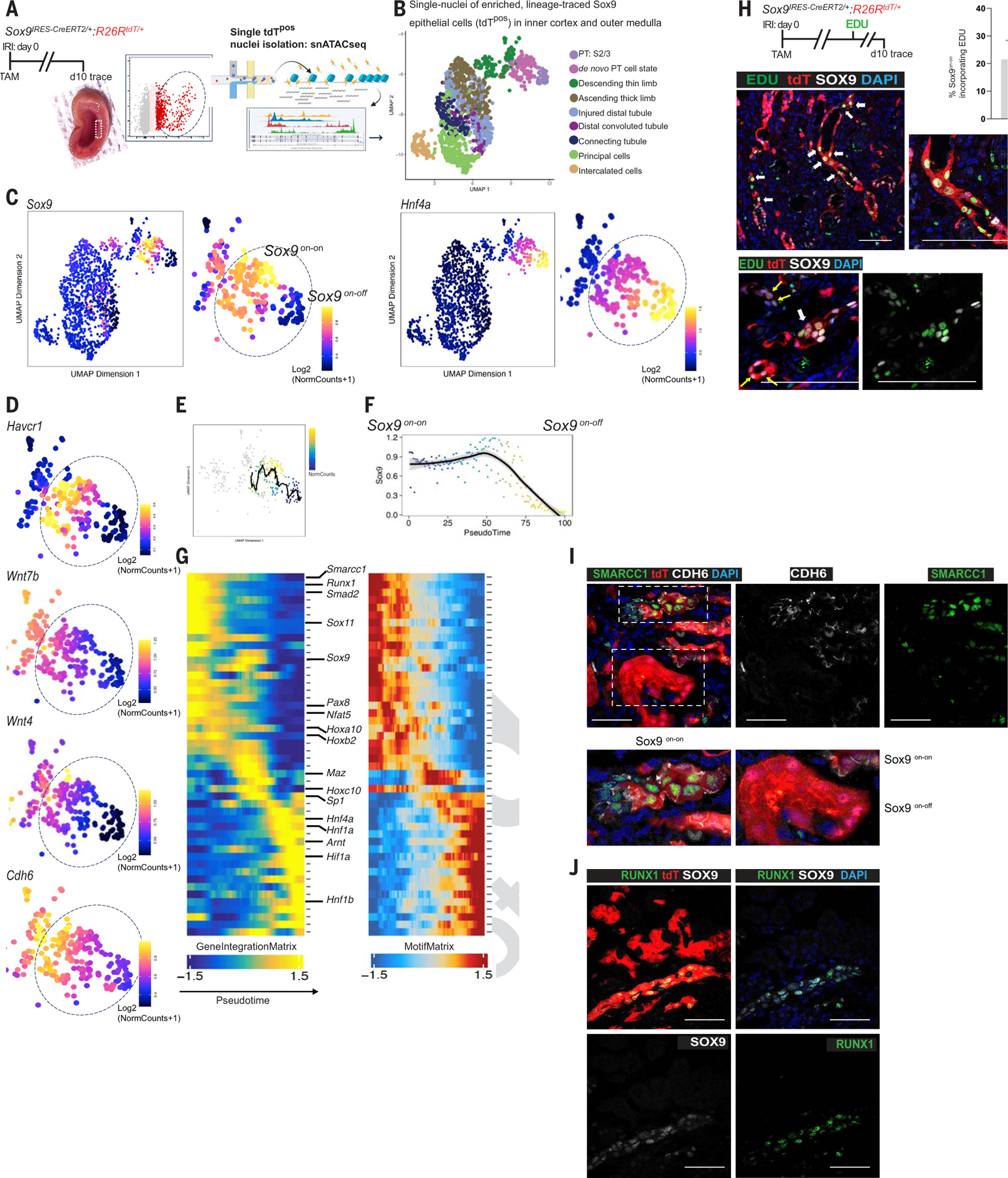
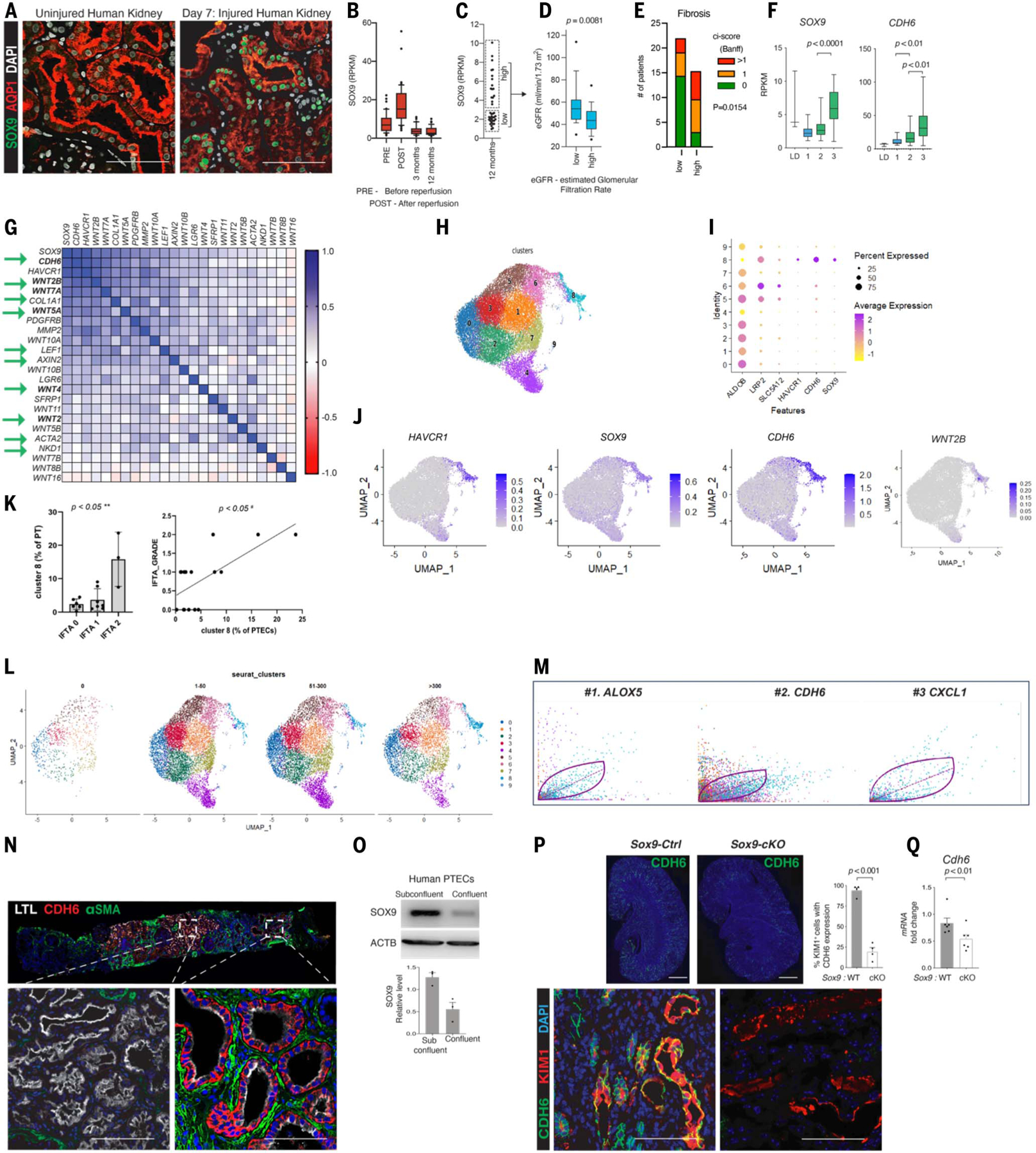
The steps governing healing with or without fibrosis within the same microenvironment are unclear. After acute kidney injury (AKI), injured proximal tubular epithelial cells activate SOX9 for self-restoration. Using a multimodal approach for a head-to-head comparison of injury-induced SOX9 lineages, we identified a dynamic SOX9 switch in repairing epithelia. Lineages that regenerated epithelia silenced SOX9 and healed without fibrosis (SOX9on-off). By contrast, lineages with unrestored apicobasal polarity maintained SOX9 activity in sustained efforts to regenerate, which were identified as a SOX9on-on Cadherin6pos cell state. These reprogrammed cells generated substantial single-cell WNT activity to provoke a fibroproliferative response in adjacent fibroblasts, driving AKI to chronic kidney disease. Transplanted human kidneys displayed similar SOX9/CDH6/WNT2B responses. Thus, we have uncovered a sensor of epithelial repair status, the activity of which determines regeneration with or without fibrosis.
Figures
Comment in
-
Switching off SOX9 for epithelial recovery after AKI.Nat Rev Nephrol. 2024 May;20(5):271. doi: 10.1038/s41581-024-00830-4. Nat Rev Nephrol. 2024. PMID: 38532003 No abstract available.
References
Publication types
MeSH terms
Substances
Grants and funding
LinkOut - more resources
Full Text Sources
Other Literature Sources
Medical
Molecular Biology Databases
Research Materials
