


Current concepts in postpartum anemia management
- PMID: 38390913
- PMCID: PMC11062600
- DOI: 10.1097/ACO.0000000000001338
Current concepts in postpartum anemia management
Abstract
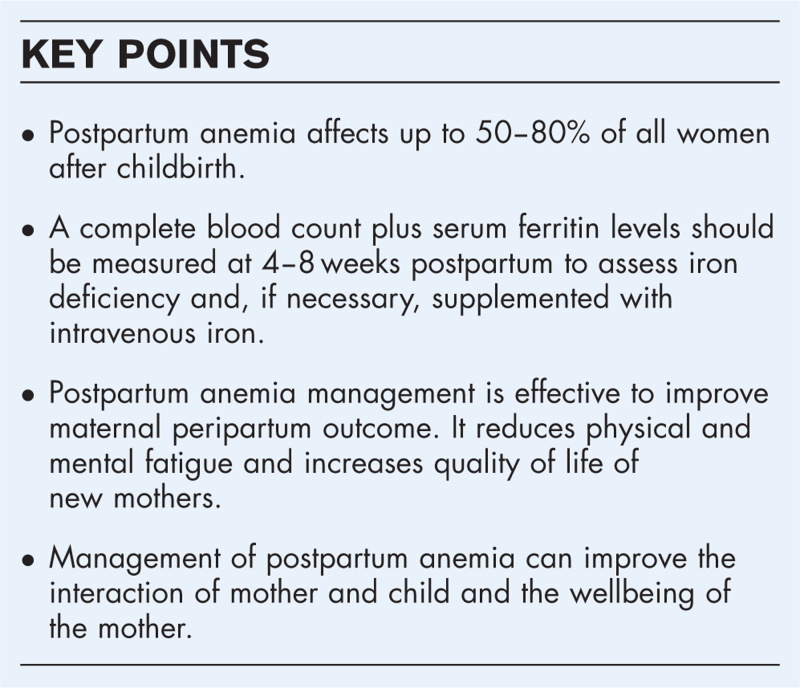
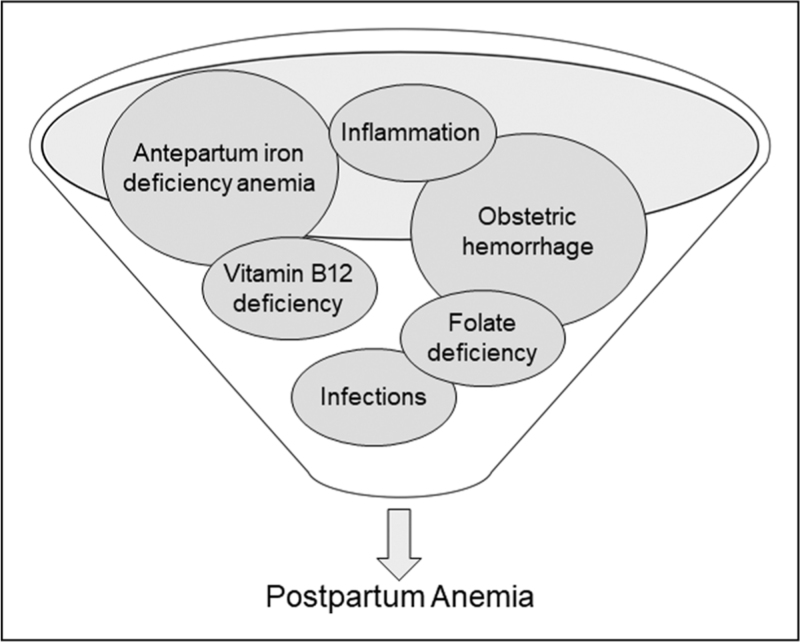
Purpose of review: Postpartum anemia (PPA) is common in women after childbirth and affects about 50-80% of all women worldwide. Iron deficiency (ID) is the main cause for anemia and constitutes a potentially preventable condition with great impact on the mother's physical and mental condition after delivery. In most cases, PPA is associated with antenatal ID and peripartum blood losses. Numerous published studies confirmed the positive effect of PPA diagnosis and treatment.
Recent findings: Iron deficiency as well as iron deficiency anemia (IDA) are common in the postpartum period and represent significant health problems in women of reproductive age.
Summary: Important movements towards early detection and therapy of postpartum anemia have been observed. However, postpartum anemia management is not implemented on a large scale as many healthcare professionals are not aware of the most recent findings in the field. Diagnosis and therapy of PPA, particularly iron supplementation in ID and IDA, has proven to be highly effective with a tremendous effect on women's wellbeing and outcome.
Copyright © 2024 The Author(s). Published by Wolters Kluwer Health, Inc.
Conflict of interest statement
Figures
References
-
- Moya E, Phiri N, Choko AT, et al. Effect of postpartum anaemia on maternal health-related quality of life: a systematic review and meta-analysis. BMC Public Health 2022; 22:364. - PMC - PubMed
-
This systematic review and meta-analysis includes 27 studies. Seven observational studies showed that iron deficient or anemic women were 1.66 times more likely to experience symptoms of depression than nonanemic or iron-replete women.
-
- Corwin EJ, Murray-Kolb LE, Beard JL. Low hemoglobin level is a risk factor for postpartum depression. J Nutr 2003; 133:4139–4142. - PubMed
-
- Lee KA, Zaffke ME. Longitudinal changes in fatigue and energy during pregnancy and the postpartum period. J Obstet Gynecol Neonatal Nurs 1999; 28:183–191. - PubMed
-
- McLean E, Cogswell M, Egli I, et al. Worldwide prevalence of anaemia, WHO Vitamin and Mineral Nutrition Information System, 1993–2005. Public Health Nutr 2009; 12:444–454. - PubMed
-
- World Health Organization (WHO). Haemoglobin concentrations for the diagnosis of anaemia and assessment of severity. 2023; Available at: https://apps.who.int/iris/bitstream/handle/10665/85839/WHO_NMH_NHD_MNM_1....
Publication types
MeSH terms
Substances
LinkOut - more resources
Full Text Sources
