


Bright Light Therapy for Major Depressive Disorder in Adolescent Outpatients: A Preliminary Study
- PMID: 38390946
- PMCID: PMC10885037
- DOI: 10.3390/clockssleep6010005
Bright Light Therapy for Major Depressive Disorder in Adolescent Outpatients: A Preliminary Study
Abstract
Background: Bright light therapy (BLT) has not been well-studied in adolescents with major depressive disorder, particularly in outpatient settings.
Methods: We conducted an 8-week clinical trial of BLT in adolescents recruited from a primary care practice with moderate to severe major depression. Acceptability and feasibility were defined by daily use of the light box and integration into daily routines. To assess treatment effects, we utilized the Short Mood and Feelings Questionnaire (SMFQ) and actigraphic sleep variables.
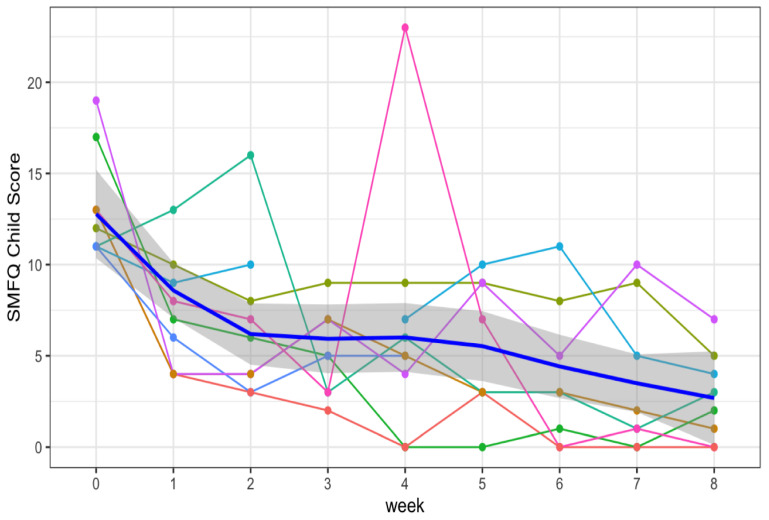
Results: Of the nine enrolled adolescents, the rate of daily use of the light therapy box was 100% at week 2, 78% at week 4 (n = 7), and 67% at weeks 6 and 8 (n = 6). Participants were better able to integrate midday BLT compared to morning BLT into their day-to-day routines. Mean depression scores improved during the 2-week placebo lead-in (dim red light-DRL) and continued to show significant improvement through 6 weeks of BLT. Sleep efficiency increased significantly (p = 0.046), and sleep onset latency showed a trend toward a significant decrease (p = 0.075) in the BLT phase compared to the DRL phase.
Conclusion: Bright light treatment that was self-administered at home was feasible, acceptable, and effective for adolescent outpatients with depression. Findings support the development of larger, well-powered, controlled clinical trials of BLT in coordination with primary care.
Keywords: adolescent; bright light therapy; depression; placebo comparator; primary care; sleep.
Conflict of interest statement
The authors declare no conflicts of interest.
Figures
References
-
- Zhou X., Teng T., Zhang Y., Del Giovane C., A Furukawa T., Weisz J.R., Li X., Cuijpers P., Coghill D., Xiang Y., et al. Comparative efficacy and acceptability of antidepressants, psychotherapies, and their combination for acute treatment of children and adolescents with depressive disorder: A systematic review and network meta-analysis. Lancet Psychiatry. 2020;7:581–601. doi: 10.1016/S2215-0366(20)30137-1. - DOI - PMC - PubMed
Grants and funding
LinkOut - more resources
Full Text Sources
