


West Nile Virus Infection in Occupational Settings-A Systematic Review
- PMID: 38392895
- PMCID: PMC10892351
- DOI: 10.3390/pathogens13020157
West Nile Virus Infection in Occupational Settings-A Systematic Review
Abstract
Background: West Nile virus (WNV) is an emerging mosquito-borne neurotropic virus, belonging to the Flaviviridae family and the Orthoflavivirus genus. The effective control of WNV requires a targeted preventive strategy that also needs the identification of the higher-risk populations. Hence, this study focused on a systematic literature review of WNV-acquired infection in work-related settings and the assessment of the exposure risks among different occupational categories.
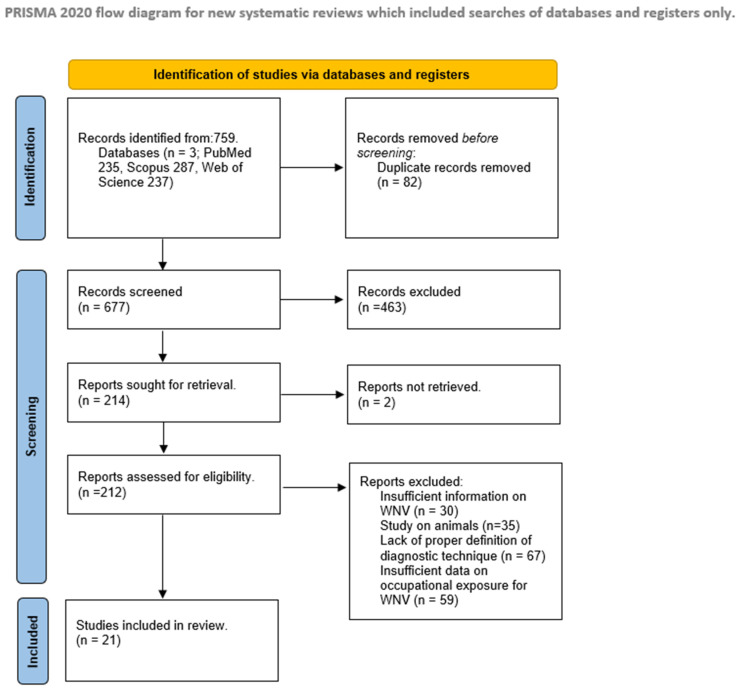
Methods: A comprehensive search was conducted to identify studies until September 2023 in multiple databases such as PubMed/MEDLINE, SCOPUS and Web of Science, according to the PRISMA 2020 statement. Risk of bias of collected papers was assessed by the ROB tool of the National Toxicology Program's Office of Health Assessment and Translation handbook.
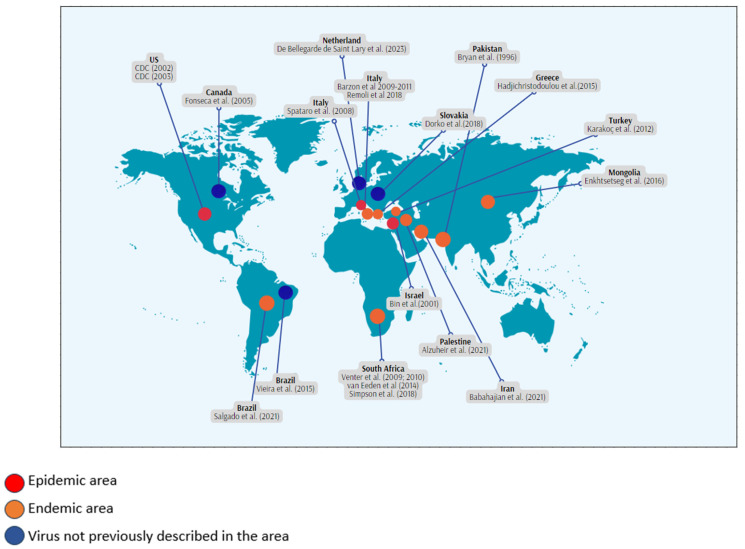
Results: A total of 21 studies were included in the systematic review, out of which seventeen were observational studies and four were case reports. Workers identified as at higher risk for WNV infection were military workers, veterinarians, agricultural workers, farmers, and laboratory workers with contact with infected fluids or aerosols.
Conclusions: The identification of higher-risk workers could facilitate active surveillance by occupational physicians, which could improve our understanding of the epidemiology of WNV and, in addition, could help tailor appropriate preventive recommendations, reducing the overall burden of disease in high-risk areas.
Keywords: West Nile virus; mosquito-borne disease; occupational exposure; risk; workers.
Conflict of interest statement
The authors declare no conflict of interest.
Figures
References
-
- ECDC. [(accessed on 18 December 2023)]. Available online: https://www.ecdc.europa.eu/en/west-nile-fever/surveillance-and-disease-d....
Publication types
MeSH terms
LinkOut - more resources
Full Text Sources
Medical
