


Systematic Review of Diagnostic Approaches for Human Giardiasis: Unveiling Optimal Strategies
- PMID: 38396402
- PMCID: PMC10887752
- DOI: 10.3390/diagnostics14040364
Systematic Review of Diagnostic Approaches for Human Giardiasis: Unveiling Optimal Strategies
Abstract
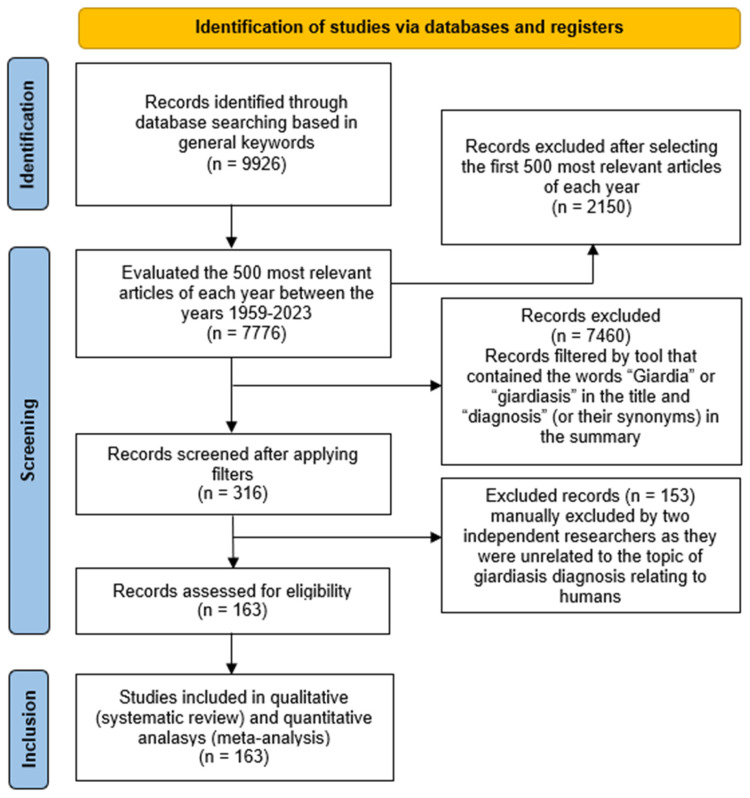
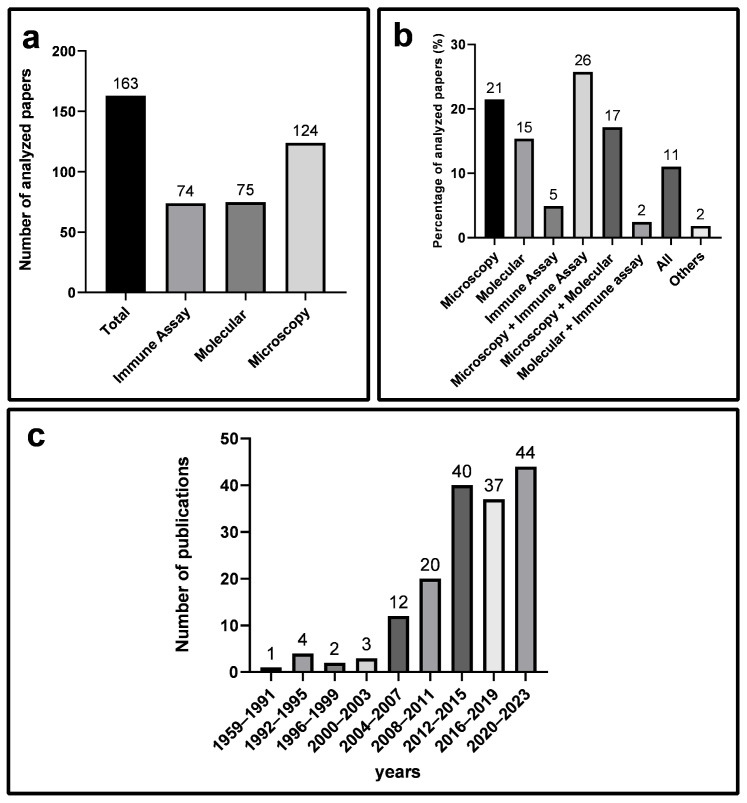
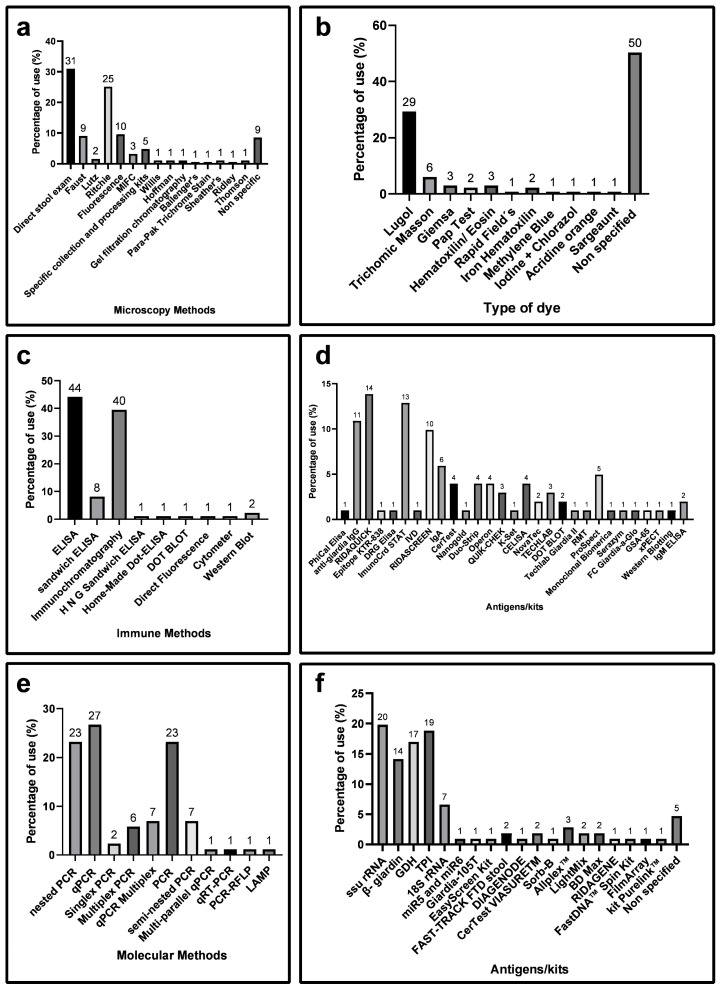
Giardiasis, caused by the protozoan Giardia intestinalis, affects around 400 million people worldwide, emphasizing the critical need for accurate diagnosis to enhance human health, especially in children. Prolonged giardiasis in childhood can lead to intellectual deficits and other complications. A variety of diagnostic tools, including microscopic, immunological, and molecular methods, are available for detecting G. intestinalis infection. Choosing the most suitable method can be challenging due to the abundance of options. This systematic review assesses the reliability and applicability of these diagnostic modalities. Utilizing the Dimensions and Wordart platforms for data analysis, we focus on relevant literature addressing diagnostic methods for human giardiasis. Microscopic techniques, particularly Ritchie's method, emerge as the primary choice, followed by enzyme-linked immunosorbent assay (ELISA) and polymerase chain reaction (PCR). PCR's limited use is attributed to its high cost and infrastructure challenges in developing nations. In conclusion, our analysis supports microscopic methods as the gold standard for giardiasis diagnosis. However, in cases where symptoms persist despite a negative diagnosis, employing more sensitive diagnostic approaches is advisable.
Keywords: ELISA; Giardia; PCR; diagnostic; microscopy; systematic review.
Conflict of interest statement
The authors declare no conflicts of interest.
Figures
References
-
- Kirk M.D., Pires S.M., Black R.E., Caipo M., Crump J.A., Devleesschauwer B., Döpfer D., Fazil A., Fischer-Walker C.L., Hald T., et al. World Health Organization Estimates of the Global and Regional Disease Burden of 22 Foodborne Bacterial, Protozoal, and Viral Diseases, 2010: A Data Synthesis. PLoS Med. 2015;12:1001921. doi: 10.1371/journal.pmed.1001921. - DOI - PMC - PubMed
Publication types
LinkOut - more resources
Full Text Sources
