


Clostridioides difficile Flagella
- PMID: 38396876
- PMCID: PMC10889297
- DOI: 10.3390/ijms25042202
Clostridioides difficile Flagella
Abstract
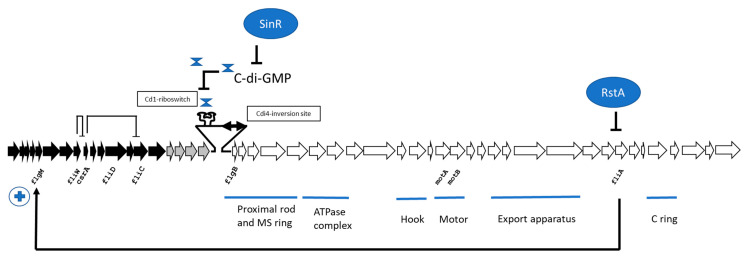
Clostridioides difficile is an important pathogen for humans with a lead in nosocomial infection, but it is also more and more common in communities. Our knowledge of the pathology has historically been focused on the toxins produced by the bacteria that remain its major virulence factors. But the dysbiosis of the intestinal microbiota creating the conditions for the colonization appears to be fundamental for our understanding of the disease. Colonization implies several steps for the bacteria that do or do not use their capacity of motility with the synthesis of flagella. In this review, we focus on the current understanding of different topics on the C. difficile flagellum, ranging from its genetic organization to the vaccinal interest in it.
Keywords: Clostridioides difficile; flagellum; motility.
Conflict of interest statement
The authors declare no conflict of interest.
Figures
References
-
- Ofori E., Ramai D., Dhawan M., Mustafa F., Gasperino J., Reddy M. Community-Acquired Clostridium difficile: Epidemiology, Ribotype, Risk Factors, Hospital and Intensive Care Unit Outcomes, and Current and Emerging Therapies. J. Hosp. Infect. 2018;99:436–442. doi: 10.1016/j.jhin.2018.01.015. - DOI - PubMed
Publication types
MeSH terms
LinkOut - more resources
Full Text Sources
