


Sulforaphane-A Compound with Potential Health Benefits for Disease Prevention and Treatment: Insights from Pharmacological and Toxicological Experimental Studies
- PMID: 38397745
- PMCID: PMC10886109
- DOI: 10.3390/antiox13020147
Sulforaphane-A Compound with Potential Health Benefits for Disease Prevention and Treatment: Insights from Pharmacological and Toxicological Experimental Studies
Abstract
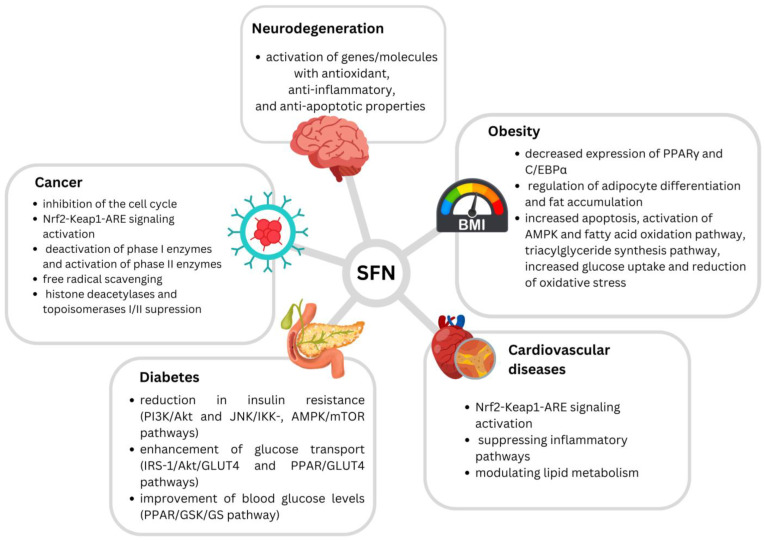
Sulforaphane (SFN), which is a hydrolysis product from glucoraphanin, a compound found in cruciferous vegetables, has been studied for its potential health benefits, particularly in disease prevention and treatment. SFN has proven to be effective in combating different types of cancer by inhibiting the proliferation of tumors and triggering apoptosis. This dual action has been demonstrated to result in a reduction in tumor size and an enhancement of survival rates in animal models. SFN has also shown antidiabetic and anti-obesity effects, improving glucose tolerance and reducing fat accumulation. SFN's ability to activate Nrf2, a transcription factor regulating oxidative stress and inflammation in cells, is a primary mechanism behind its anticancerogenic and antidiabetic effects. Its antioxidant, anti-inflammatory, and anti-apoptotic properties are also suggested to provide beneficial effects against neurodegenerative diseases. The potential health benefits of SFN have led to increased interest in its use as a dietary supplement or adjunct to chemotherapy, but there are insufficient data on its efficacy and optimal doses, as well as its safety. This review aims to present and discuss SFN's potential in treating various diseases, such as cancer, diabetes, cardiovascular diseases, obesity, and neurodegenerative diseases, focusing on its mechanisms of action. It also summarizes studies on the pharmacological and toxicological potential of SFN in in vitro and animal models and explores its protective role against toxic compounds through in vitro and animal studies.
Keywords: anticancerogenic effects; disease prevention; mechanisms; phytochemical; sulforaphane; toxicity.
Conflict of interest statement
The authors declare that they have no known competing financial interests or personal relationships that could have appeared to influence the work reported in this paper.
Figures
References
-
- Aune D., Giovannucci E., Boffetta P., Fadnes L.T., Keum N., Norat T., Greenwood D.C., Riboli E., Vatten L.J., Tonstad S. Fruit and Vegetable Intake and the Risk of Cardiovascular Disease, Total Cancer and All-Cause Mortality—A Systematic Review and Dose-Response Meta-Analysis of Prospective Studies. Int. J. Epidemiol. 2017;46:1029–1056. doi: 10.1093/ije/dyw319. - DOI - PMC - PubMed
Publication types
Grants and funding
LinkOut - more resources
Full Text Sources
Research Materials
Miscellaneous
