


Cholesterol Conjugates of Small Interfering RNA: Linkers and Patterns of Modification
- PMID: 38398538
- PMCID: PMC10892548
- DOI: 10.3390/molecules29040786
Cholesterol Conjugates of Small Interfering RNA: Linkers and Patterns of Modification
Abstract
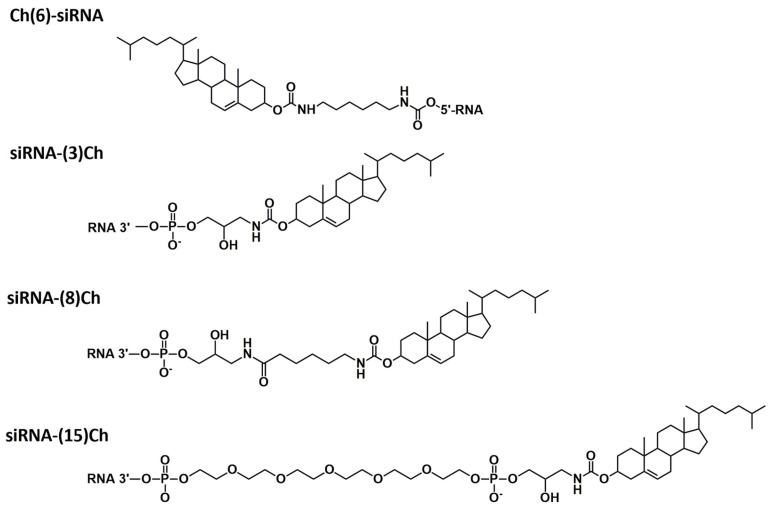
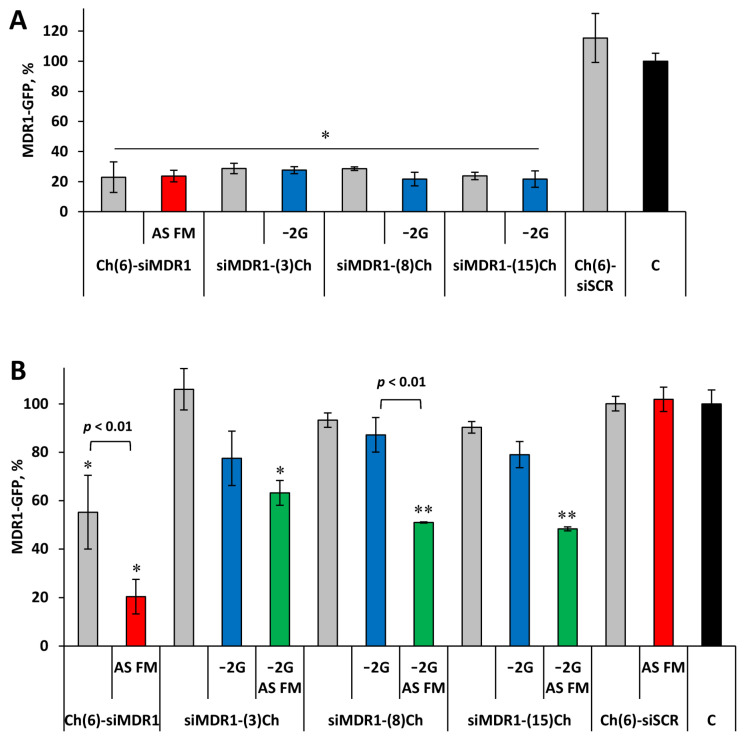
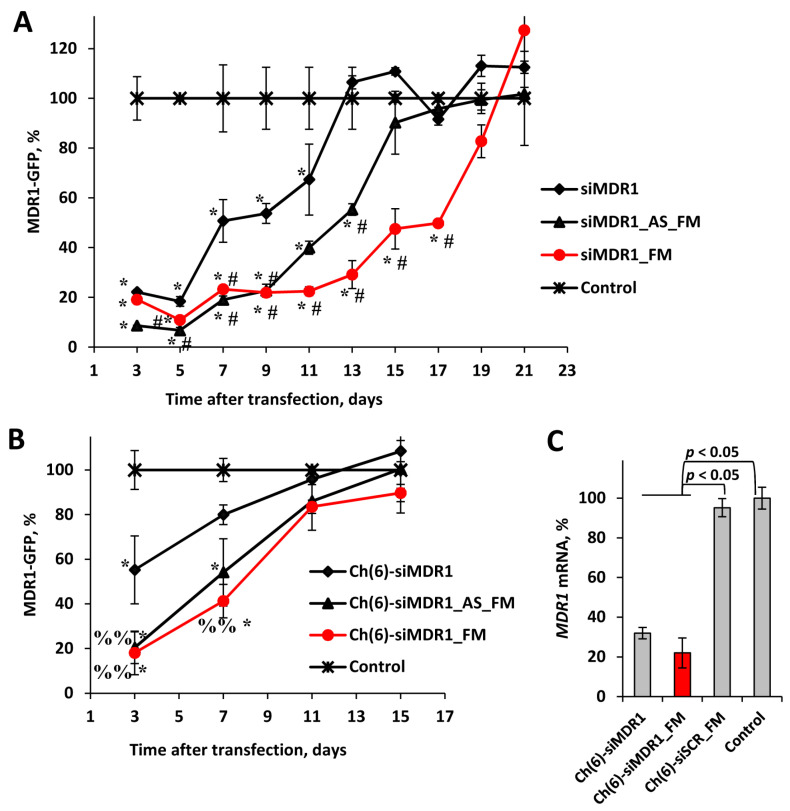
Cholesterol siRNA conjugates attract attention because they allow the delivery of siRNA into cells without the use of transfection agents. In this study, we compared the efficacy and duration of silencing induced by cholesterol conjugates of selectively and totally modified siRNAs and their heteroduplexes of the same sequence and explored the impact of linker length between the 3' end of the sense strand of siRNA and cholesterol on the silencing activity of "light" and "heavy" modified siRNAs. All 3'-cholesterol conjugates were equally active under transfection, but the conjugate with a C3 linker was less active than those with longer linkers (C8 and C15) in a carrier-free mode. At the same time, they were significantly inferior in activity to the 5'-cholesterol conjugate. Shortening the sense strand carrying cholesterol by two nucleotides from the 3'-end did not have a significant effect on the activity of the conjugate. Replacing the antisense strand or both strands with fully modified ones had a significant effect on silencing as well as improving the duration in transfection-mediated and carrier-free modes. A significant 78% suppression of MDR1 gene expression in KB-8-5 xenograft tumors developed in mice promises an advantage from the use of fully modified siRNA cholesterol conjugates in combination chemotherapy.
Keywords: MDR1 gene; chemical modifications; cholesterol conjugate; duration of silencing; nuclease resistance; siRNA.
Conflict of interest statement
The authors declare no conflicts of interest.
Figures
References
MeSH terms
Substances
Grants and funding
LinkOut - more resources
Full Text Sources
Medical
Miscellaneous
