


Serial Llama Immunization with Various SARS-CoV-2 RBD Variants Induces Broad Spectrum Virus-Neutralizing Nanobodies
- PMID: 38400113
- PMCID: PMC10891761
- DOI: 10.3390/vaccines12020129
Serial Llama Immunization with Various SARS-CoV-2 RBD Variants Induces Broad Spectrum Virus-Neutralizing Nanobodies
Abstract
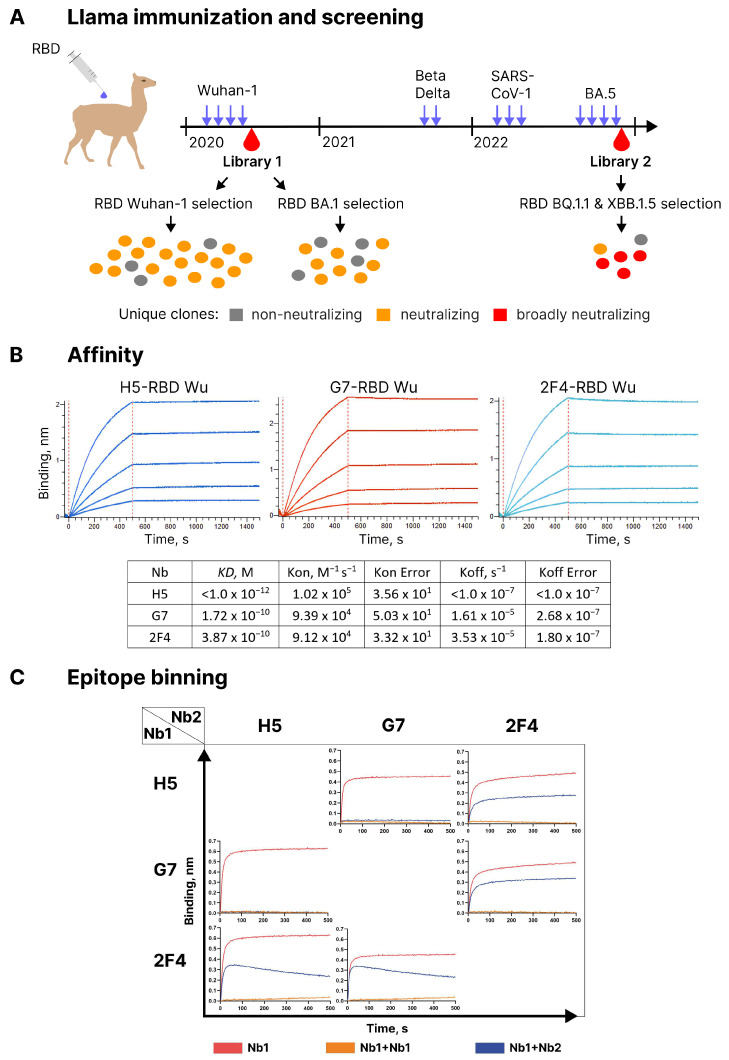
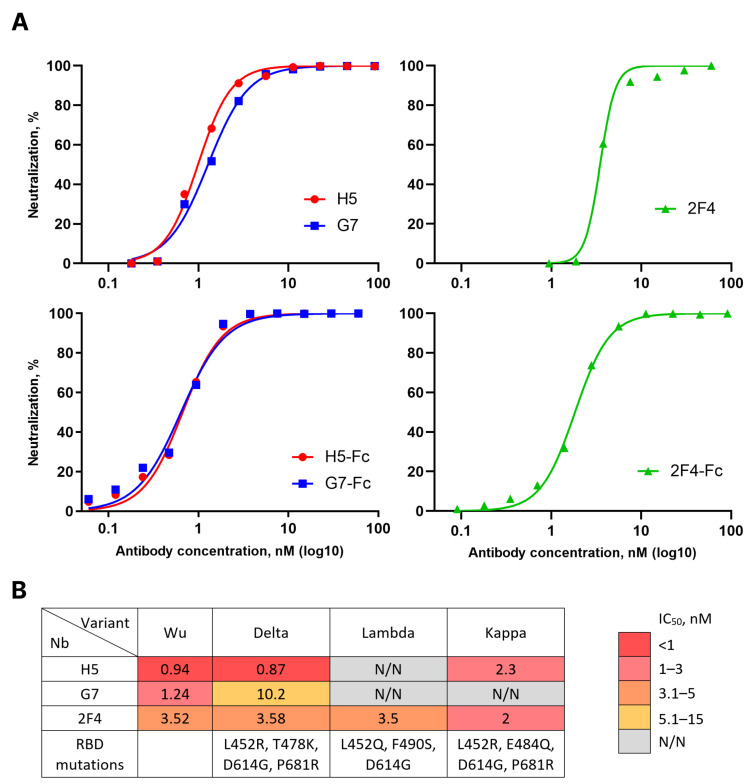
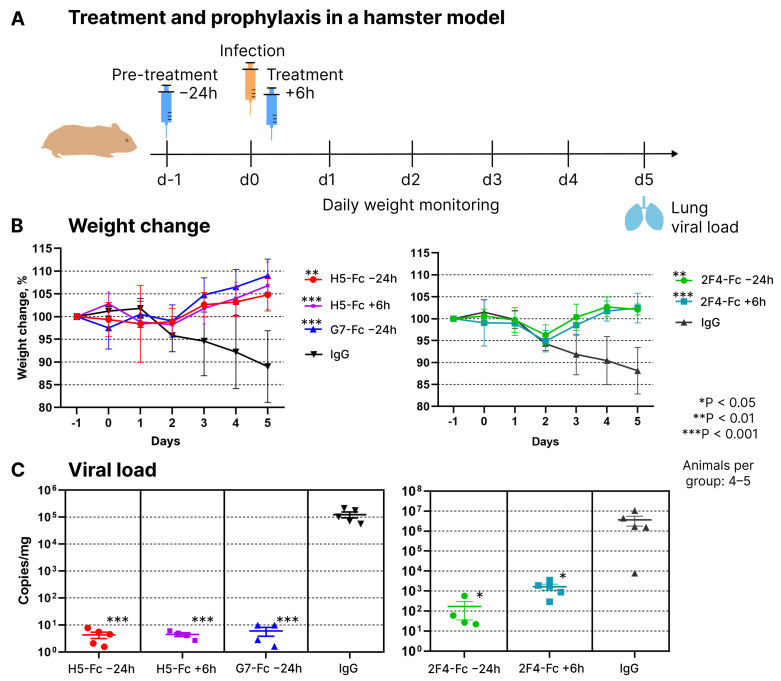
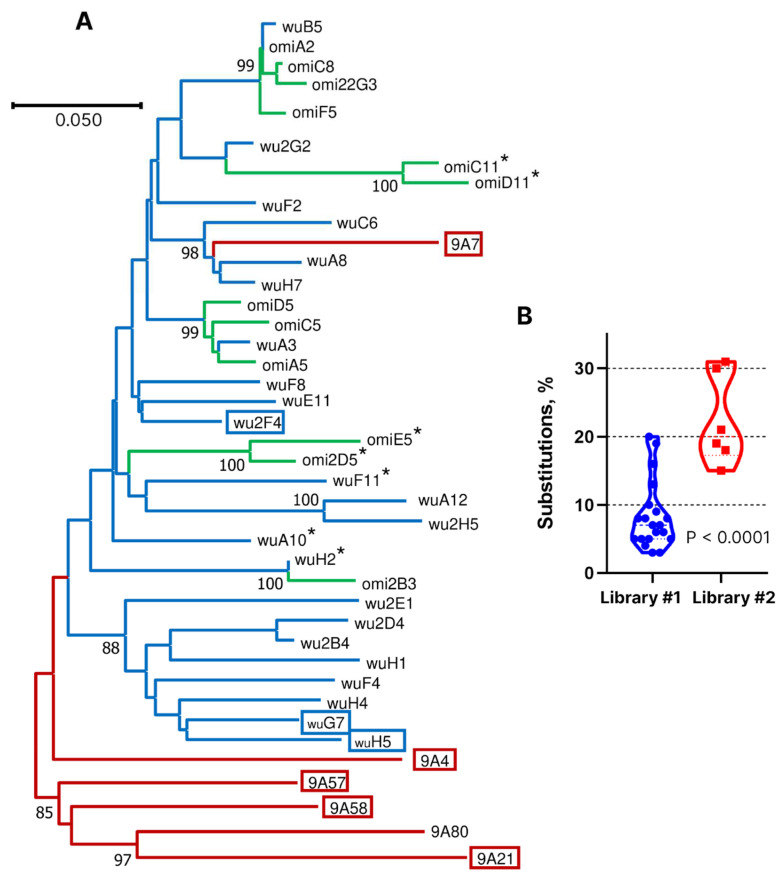
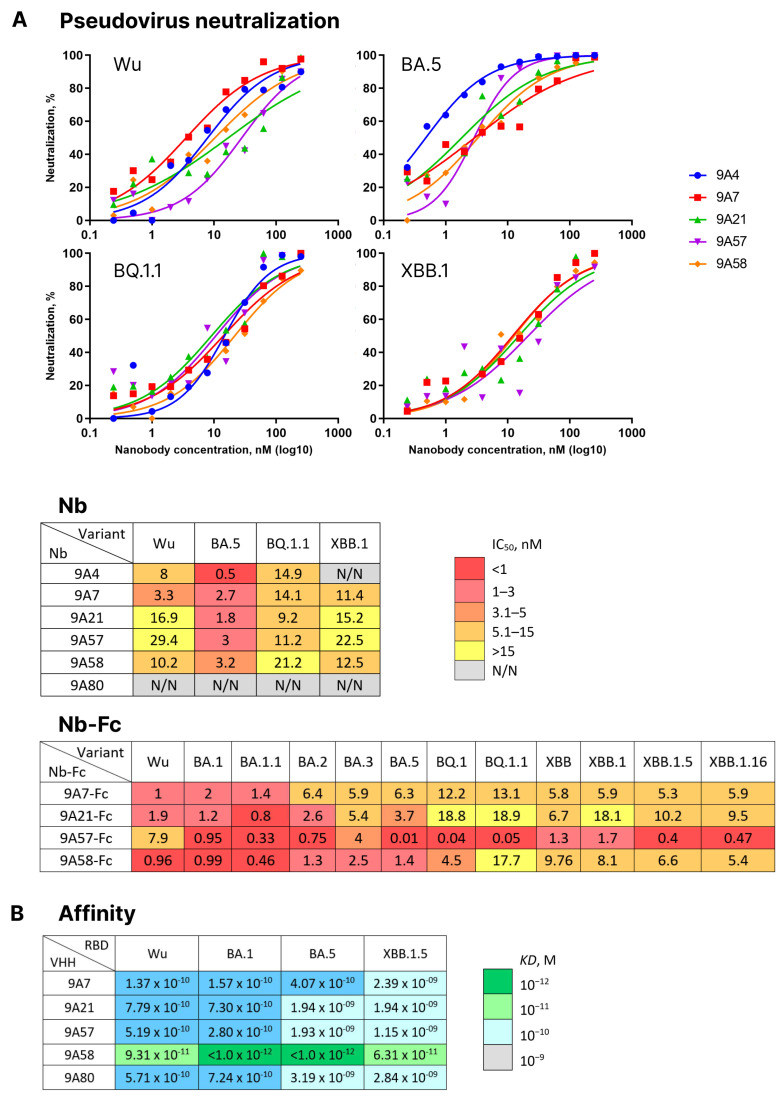
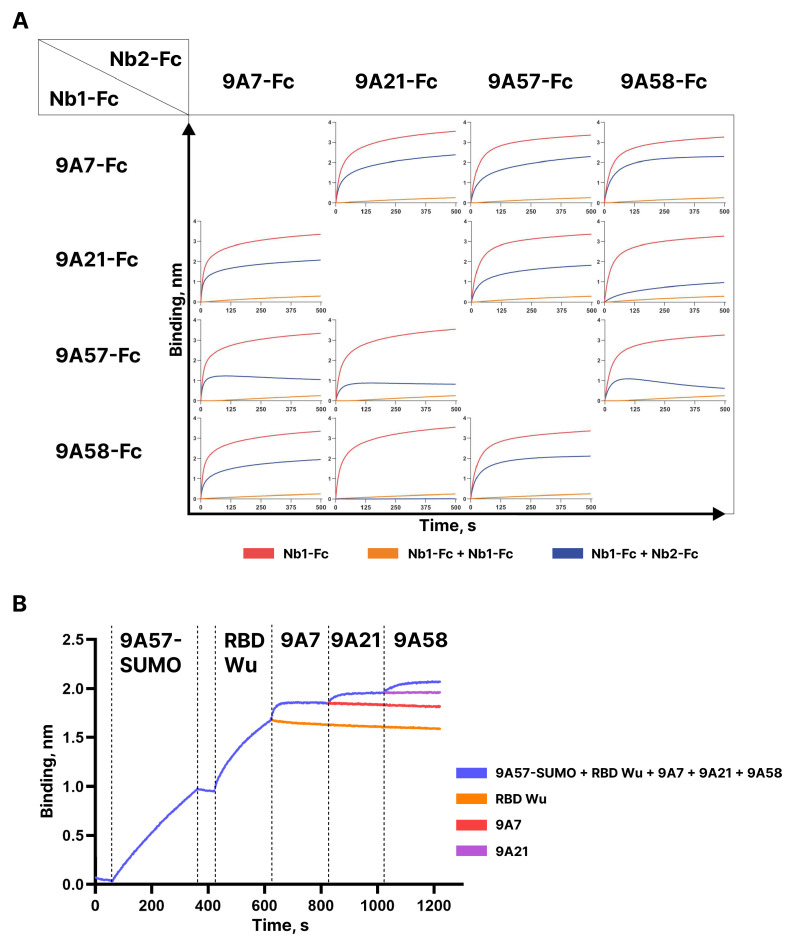
The emergence of SARS-CoV-2 mutant variants has posed a significant challenge to both the prevention and treatment of COVID-19 with anti-coronaviral neutralizing antibodies. The latest viral variants demonstrate pronounced resistance to the vast majority of human monoclonal antibodies raised against the ancestral Wuhan variant. Less is known about the susceptibility of the evolved virus to camelid nanobodies developed at the start of the pandemic. In this study, we compared nanobody repertoires raised in the same llama after immunization with Wuhan's RBD variant and after subsequent serial immunization with a variety of RBD variants, including that of SARS-CoV-1. We show that initial immunization induced highly potent nanobodies, which efficiently protected Syrian hamsters from infection with the ancestral Wuhan virus. These nanobodies, however, mostly lacked the activity against SARS-CoV-2 omicron-pseudotyped viruses. In contrast, serial immunization with different RBD variants resulted in the generation of nanobodies demonstrating a higher degree of somatic mutagenesis and a broad range of neutralization. Four nanobodies recognizing distinct epitopes were shown to potently neutralize a spectrum of omicron variants, including those of the XBB sublineage. Our data show that nanobodies broadly neutralizing SARS-CoV-2 variants may be readily induced by a serial variant RBD immunization.
Keywords: COVID-19; SARS-CoV-2; antiviral nanobody; broadly neutralizing antibody; coronavirus variants; single-domain antibody; viral evasion.
Conflict of interest statement
Patent applications are being filed for the nanobodies described. K.O.B., L.V.M., O.Y.V., A.M.N., N.A.C. and A.V.T. are employees of IMGEN+, LLC. This work was funded by IMGEN+, LLC, and the grant listed above.
Figures
Similar articles
-
A Glycosylated RBD Protein Induces Enhanced Neutralizing Antibodies against Omicron and Other Variants with Improved Protection against SARS-CoV-2 Infection.J Virol. 2022 Sep 14;96(17):e0011822. doi: 10.1128/jvi.00118-22. Epub 2022 Aug 16. J Virol. 2022. PMID: 35972290 Free PMC article.
-
A mosaic-type trimeric RBD-based COVID-19 vaccine candidate induces potent neutralization against Omicron and other SARS-CoV-2 variants.Elife. 2022 Aug 25;11:e78633. doi: 10.7554/eLife.78633. Elife. 2022. PMID: 36004719 Free PMC article.
-
A Multivalent and Thermostable Nanobody Neutralizing SARS-CoV-2 Omicron (B.1.1.529).Int J Nanomedicine. 2023 Jan 19;18:353-367. doi: 10.2147/IJN.S387160. eCollection 2023. Int J Nanomedicine. 2023. PMID: 36700149 Free PMC article.
-
Bovine-derived antibodies and camelid-derived nanobodies as biotherapeutic weapons against SARS-CoV-2 and its variants: A review article.Int J Surg. 2022 Feb;98:106233. doi: 10.1016/j.ijsu.2022.106233. Epub 2022 Jan 19. Int J Surg. 2022. PMID: 35065260 Free PMC article. Review.
-
The Biological Functions and Clinical Significance of SARS-CoV-2 Variants of Corcern.Front Med (Lausanne). 2022 May 20;9:849217. doi: 10.3389/fmed.2022.849217. eCollection 2022. Front Med (Lausanne). 2022. PMID: 35669924 Free PMC article. Review.
Cited by
-
A potent, broadly neutralizing human monoclonal antibody that efficiently protects hACE2-transgenic mice from infection with the Wuhan, BA.5, and XBB.1.5 SARS-CoV-2 variants.Front Immunol. 2024 Jul 19;15:1442160. doi: 10.3389/fimmu.2024.1442160. eCollection 2024. Front Immunol. 2024. PMID: 39100673 Free PMC article.
-
The Use of Heterologous Antigens for Biopanning Enables the Selection of Broadly Neutralizing Nanobodies Against SARS-CoV-2.Antibodies (Basel). 2025 Mar 7;14(1):23. doi: 10.3390/antib14010023. Antibodies (Basel). 2025. PMID: 40136472 Free PMC article.
-
Potent bivalent nanobody constructs that protect against the SARS-CoV-2 XBB variant.Npj Viruses. 2025 Mar 13;3(1):19. doi: 10.1038/s44298-025-00101-4. Npj Viruses. 2025. PMID: 40295895 Free PMC article.
References
-
- Ejnirattisai W., Huo J., Zhou D., Zahradník J., Supasa P., Liu C., Duyvesteyn H.M.E., Ginn H.M., Mentzer A.J., Tuekprakhon A., et al. SARS-CoV-2 Omicron-B.1.1.529 Leads to Widespread Escape from Neutralizing Antibody Responses. Cell. 2022;185:467–484.e15. doi: 10.1016/j.cell.2021.12.046. - DOI - PMC - PubMed
-
- VanBlargan L.A., Errico J.M., Halfmann P.J., Zost S.J., Crowe J.E., Purcell L.A., Kawaoka Y., Corti D., Fremont D.H., Diamond M.S. An Infectious SARS-CoV-2 B.1.1.529 Omicron Virus Escapes Neutralization by Therapeutic Monoclonal Antibodies. Nat. Med. 2022;28:490–495. doi: 10.1038/s41591-021-01678-y. - DOI - PMC - PubMed
LinkOut - more resources
Full Text Sources
Miscellaneous
