


In-Depth Glycoproteomic Assay of Urinary Prostatic Acid Phosphatase
- PMID: 38404489
- PMCID: PMC10885330
- DOI: 10.1021/acsmeasuresciau.3c00055
In-Depth Glycoproteomic Assay of Urinary Prostatic Acid Phosphatase
Abstract
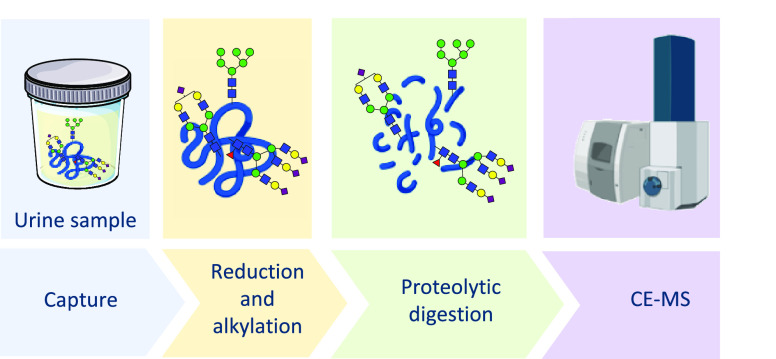
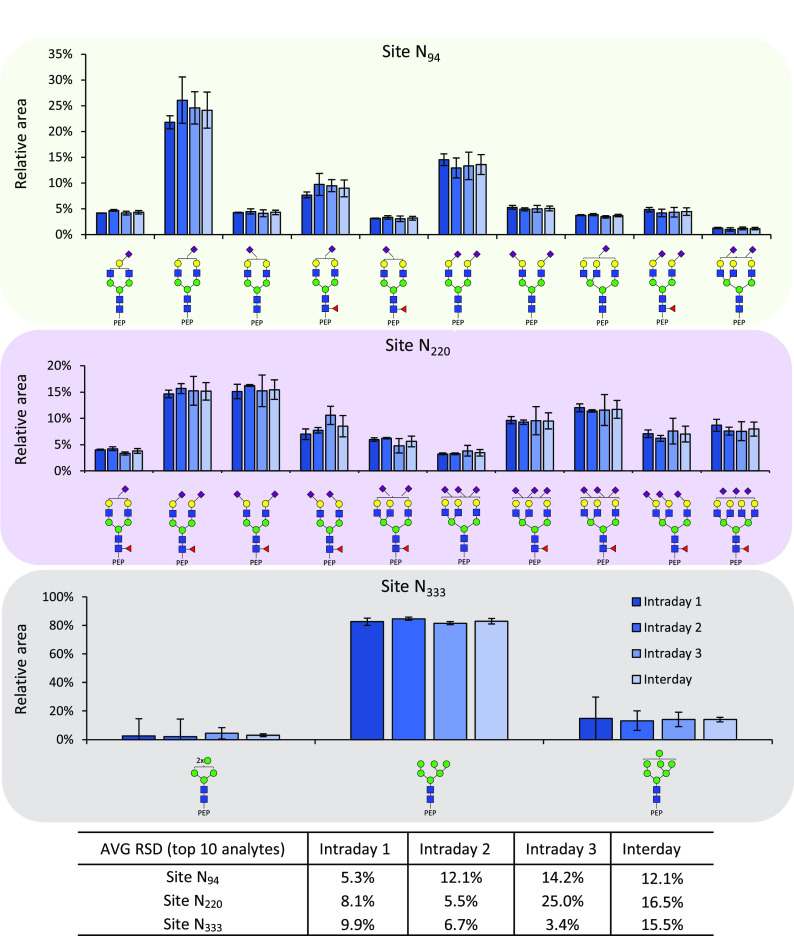
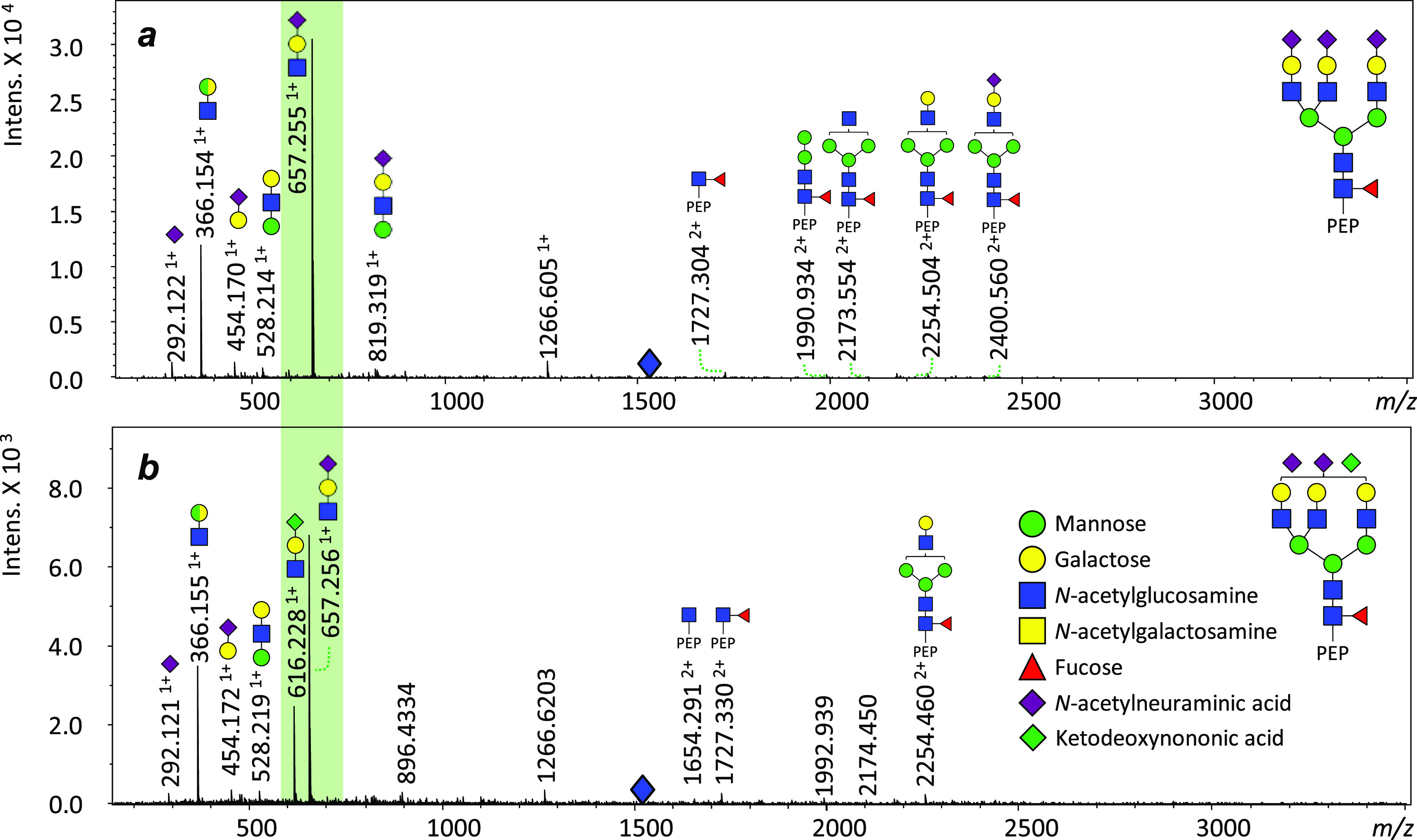
Prostate-specific antigen (PSA) is a well-known clinical biomarker in prostate cancer (PCa) diagnosis, but a better test is still needed, as the serum-level-based PSA quantification exhibits limited specificity and comes with poor predictive value. Prior to PSA, prostatic acid phosphatase (PAP) was used, but it was replaced by PSA because PSA improved the early detection of PCa. Upon revisiting PAP and its glycosylation specifically, it appears to be a promising new biomarker candidate. Namely, previous studies have indicated that PAP glycoforms differ between PCa and non-PCa individuals. However, an in-depth characterization of PAP glycosylation is still lacking. In this study, we established an in-depth glycoproteomic assay for urinary PAP by characterizing both the micro- and macroheterogeneity of the PAP glycoprofile. For this purpose, PAP samples were analyzed by capillary electrophoresis coupled to mass spectrometry after affinity purification from urine and proteolytic digestion. The developed urinary PAP assay was applied on a pooled DRE (digital rectal examination) urine sample from nine individuals. Three glycosylation sites were characterized, namely N94, N220, and N333, via N-glycopeptide analysis. Taking sialic acid linkage isomers into account, a total of 63, 27, and 4 N-glycan structures were identified, respectively. The presented PAP glycoproteomic assay will enable the determination of potential glycomic biomarkers for the early detection and prognosis of PCa in cohort studies.
© 2023 The Authors. Published by American Chemical Society.
Conflict of interest statement
The authors declare no competing financial interest.
Figures

References
-
- Collin S. M.; Metcalfe C.; Donovan J.; Lane J. A.; Davis M.; Neal D.; Hamdy F.; Martin R. M. Associations of lower urinary tract symptoms with prostate-specific antigen levels, and screen-detected localized and advanced prostate cancer: a case-control study nested within the UK population-based ProtecT (Prostate testing for cancer and Treatment) study. BJU international 2008, 102 (10), 1400–1406. 10.1111/j.1464-410X.2008.07817.x. - DOI - PubMed
-
- Kammeijer G. S. M.Unravelling the sugar-coating of prostate-specific antigen: method development and its application to prostate cancer research. Ph.D. Dissertation, Leiden University, 2019.
-
- Grossman D. C.; Curry S. J.; Owens D. K.; Bibbins-Domingo K.; Caughey A. B.; Davidson K. W.; Doubeni C. A.; Ebell M.; Epling J. W.; Kemper A. R.; et al. Screening for prostate cancer: US Preventive Services Task Force recommendation statement. JAMA 2018, 319 (18), 1901–1913. 10.1001/jama.2018.3710. - DOI - PubMed
LinkOut - more resources
Full Text Sources
Research Materials
Miscellaneous