


Green honey of Banggi Island: A preliminary anti-diabetic study on zebrafish model
- PMID: 38404777
- PMCID: PMC10884957
- DOI: 10.1016/j.heliyon.2024.e26469
Green honey of Banggi Island: A preliminary anti-diabetic study on zebrafish model
Abstract
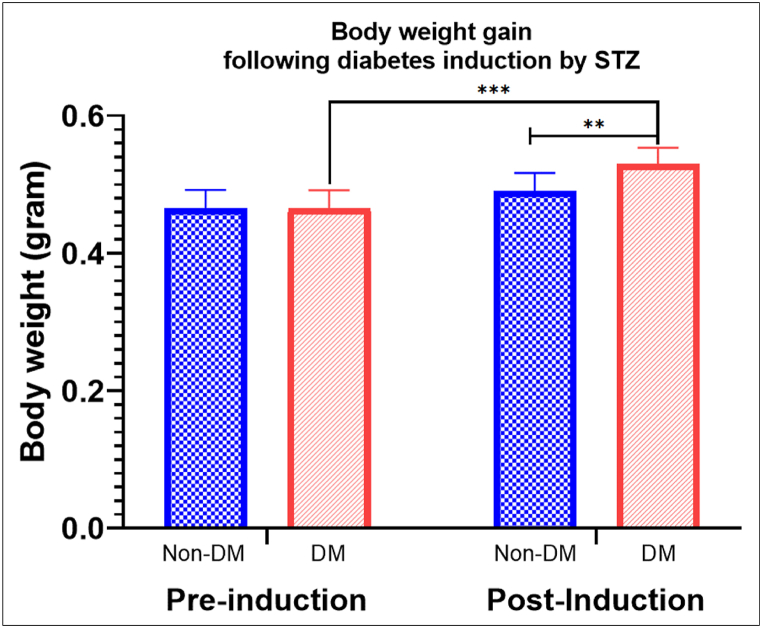
Zebrafish is a developing vertebrate model with several advantages, including its small size, and high experimental efficiency. Malaysia exhibit one of the highest diabetes rates in the Western Pacific and incurring an annual cost of 600 million US dollars. The objective of the study is to determine the antidiabetic properties of green honey (GH) using a zebrafish model. Adult zebrafish, aged 3-4 months, were subjected to overfeeding and treated with streptozotocin (STZ) through intraperitoneal injection (IP) on days 7 and 9. The study assessed the oral sucrose tolerance test (OSTT) and the anti-diabetic effects of green honey. The evaluation was conducted at three time points: 30, 60, and 120 min after treatment and sucrose administration. The study utilised a model with a sample size of 5. The study was performed in six groups. These groups are (1) Normal control (non-diabetic, no intervention), (2) Normal control + GH (non-diabetic, supplemented with GH 3 μl), (3) DM control (diabetic, no intervention), (4) DM Gp1 (diabetic, 3 μL GH), (5) DM Gp2 (diabetic, 6 μ L GH), (6) DM Acarbose (diabetic, treated with acarbose). Fasting blood glucose levels for non-diabetic (non-DM) and diabetic (DM) groups were evaluated before and after the 10 days of diabetic induction. DM groups (excess of food and two injections of STZ) have caused a significant increment in the fasting blood glucose to 11.55 mmol/l (p < 0.0001). Both GH treatments effectively decreased postprandial blood glucose levels and the area under the curve in the oral glucose tolerance test (OSTT). Based on these results, it is concluded that green honey could play a role in hyperglycemia management and show potential as a natural alternative to conventional diabetes therapy. The underlying mechanisms need to be clarified, and their potential use in human diabetes therapy needs to be investigated.
Keywords: Acarbose; Antidiabetic; Green honey; STZ; Zebrafish.
© 2024 The Authors. Published by Elsevier Ltd.
Conflict of interest statement
The authors declare that the research was conducted in the absence of any commercial or financial relationships that could be construed as a potential conflict of interest.
Figures




References
LinkOut - more resources
Full Text Sources
Molecular Biology Databases
Research Materials
