


To explore the potential mechanisms of cognitive impairment in children with MRI-negative pharmacoresistant epilepsy due to focal cortical dysplasia: A pilot study from gray matter structure view
- PMID: 38404806
- PMCID: PMC10884915
- DOI: 10.1016/j.heliyon.2024.e26609
To explore the potential mechanisms of cognitive impairment in children with MRI-negative pharmacoresistant epilepsy due to focal cortical dysplasia: A pilot study from gray matter structure view
Abstract
Objectives: To investigate the characteristics of brain structure in children with focal cortical dysplasia (FCD)-induced pharmacoresistant epilepsy, and explore the potential mechanisms of cognitive impairment from the view of gray matter alteration.
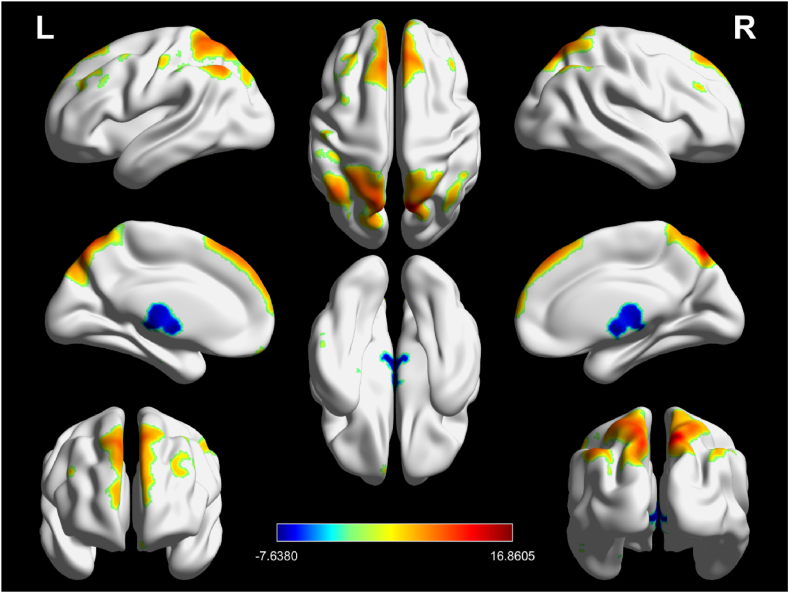
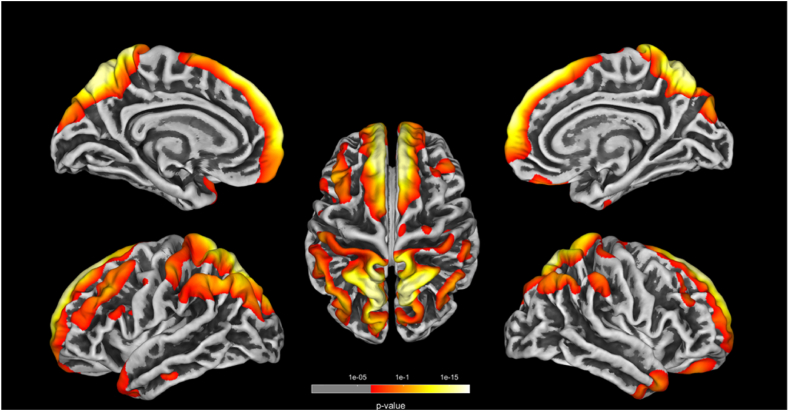
Methods: 25 pharmacoresistant pediatric patients with pathologically confirmed focal cortical dysplasia (FCD), and 25 gender-matched healthy controls were included in this study. 3.0T MRI data and intelligence tests using the Wechsler Intelligence Scale for Children-Forth Edition (WISC-IV) were generated for all subjects. Voxel-based morphometry (VBM)-diffeomorphic anatomical registration through exponentiated lie algebra (DARTEL) and surface-based morphometry (SBM) analyses were performed to analyze gray matter volume and cortical structure. Two-sample t-tests were used to compare the differences in gray matter volume (P<0.05, FWE) and cortical thickness (P<0.001, FWE) between the two groups. Also, the Spearman rank correlation analyses were employed to determine the relationship between structural alterations and neuropsychological results.
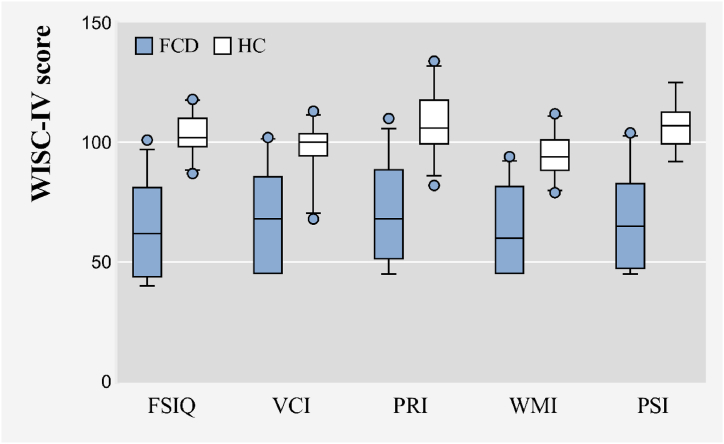
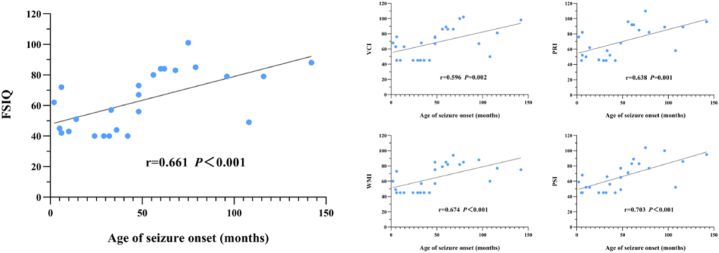
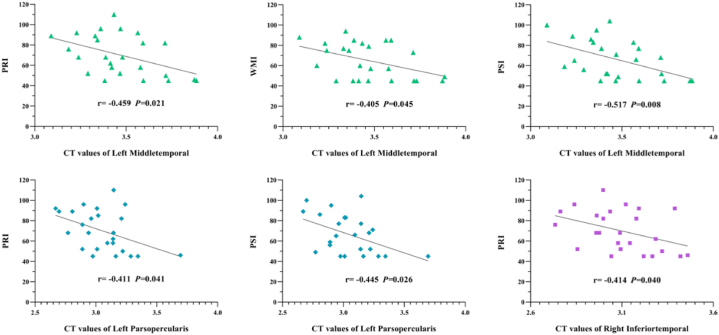
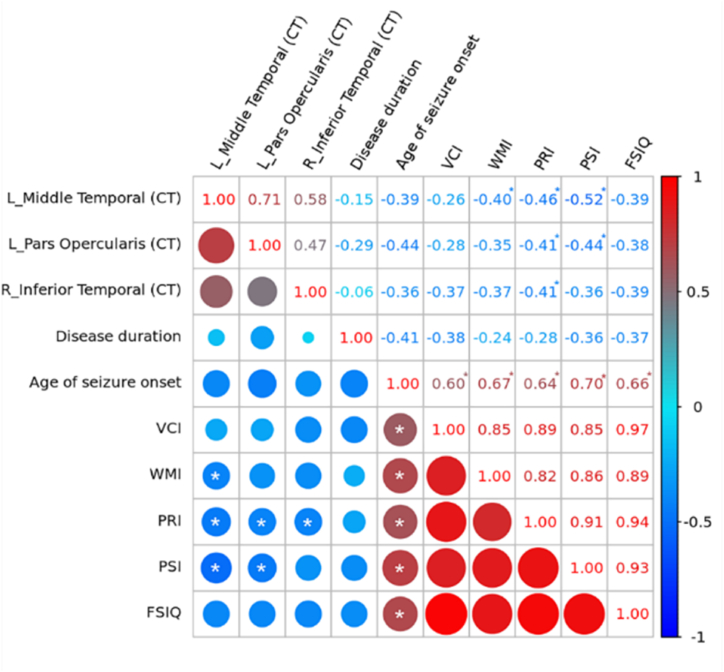
Results: The WISC-IV scores of the FCD group were significantly lower than those of the HC group in terms of full-scale intelligence quotient (FSIQ), verbal comprehension index (VCI), perceptual reasoning index (PRI), working memory index (WMI), and processing speed index (PSI) (all P<0.01). Compared with the HC group, in the FCD group, the gray matter volume (GMV) reduced significantly in the left cerebellum_8, cerebellum_Crus2, and bilateral thalamus (P<0.05, FWE); the GMV increased in the bilateral medial frontal gyrus, right precuneus, and left inferior temporal gyrus (P<0.05, FWE), and the cortical thickness increased in the bilateral frontal, parietal, and temporal areas (P<0.001, FWE). Correlation analyses showed that the age of seizure onset had positive correlations with the WISC-IV scores significantly. Meanwhile, the cortex thicknesses of the left pars opercularis gyrus, left middle temporal gyrus, and right inferior temporal gyrus had negative correlations with the WISC-IV scores significantly.
Conclusion: FCD patients showed subtle structural abnormalities in multiple brain regions, with significant involvement of the primary visual cortex and language function cortex. And we also demonstrated a crucial correlation between gray matter structural alteration and cognitive impairment.
Keywords: Cognitive function; Focal cortical dysplasia; Magnetic resonance imaging; Pharmacoresistant epilepsy; Structural abnormalities.
© 2024 The Authors. Published by Elsevier Ltd.
Conflict of interest statement
The authors declare that they have no competing interests.
Figures
References
-
- Lamberink H.J., Otte W.M., Blümcke I., Braun K. Seizure outcome and use of antiepileptic drugs after epilepsy surgery according to histopathological diagnosis: a retrospective multicentre cohort study. Lancet. Neurol. 2020;19(9):748–757. - PubMed
-
- Fauser S., Huppertz H.J., Bast T., Strobl K., Pantazis G., Altenmueller D.M., et al. Clinical characteristics in focal cortical dysplasia: a retrospective evaluation in a series of 120 patients. Brain. 2006;129(Pt 7):1907–1916. - PubMed
LinkOut - more resources
Full Text Sources
Miscellaneous
