


Formalin-fixed stool improves the performance of the Kato-Katz method
- PMID: 38406352
- PMCID: PMC10884569
- DOI: 10.14202/vetworld.2024.99-107
Formalin-fixed stool improves the performance of the Kato-Katz method
Abstract
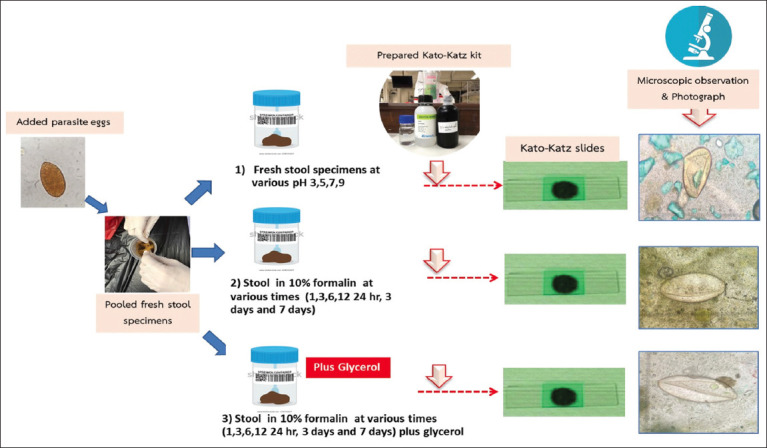
Background and aim: Parasitic infections are a public health problem worldwide, including in Thailand. An epidemiological survey for helminthiasis based on stool examination uses the Kato-Katz method as recommended by the World Health Organization. Limitations of this method include the need for fresh stool, time requirement, and lack of quality control. The aim of this study was to enhance the efficiency of the Kato-Katz technique using formalin and glycerol solutions and to implement specimen preparation in fieldwork.
Materials and methods: For the Kato-Katz method, stool samples were divided into formalin-fixed and unfixed groups at various time points and processes. Fresh echinostome eggs were added to each stool group. Incubation with glycerol increased the clearing process. Each group was observed and photographed using a light microscope. Parasite eggs were imaged and compared using the standard Kato-Katz method.
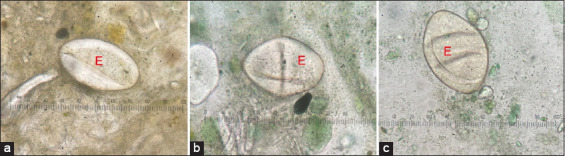
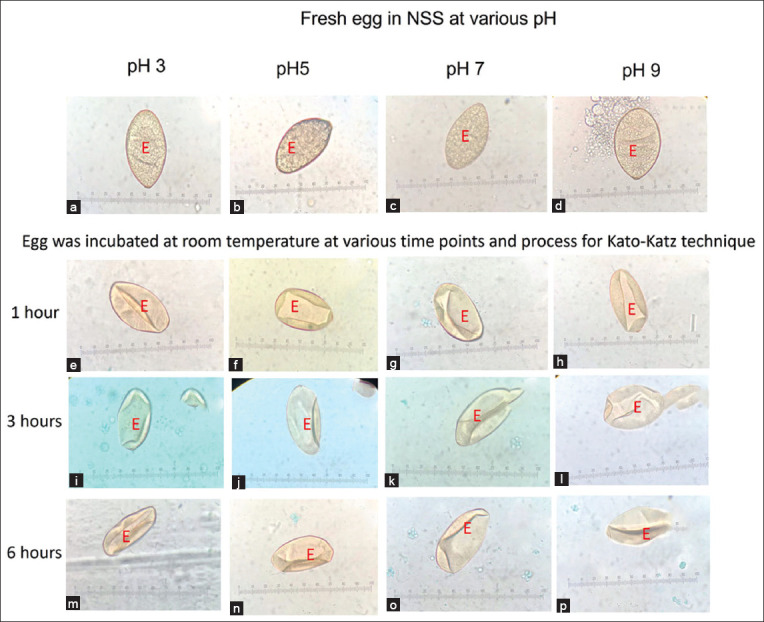
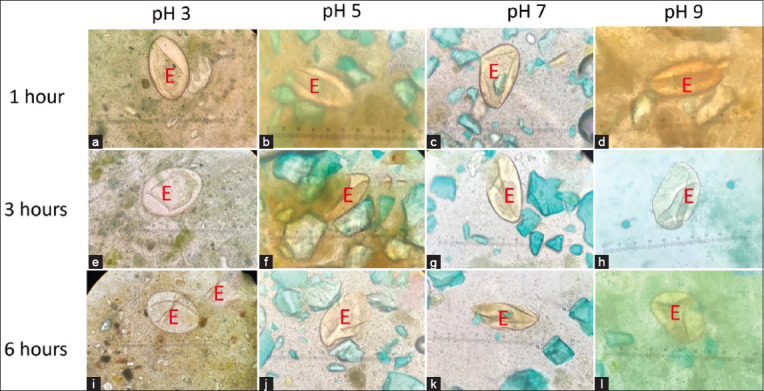
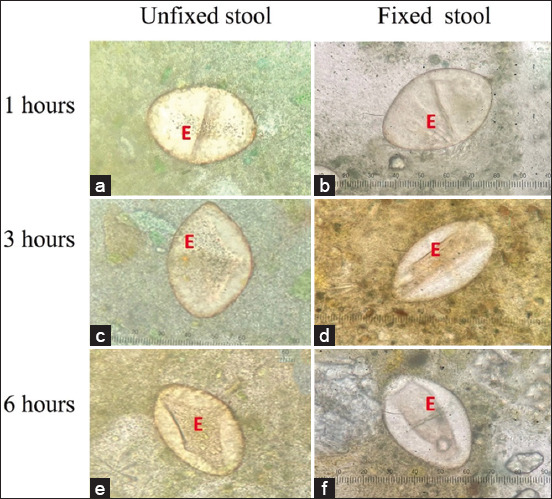
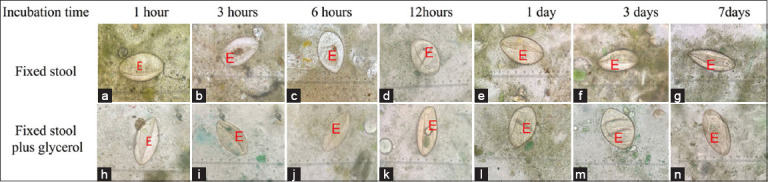
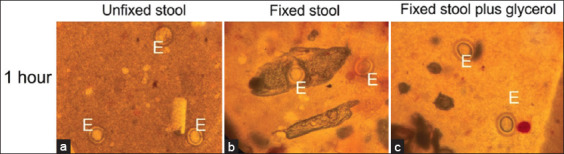
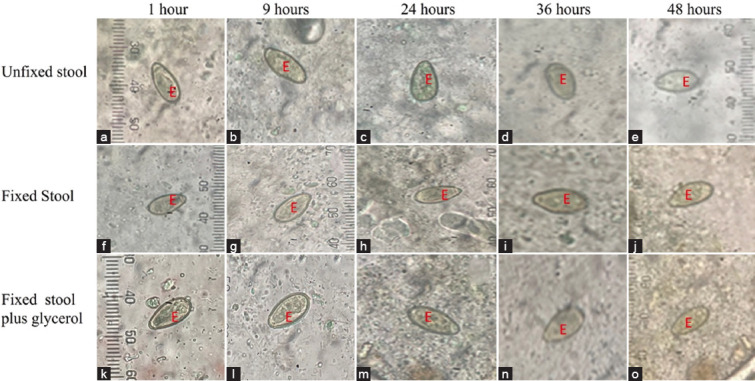
Results: Visualization of echinostome eggs from formalin-fixed stool slides was significantly better than that from unfixed stool slides (p < 0.01). Stool samples fixed for 7 days retained normal echinostome eggs morphology. Incubation with glycerol for 1 h resulted in increased Kato-Katz performance by digesting the stool content and enhancing egg observation. Moreover, the results of the Kato-Katz method using fixed and fixed stool plus glycerol for natural helminth infection showed good quality of Opisthorchis viverrini and Taenia egg visualization and normal morphology with a clear background of slides.
Conclusion: Formalin-fixed stool could be more suitable than fresh stool for the Kato-Katz method.
Keywords: Kato–Katz method; formalin-fixed stool; glycerol; parasitology examination; specimen preparation.
Copyright: © Wisetmora, et al.
Conflict of interest statement
The authors declare that they have no competing interests.
Figures
References
-
- World Health Organization. WHO Methods and Data Sources for the Global Burden of Disease Estimates 2000–2011. Geneva: World Health Organization; 2013.
-
- Daly G Hale Collaborators. Global, regional, and national disability-adjusted life-years (DALYs) for 359 diseases and injuries and healthy life expectancy (HALE) for 195 countries and territories, 1990–2017:A systematic analysis for the Global Burden of Disease Study 2017. Lancet. 2018;392(10159):1859. - PMC - PubMed
-
- Wattanawong O, Iamsirithaworn S, Kophachon T, NakAi W, Wisetmora A, Wongsaroj T, Dekumyoy P, Nithikathkul C, Suwannatrai A, Sripa B. Current status of helminthiases in Thailand:A cross-sectional, nationwide survey, 2019. Acta Trop. 2021;223:106082. - PubMed
-
- World Health Organization. Investing to Overcome the Global Impact of Neglected Tropical Diseases:Third WHO Report on Neglected Tropical Diseases. World Health Organization; 2015.
LinkOut - more resources
Full Text Sources