


School students' burdens and resources after 2 years of COVID-19 in Austria: a qualitative study using content analysis
- PMID: 38406498
- PMCID: PMC10884163
- DOI: 10.3389/fpubh.2024.1327999
School students' burdens and resources after 2 years of COVID-19 in Austria: a qualitative study using content analysis
Abstract
Introduction: The mental health of young people has been severely affected by the COVID-19 pandemic and the measures associated with it. Mental health symptoms increased across various domains during the pandemic and subjective wellbeing decreased.
Methods: This study examined the burdens and resources of Austrian school students (M = 16.63 years old) in the third year of the pandemic and compared them descriptively with the burdens and resources identified in a comparative study in 2021. A cross-sectional online survey with open-ended questions from April to May 2022 provided data that was analyzed using qualitative content analysis. A sub-sample of N = 214 was selected from the larger sample. This sub-sample is representative for the Austrian population aged 15-19 in terms of gender and migrant background.
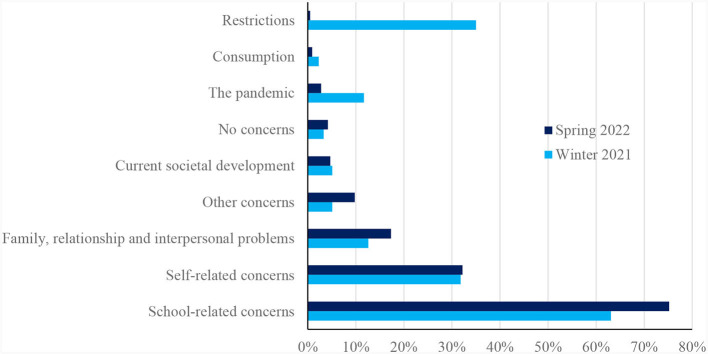
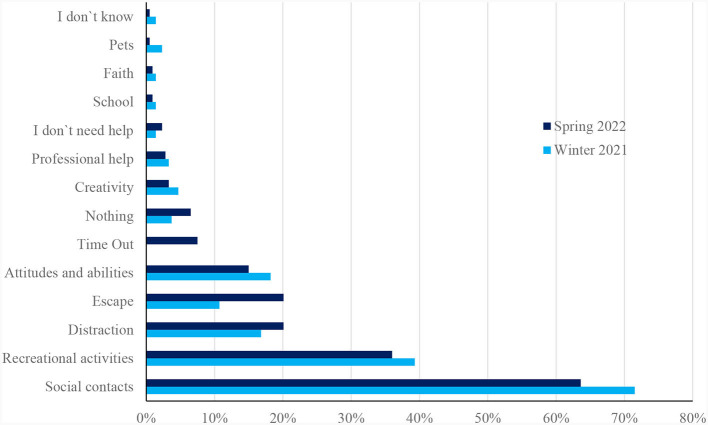
Results: Analysis of the open-ended questions showed that concerns about the pandemic and the burdens of the measures were no longer on young people's minds at the time of the survey in 2022. On the other hand, stress at school was increasing and the opening of schools and the resumption of face-to-face teaching were challenging for respondents. While resuming social contacts and leisure activities was mentioned as a resource by many respondents, some also expressed a desire for more time off and a retreat into coping strategies such as sleeping more or avoiding problems.
Discussion: Our findings suggest that there is a need for low-threshold support from teachers and parents to help students catch up on missed lessons and to empathize with the mas they make the transition back to "old normal".
Keywords: COVID-19; adolescents; burdens; mental health; qualitative content analysis; resources; school students.
Copyright © 2024 Sobotka, Kern, Haider, Dale, Wöhrer, Pieh, Probst, Humer and Jesser.
Conflict of interest statement
The authors declare that the research was conducted in the absence of any commercial or financial relationships that could be construed as a potential conflict of interest.
Figures
References
-
- Hurrelmann K, Quenzel G. Lebensphase Jugend: Eine Einführung in die sozialwissenschaftliche Jugendforschung. Weinheim: Juventa Verlag ein Imprint der Julius Beltz GmbH & Company KG; (2022). p. 270.
Publication types
MeSH terms
LinkOut - more resources
Full Text Sources
Medical
Miscellaneous
