


Optical imaging technologies for in vivo cancer detection in low-resource settings
- PMID: 38406798
- PMCID: PMC10883072
- DOI: 10.1016/j.cobme.2023.100495
Optical imaging technologies for in vivo cancer detection in low-resource settings
Abstract
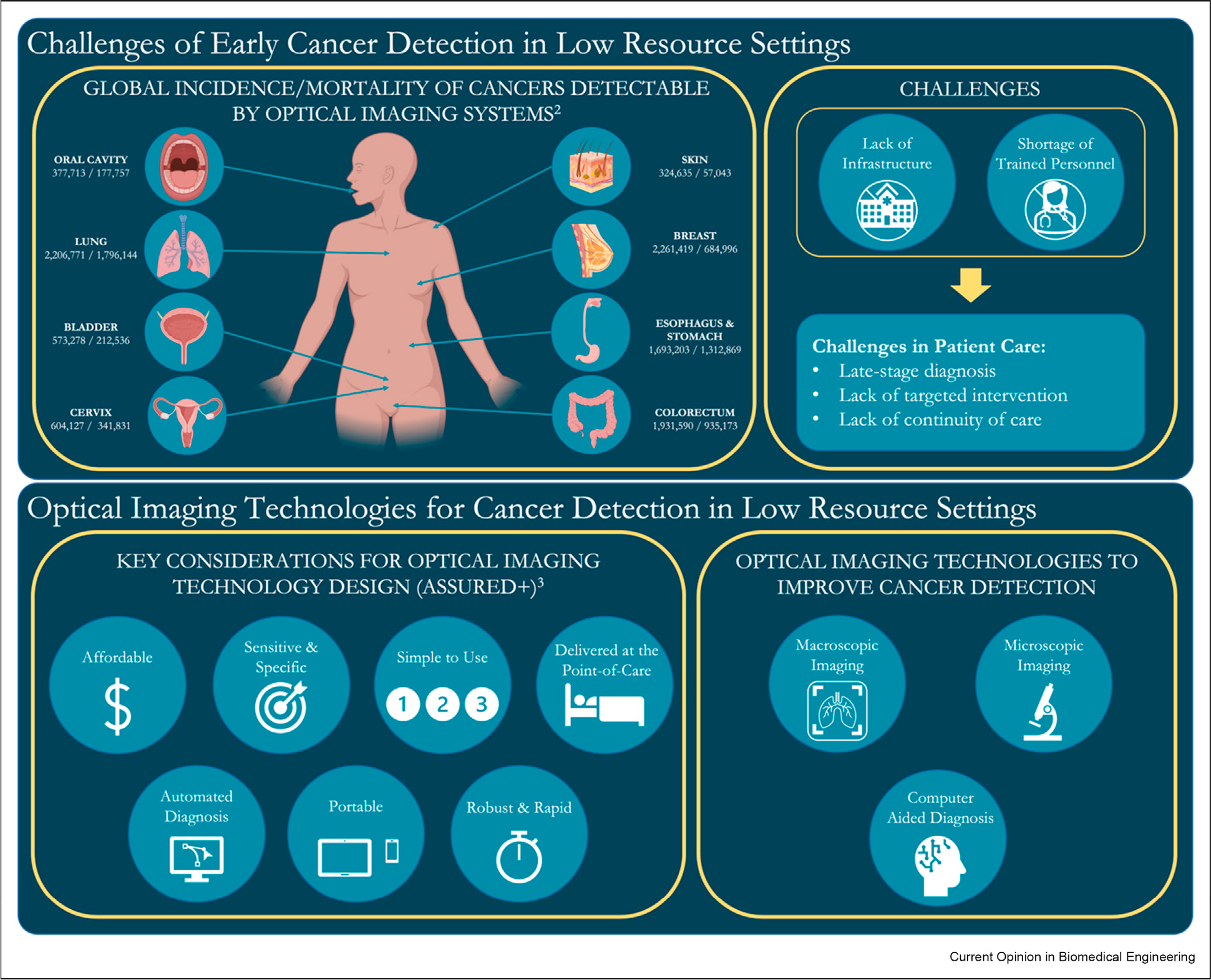
Cancer continues to affect underserved populations disproportionately. Novel optical imaging technologies, which can provide rapid, non-invasive, and accurate cancer detection at the point of care, have great potential to improve global cancer care. This article reviews the recent technical innovations and clinical translation of low-cost optical imaging technologies, highlighting the advances in both hardware and software, especially the integration of artificial intelligence, to improve in vivo cancer detection in low-resource settings. Additionally, this article provides an overview of existing challenges and future perspectives of adapting optical imaging technologies into clinical practice, which can potentially contribute to novel insights and programs that effectively improve cancer detection in low-resource settings.
Keywords: Deep learning; In vivo cancer detection; Low-resource settings; Optical imaging.
Conflict of interest statement
Declaration of competing interest The authors declare that they have no known competing financial interests or personal relationships that could have appeared to influence the work reported in this paper.
Figures
References
-
- Sung H, Ferlay J, Siegel RL, Laversanne M, Soerjomataram I, Jemal A, Bray F: Global cancer statistics 2020: GLOBOCAN estimates of incidence and mortality worldwide for 36 cancers in 185 countries. CA A Cancer J Clin 2021, 71:209–249. - PubMed
-
- Lin L, Jiang P, Bao Z, Pang W, Ding S, Yin M-J, Li P, Gu B: Fundamentals of optical imaging. In Optical imaging in human disease and biological research. Edited by Wei X, Gu B, Springer; 2021:1–22. - PubMed
Grants and funding
LinkOut - more resources
Full Text Sources