Eating behaviors as pathways from early childhood adversity to adolescent cardiometabolic risk
- PMID: 38407101
- PMCID: PMC11263003
- DOI: 10.1037/hea0001340
Eating behaviors as pathways from early childhood adversity to adolescent cardiometabolic risk
Abstract
Objective: To identify specific eating behavior pathways that mediate associations between financial difficulties, negative life events, and maternal depressive symptoms from 0 to 5 years and cardiometabolic risk in adolescence.
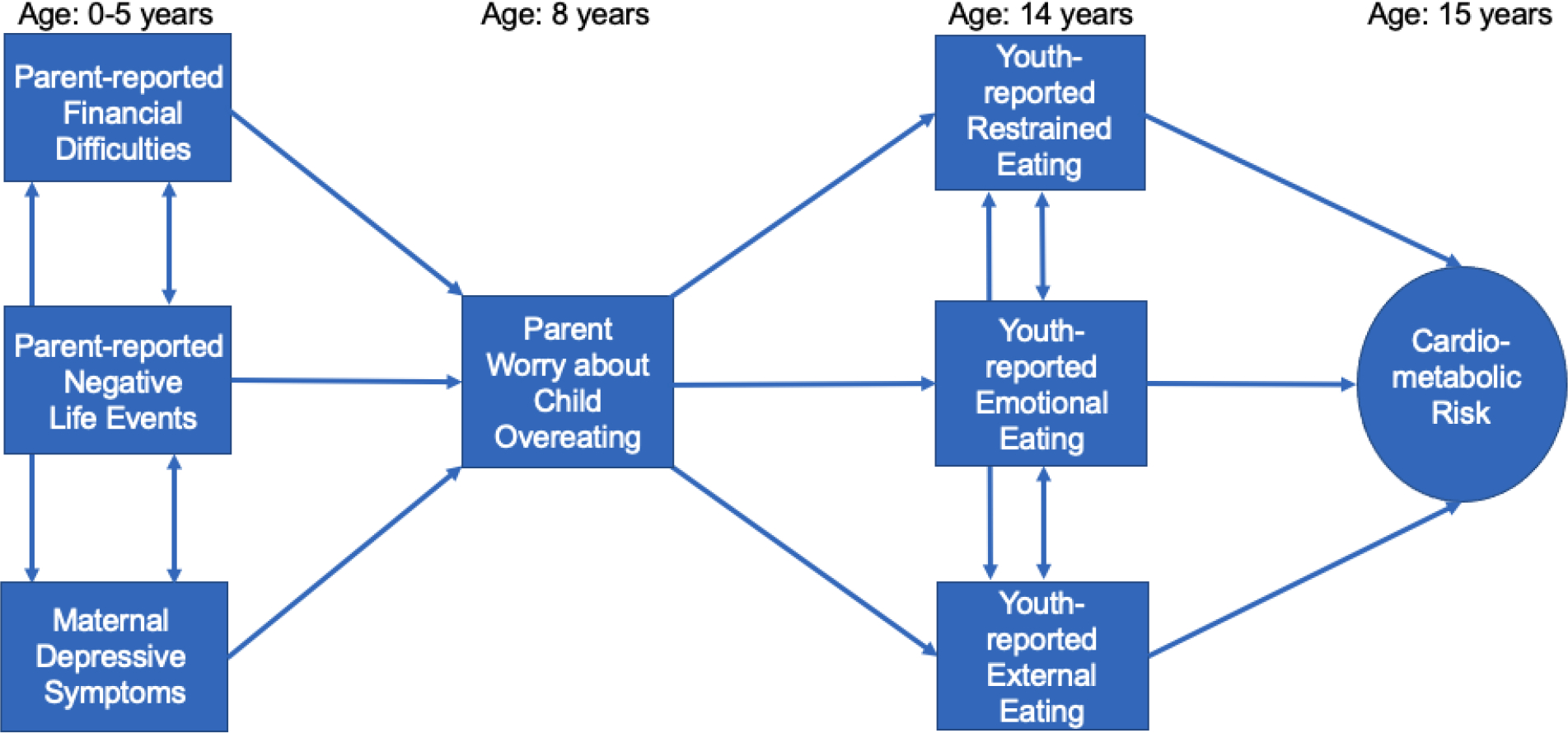
Method: Hypotheses were tested with data from birth to age 15 years using the Avon Longitudinal Study of Parents and Children, a birth cohort in the United Kingdom (n = 3,887 for current analyses). Mothers reported on financial difficulties, negative life events, and maternal depressive symptoms at multiple points from 0 to 5 years and reported on worry about child overeating at 8 years. Youth self-reported restrained, emotional, and external eating at age 14. Youth completed a cardiometabolic health assessment at age 15 where waist circumference, triglycerides, high-density lipoprotein, and insulin resistance were measured. Longitudinal structural equation modeling with bootstrapping was used to test mediation models.
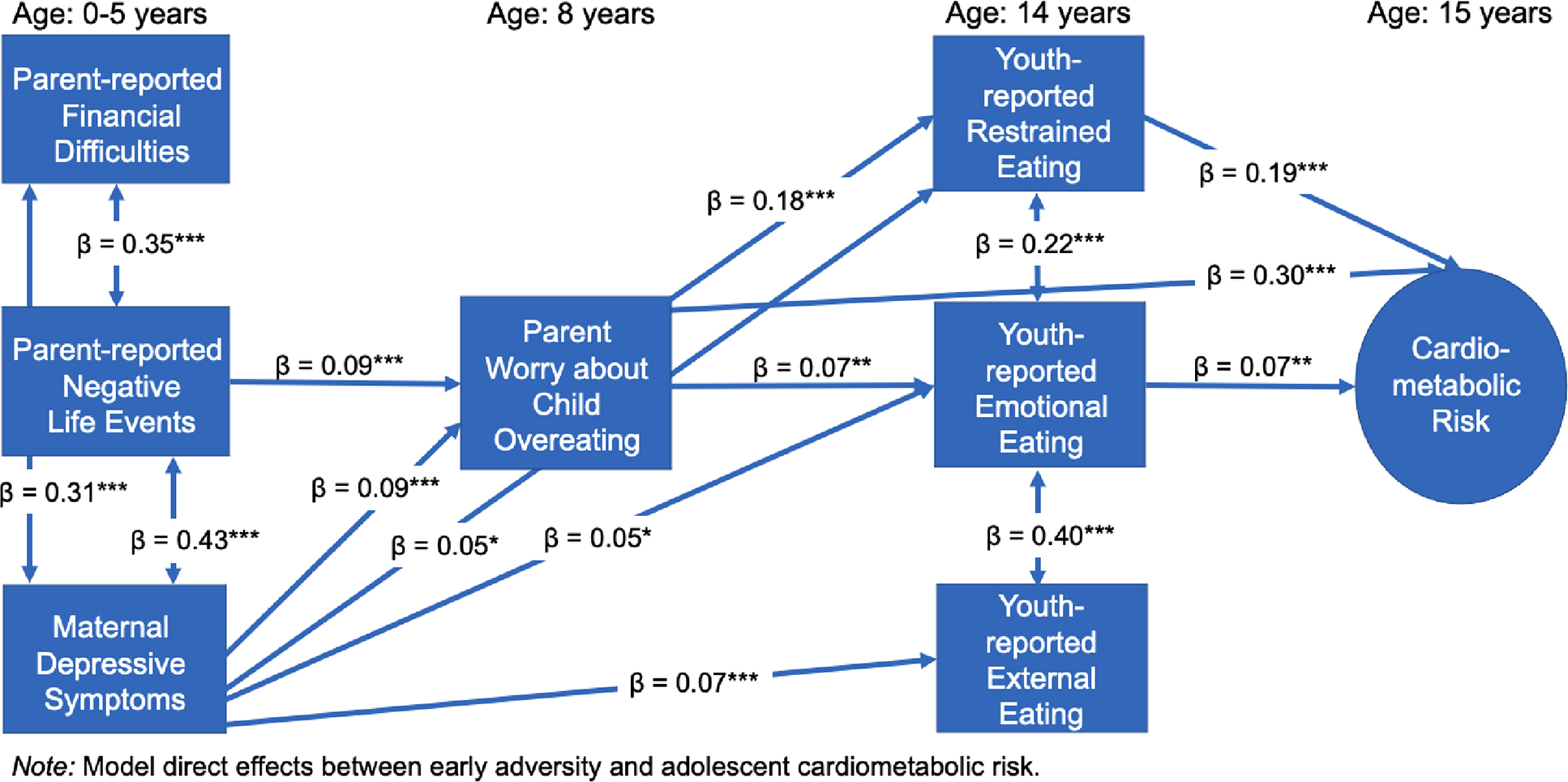
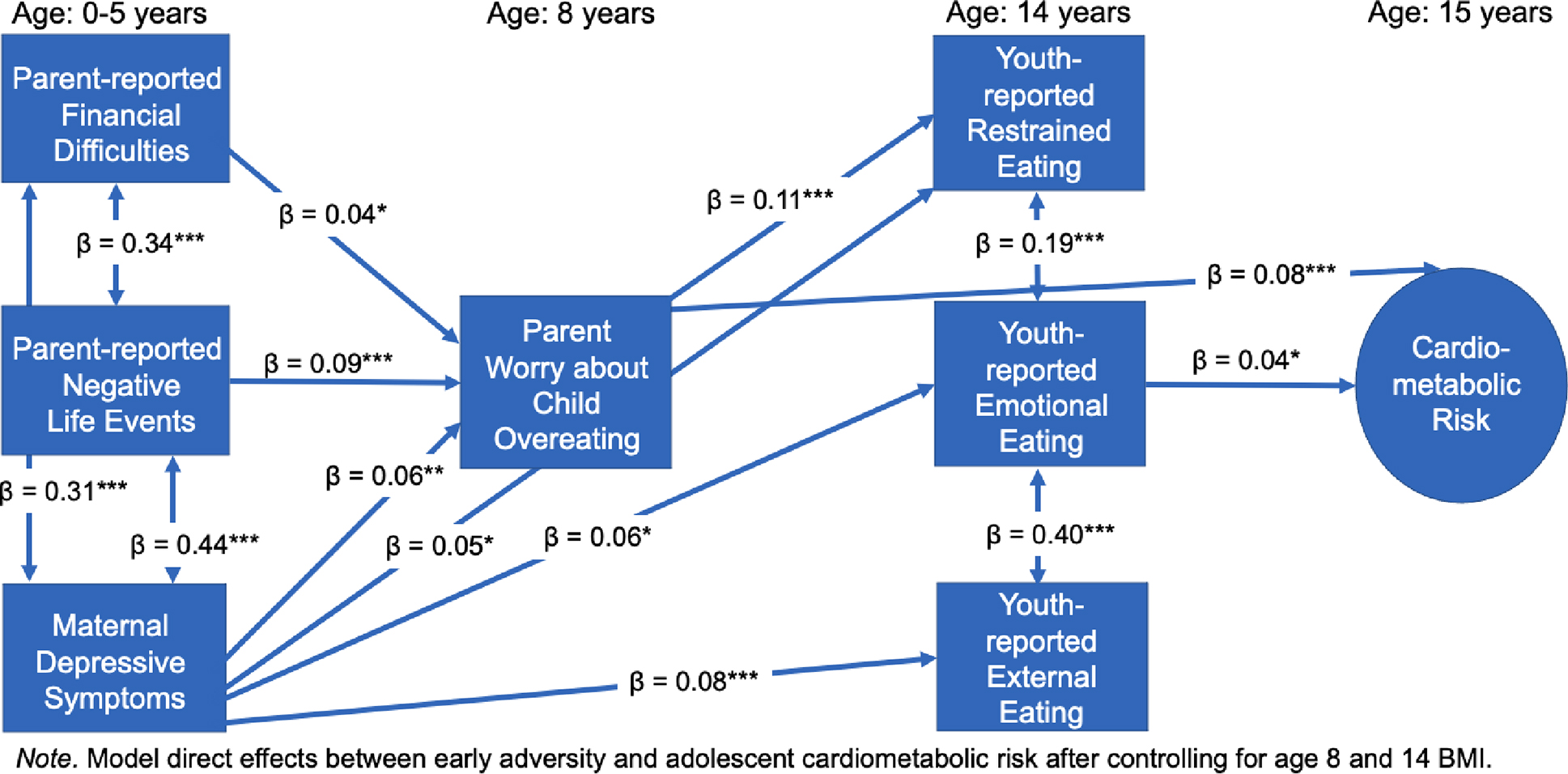
Results: Greater negative life events and maternal depressive symptoms predicted greater parental worry about child overeating at age 8, which directly predicted greater restrained and emotional eating at 14 and cardiometabolic risk at 15. Restrained and emotional eating at 14 directly predicted greater cardiometabolic risk at age 15.
Conclusions: Negative life events and maternal depressive symptoms in infancy/early childhood are associated with cardiometabolic risk in adolescence through pathways of parental worry about child overeating in middle childhood and youth-reported restrained and emotional eating in adolescence. (PsycInfo Database Record (c) 2024 APA, all rights reserved).
Conflict of interest statement
Figures
References
-
- Allen KL, Byrne SM, Oddy WH, Schmidt U, & Crosby RD (2014). Risk factors for binge eating and purging eating disorders: Differences based on age of onset. International Journal of Eating Disorders, 47(7), 802–812. - PubMed
-
- Balantekin KN, & Roemmich JN (2012). Children’s coping after psychological stress. Choices among food, physical activity, and television. Appetite, 59(2), 298–304. - PubMed
MeSH terms
Grants and funding
LinkOut - more resources
Full Text Sources