


The Vaginal Microbiota, Human Papillomavirus Infection, and Cervical Carcinogenesis: A Systematic Review in the Latina Population
- PMID: 38407720
- PMCID: PMC11176136
- DOI: 10.1007/s44197-024-00201-z
The Vaginal Microbiota, Human Papillomavirus Infection, and Cervical Carcinogenesis: A Systematic Review in the Latina Population
Abstract
Background: Latina women experience disproportionately higher rates of HPV infection, persistence, and progression to cervical dysplasia and cancer compared to other racial-ethnic groups. This systematic review explores the relationship between the cervicovaginal microbiome and human papillomavirus infection, cervical dysplasia, and cervical cancer in Latinas.
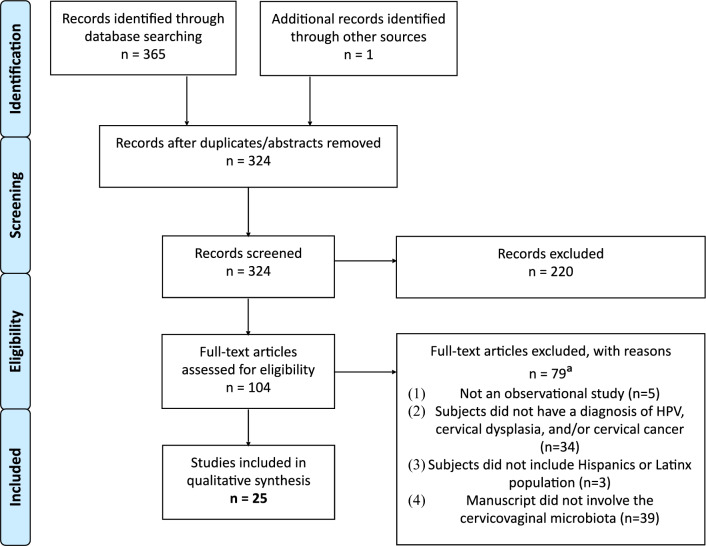
Methods: The review abides by the Preferred Reporting Items for Systematic Reviews and Meta-analyses guidelines. PubMed, EMBASE, and Scopus databases were searched from January 2000 through November 11, 2022. The review included observational studies reporting on the cervicovaginal microbiota in premenopausal Latina women with human papillomavirus infection, cervical dysplasia, and cervical cancer.
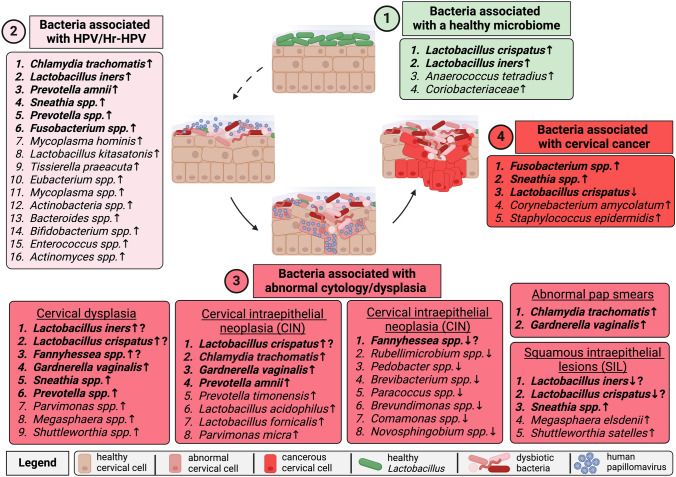
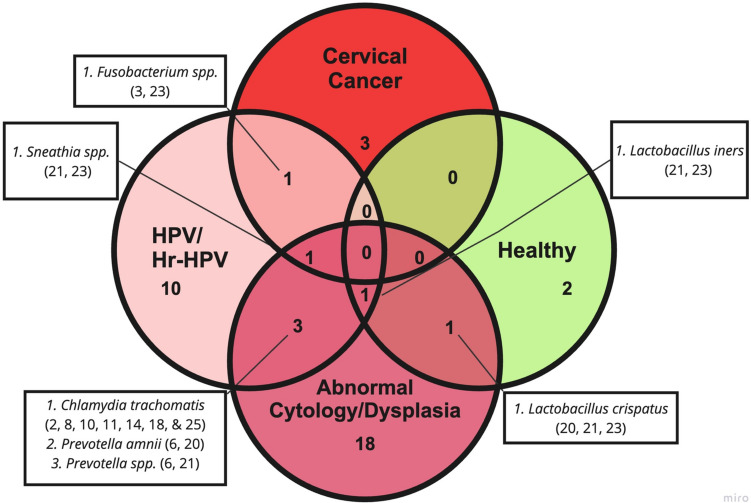
Results: Twenty-five articles were eligible for final inclusion (N = 131,183). Forty-two unique bacteria were reported in the cervicovaginal microbiome of Latinas. Seven bacteria: Lactobacillus crispatus, Lactobacillus iners, Chlamydia trachomatis, Prevotella spp., Prevotella amnii, Fusobacterium spp. and Sneathia spp. were enriched across multiple stages of cervical carcinogenesis in Latinas. Therefore, the total number of reported bacteria includes four bacteria associated with the healthy state, 16 bacteria enriched in human papillomavirus outcomes, 24 unique bacteria associated with abnormal cytology/dysplasia, and five bacteria associated with cervical cancer. Furthermore, three studies reported significantly higher alpha and beta diversity in Latinas with cervical dysplasia and cancer compared to controls. Lactobacillus depletion and an increased abundance of L. iners in Latinas compared to non-Latinas, regardless of human papillomavirus status or lesions, were observed.
Conclusions: The identification of 42 unique bacteria and their enrichment in cervical carcinogenesis can guide future cervicovaginal microbiome research to better inform cervical cancer prevention strategies in Latinas.
Keywords: Cervical cancer; Health disparities; Human papillomavirus; Latin America and the Caribbean; Latinas; Microbiome.
© 2024. The Author(s).
Conflict of interest statement
M.M.H.–K. is a paid consultant for Vaginal Biome Sciences and serves on the scientific advisory board for Freya Biosciences. None of this work or related to was shared with or was licensed to this company or any other commercial entity. V.M., N.R.J., N.S.B., and M.F. declare no financial interests. The authors have no relevant non-financial interests to disclose.
Figures
References
Publication types
MeSH terms
Grants and funding
LinkOut - more resources
Full Text Sources
Medical
Miscellaneous
