


Dietary Changes of Youth during the COVID-19 Pandemic: A Systematic Review
- PMID: 38408731
- PMCID: PMC11007747
- DOI: 10.1016/j.tjnut.2024.02.022
Dietary Changes of Youth during the COVID-19 Pandemic: A Systematic Review
Abstract
Background: The coronavirus disease 2019 (COVID-19) pandemic has taken the lives of millions and disrupted countless more worldwide. Simply living through the pandemic has had drastic effects on the health of citizens. Diet, an important aspect of health, has been uniquely affected by the pandemic, although these changes have not been sufficiently studied among youth.
Objectives: The objective of this systematic review was to investigate dietary changes of youth during COVID-19.
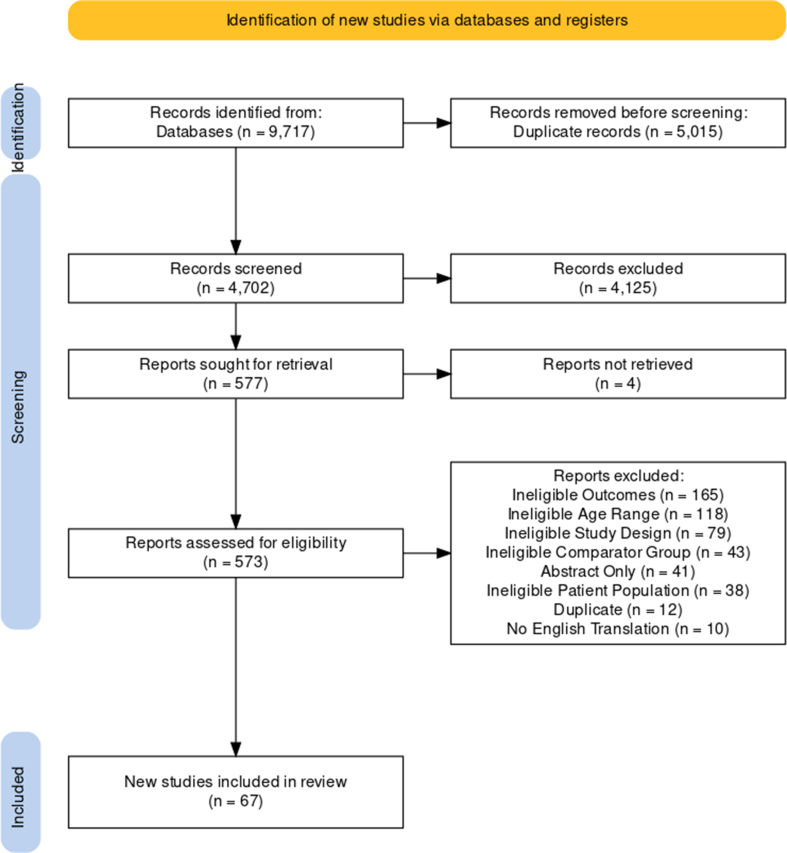
Methods: A prespecified literature review was conducted using MEDLINE, EMBASE, Scopus, and CINAHL to identify studies from January 2020 to May 2023 that assessed dietary changes among youth aged ≤20 y compared with before the pandemic. Only quantitative observational studies that were published in English were included. Two authors completed all screening/study selection independently, with disagreements being resolved via discussion. Data extraction was completed by 1 author. Dietary changes were categorized into food groups and habits for analysis purposes.
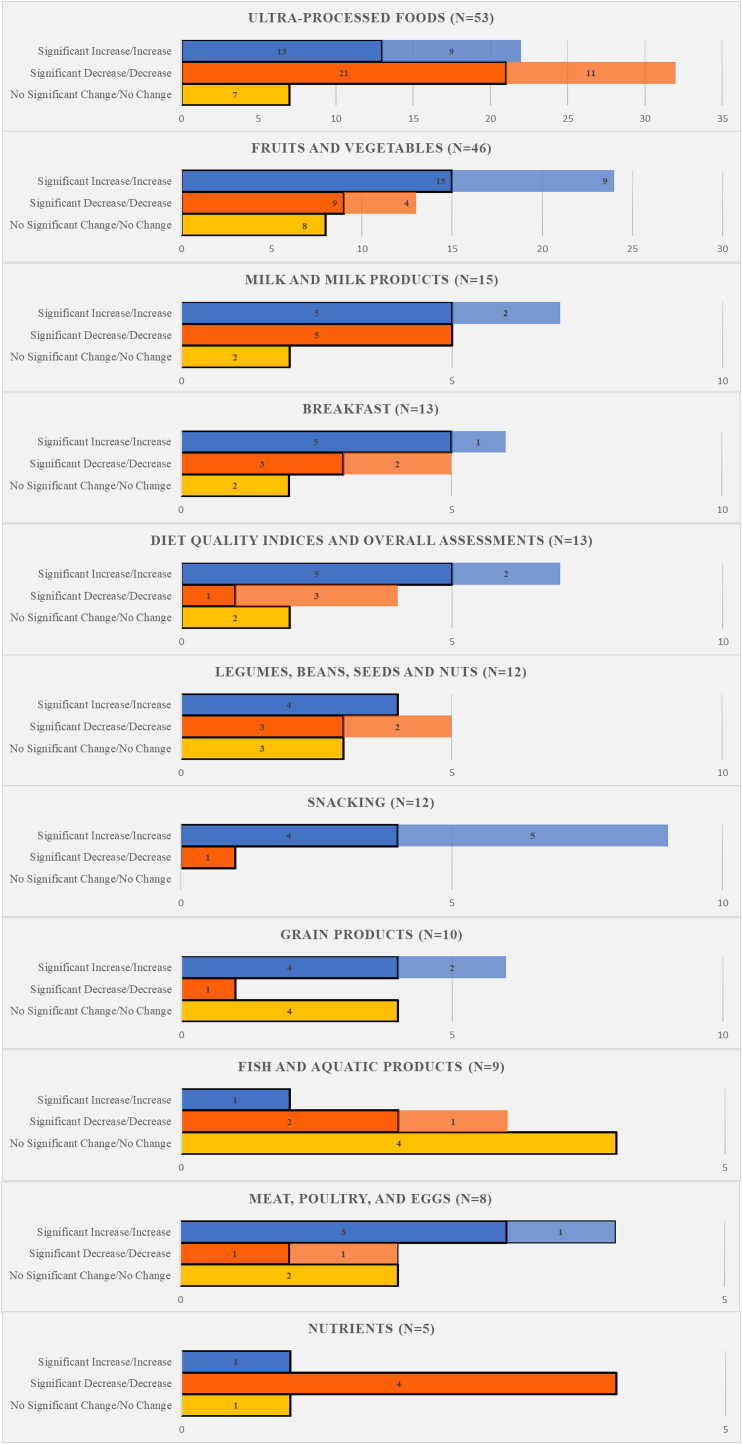
Results: In total, 67 studies met inclusion criteria. Most studies used recall to assess changes (48/67; 71.6%). Most studies found an increase in fruits and vegetables (24/46; 52.2%), grain products (6/11; 54.5%), meat, poultry, and eggs (4/8, 50.0%), diet quality indices and/or overall dietary assessments (7/13, 53.8%), and the frequency of snacking (9/12; 75.0%), whereas generally finding a decrease in ultraprocessed foods (32/53; 60.4%), compared with before the COVID-19 pandemic. Mixed findings or primarily no changes were found for fish and aquatic products, legumes, beans, seeds and nuts, milk and milk products, breakfast consumption, and nutrient intake.
Conclusions: Mostly favorable dietary changes appear to have occurred among youth during COVID-19, although there were several mixed findings and unclear takeaways among the foods and habits under study. The heterogeneity of defining food groups was a noted limitation in the current review.
Keywords: COVID-19; children; nutrition; teen; youth.
Copyright © 2024 The Authors. Published by Elsevier Inc. All rights reserved.
Figures
References
-
- WHO. WHO Director-General’s opening remarks at the media briefing on COVID-19—11 March 2020 [Internet]. [cited August 26, 2022]. Available from: https://www.who.int/director-general/speeches/detail/who-director-genera....
-
- Koh D. COVID-19 lockdowns throughout the world. Occup. Med. (Lond.). 2020;70(5):322.
-
- Czeisler M.É., Tynan M.A., Howard M.E., Honeycutt S., Fulmer E.B., Kidder D.P., et al. Public attitudes, behaviors, and beliefs related to COVID-19, stay-at-home orders, nonessential business closures, and public health guidance—United States, New York City, and Los Angeles, May 5-12, 2020. MMWR Morb. Mortal. Wkly Rep. 2020;69(24):751–758. - PMC - PubMed
-
- Bestetti R.B., Furlan-Daniel R., Couto L.B. Nonpharmaceutical public health interventions to curb the COVID-19 pandemic: a narrative review. J. Infect. Dev. Ctries. 2022;16(4):583–591. - PubMed
Publication types
MeSH terms
LinkOut - more resources
Full Text Sources
Medical
Miscellaneous
