Understanding the Unfolded Protein Response (UPR) Pathway: Insights into Neuropsychiatric Disorders and Therapeutic Potentials
- PMID: 38410073
- PMCID: PMC10902702
- DOI: 10.4062/biomolther.2023.181
Understanding the Unfolded Protein Response (UPR) Pathway: Insights into Neuropsychiatric Disorders and Therapeutic Potentials
Abstract
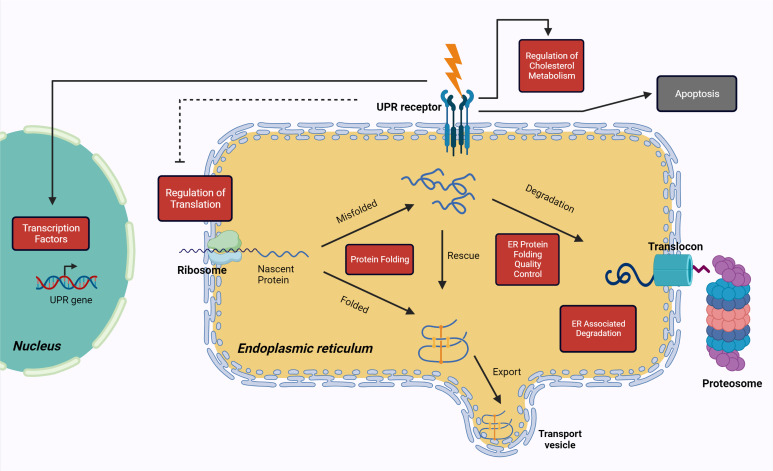
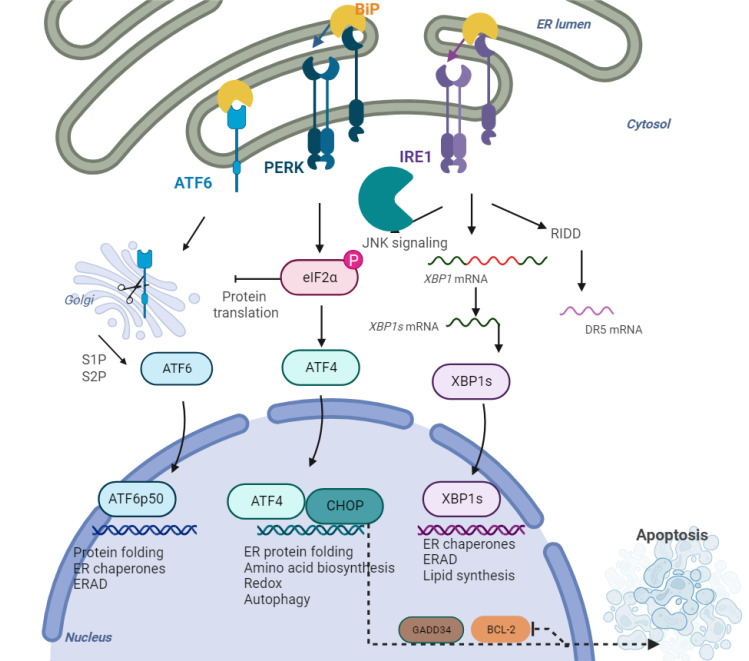
The Unfolded Protein Response (UPR) serves as a critical cellular mechanism dedicated to maintaining protein homeostasis, primarily within the endoplasmic reticulum (ER). This pathway diligently responds to a variety of intracellular indicators of ER stress with the objective of reinstating balance by diminishing the accumulation of unfolded proteins, amplifying the ER's folding capacity, and eliminating slow-folding proteins. Prolonged ER stress and UPR irregularities have been linked to a range of neuropsychiatric disorders, including major depressive disorder, bipolar disorder, and schizophrenia. This review offers a comprehensive overview of the UPR pathway, delineating its activation mechanisms and its role in the pathophysiology of neuropsychiatric disorders. It highlights the intricate interplay within the UPR and its profound influence on brain function, synaptic perturbations, and neural developmental processes. Additionally, it explores evolving therapeutic strategies targeting the UPR within the context of these disorders, underscoring the necessity for precision and further research to effective treatments. The research findings presented in this work underscore the promising potential of UPR-focused therapeutic approaches to address the complex landscape of neuropsychiatric disorders, giving rise to optimism for improving outcomes for individuals facing these complex conditions.
Keywords: Endoplasmic reticulum (ER) stress; Neuropsychiatric disorders; Unfolded protein response.
Figures
References
-
- Bengesser S. A., Reininghaus E. Z., Lackner N., Birner A., Fellendorf F. T., Platzer M., Kainzbauer N., Tropper B., Hormanseder C., Queissner R., Kapfhammer H. P., Wallner-Liebmann S. J., Fuchs R., Petek E., Windpassinger C., Schnalzenberger M., Reininghaus B., Evert B., Waha A. Is the molecular clock ticking differently in bipolar disorder? Methylation analysis of the clock gene ARNTL. World J. Biol. Psychiatry. 2018;19:S21–S29. doi: 10.1080/15622975.2016.1231421. - DOI - PubMed
Publication types
LinkOut - more resources
Full Text Sources