


Effectiveness and reliability of hypnosis in stereotaxy: a randomized study
- PMID: 38411747
- PMCID: PMC10899299
- DOI: 10.1007/s00701-024-05943-0
Effectiveness and reliability of hypnosis in stereotaxy: a randomized study
Abstract
Background: Patients suffering from Parkinson's disease (PD) may experience pain during stereotactic frame (SF) fixation in deep brain stimulation (DBS). We assessed the role of hypnosis during the SF fixation in PD patients undergoing awake bilateral subthalamic nucleus (STN) DBS.
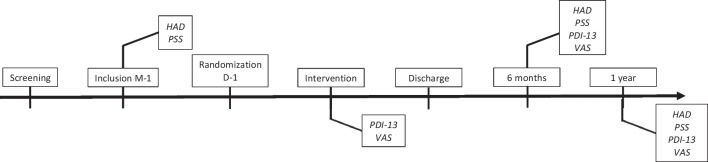
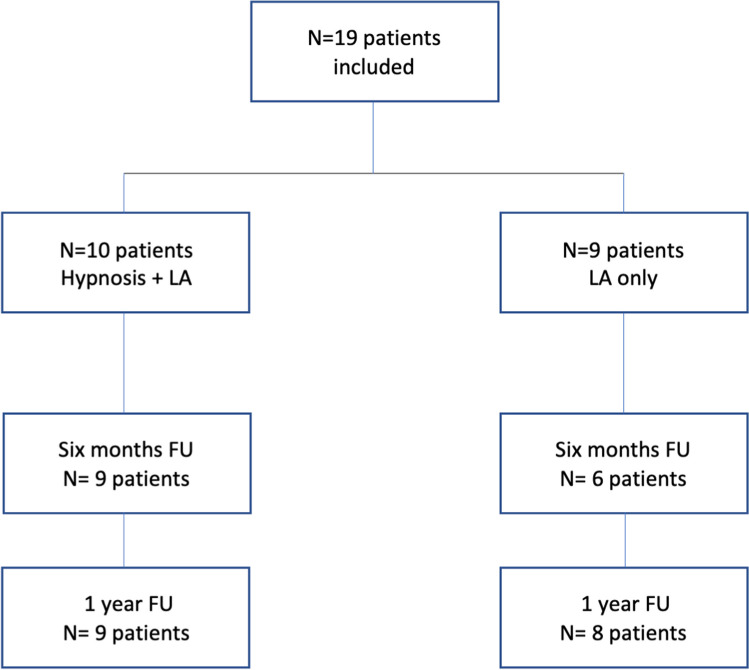
Methods: N = 19 patients were included (N = 13 males, mean age 63 years; N = 10 allocated to the hypnosis and N = 9 allocated to the control groups). Patients were randomly assigned to the interventional (hypnosis and local anesthesia) or non-interventional (local anesthesia only) groups. The primary outcome was the pain perceived (the visual analogue scale (VAS)). Secondary outcomes were stress, anxiety, and depression, as measured by the perceived stress scale (PSS) and hospital anxiety and depression scale (HADS). Procedural distress was measured using the peritraumatic distress inventory (PDI-13).
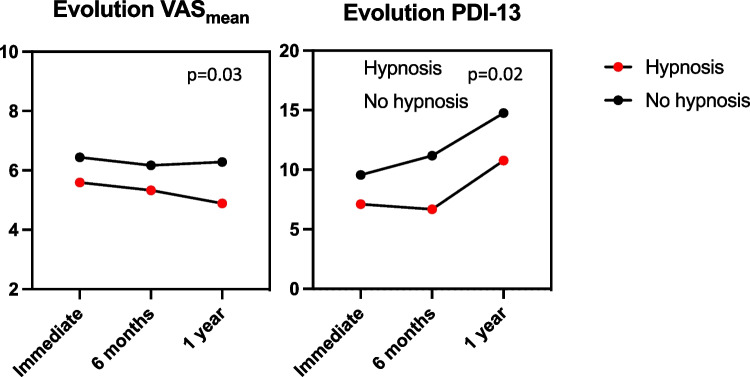
Results: In the hypnosis group, VASmean was 5.6 ± 2.1, versus 6.4 ± 1.2 in the control group (p = 0.31). Intervention and control groups reported similar VASmax scores (7.6 ± 2.1 versus 8.6 ± 1.6 (p = 0.28), respectively). Both groups had similar HADS scores (6.2 ± 4.3 versus 6.7 ± 1.92, p = 0.72 (HADSa) and 6.7 ± 4.2 versus 7.7 ± 3, p = 0.58 (HADSd)), so were the PSS scores (26.1 ± 6.3 versus 25.1 ± 7, p = 0.75). Evolutions of VASmean (R2 = 0.93, 95% CI [0.2245, 1.825], p = 0.03) and PDI-13 scores (R2 = 0.94, 95% CI [1.006, 6.279], p = 0.02) significantly differ over follow-up with patients in the hypnosis groups showing lower scores.
Conclusion: In this unblinded, randomized study, hypnosis does not influence pain, anxiety, and distress during awake SF fixation but modulates pain memory over time and may prevent the integration of awake painful procedures as a bad experience into the autobiographical memory of patients suffering from PD. A randomized controlled study with more data is necessary to confirm our findings.
Trial registration: ClinicalTrials.gov NCT03074422.
Keywords: Deep brain stimulation; Hypnosis; Pain; Parkinson’s disease.
© 2024. The Author(s).
Conflict of interest statement
The authors declare no competing interests.
Figures
References
Publication types
MeSH terms
Supplementary concepts
Associated data
LinkOut - more resources
Full Text Sources
Medical
Research Materials
