


Dynamics of brain-muscle networks reveal effects of age and somatosensory function on gait
- PMID: 38414847
- PMCID: PMC10897916
- DOI: 10.1016/j.isci.2024.109162
Dynamics of brain-muscle networks reveal effects of age and somatosensory function on gait
Abstract
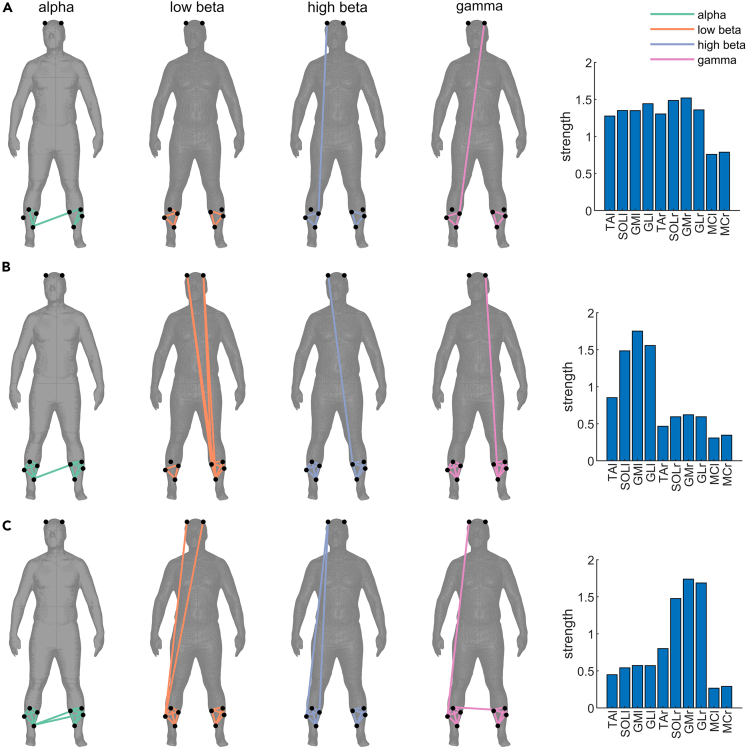
Walking is a complex motor activity that requires coordinated interactions between the sensory and motor systems. We used mobile EEG and EMG to investigate the brain-muscle networks involved in gait control during overground walking in young people, older people, and individuals with Parkinson's disease. Dynamic interactions between the sensorimotor cortices and eight leg muscles within a gait cycle were assessed using multivariate analysis. We identified three distinct brain-muscle networks during a gait cycle. These networks include a bilateral network, a left-lateralized network activated during the left swing phase, and a right-lateralized network active during the right swing. The trajectories of these networks are contracted in older adults, indicating a reduction in neuromuscular connectivity with age. Individuals with the impaired tactile sensitivity of the foot showed a selective enhancement of the bilateral network, possibly reflecting a compensation strategy to maintain gait stability. These findings provide a parsimonious description of interindividual differences in neuromuscular connectivity during gait.
Keywords: Age; Neuroscience; Techniques in neuroscience.
© 2024 The Author(s).
Conflict of interest statement
The authors declare no competing interests.
Figures




References
-
- Nielsen J.B. How we walk: Central control of muscle activity during human walking. Neuroscientist. 2003;9:195–204. - PubMed
LinkOut - more resources
Full Text Sources
