


Who Transmits Tuberculosis to Whom: A Cross-Sectional Analysis of a Cohort Study in Lima, Peru
- PMID: 38416532
- PMCID: PMC11276835
- DOI: 10.1164/rccm.202307-1217OC
Who Transmits Tuberculosis to Whom: A Cross-Sectional Analysis of a Cohort Study in Lima, Peru
Erratum in
-
Erratum: Who Transmits Tuberculosis to Whom: A Cross-Sectional Analysis of a Cohort Study in Lima, Peru.Am J Respir Crit Care Med. 2024 Nov 15;210(10):1280. doi: 10.1164/rccm.v210erratum8. Am J Respir Crit Care Med. 2024. PMID: 39545752 Free PMC article. No abstract available.
Abstract
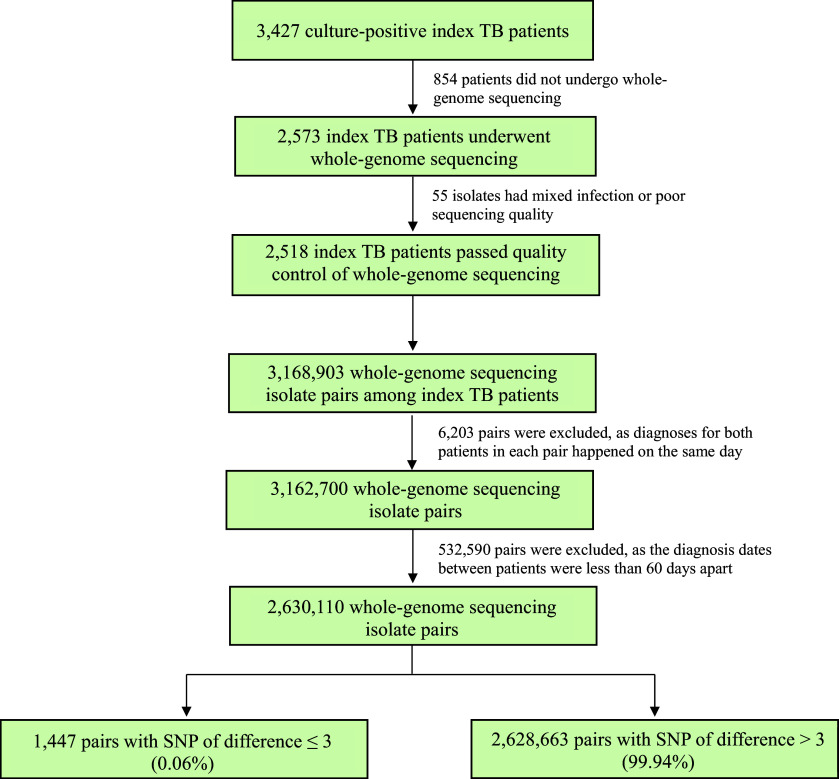
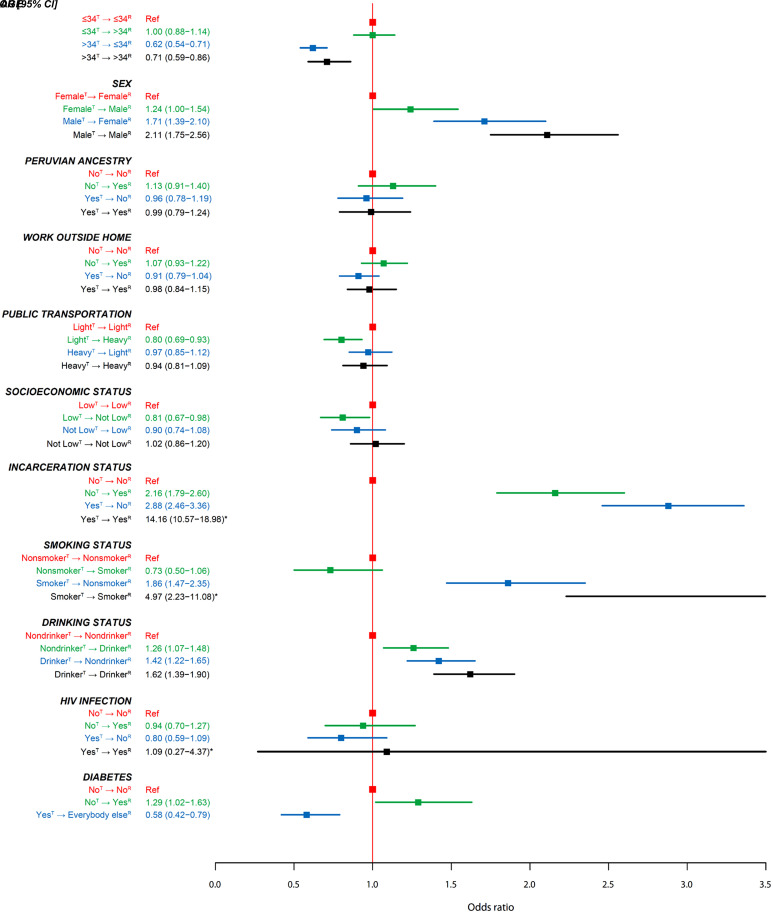
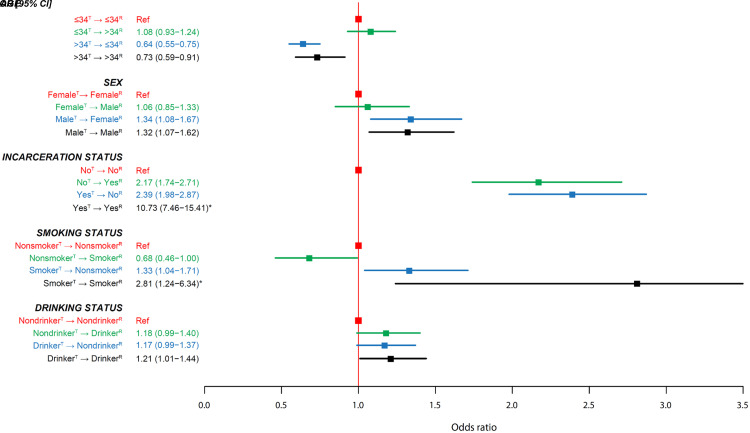
Rationale: The persistent burden of tuberculosis (TB) disease emphasizes the need to identify individuals with TB for treatment and those at a high risk of incident TB for prevention. Targeting interventions toward those at high risk of developing and transmitting TB is a public health priority. Objectives: We aimed to identify characteristics of individuals involved in TB transmission in a community setting, which may guide the prioritization of targeted interventions. Methods: We collected clinical and sociodemographic data from a cohort of patients with TB in Lima, Peru. We used whole-genome sequencing data to assess the genetic distance between all possible pairs of patients; we considered pairs to be the result of a direct transmission event if they differed by three or fewer SNPs, and we assumed that the first diagnosed patient in a pair was the transmitter and the second was the recipient. We used logistic regression to examine the association between host factors and the likelihood of direct TB transmission. Measurements and Main Results: Analyzing data from 2,518 index patients with TB, we identified 1,447 direct transmission pairs. Regardless of recipient attributes, individuals less than 34 years old, males, and those with a history of incarceration had a higher likelihood of being transmitters in direct transmission pairs. Direct transmission was more likely when both patients were drinkers or smokers. Conclusions: This study identifies men, young adults, former prisoners, alcohol consumers, and smokers as priority groups for targeted interventions. Innovative strategies are needed to extend TB screening to social groups such as young adults and prisoners with limited access to routine preventive care.
Keywords: interventions; pulmonary tuberculosis; transmission; whole-genome sequencing.
Figures
Comment in
-
One Half of the Pair: Prioritizing Tuberculosis Transmitters for Early Detection.Am J Respir Crit Care Med. 2024 Jul 15;210(2):143-144. doi: 10.1164/rccm.202404-0699ED. Am J Respir Crit Care Med. 2024. PMID: 38687502 Free PMC article. No abstract available.
References
-
- World Health Organization. https://www.who.int/teams/global-tuberculosis-programme/tb-reports/globa...
-
- Pai M, Kasaeva T, Swaminathan S. Covid-19’s devastating effect on tuberculosis care—a path to recovery. N Engl J Med . 2022;386:1490–1493. - PubMed
-
- Date A, Modi S. TB screening among people living with HIV/AIDS in resource-limited settings. J Acquir Immune Defic Syndr . 2015;68:S270–S273. - PubMed
Publication types
MeSH terms
Grants and funding
LinkOut - more resources
Full Text Sources
Medical
