


Association of consumption of sugar-sweetened beverages with elevated blood pressure among college students in Yunnan Province, China
- PMID: 38418286
- PMCID: PMC10966883
- DOI: 10.1017/S1368980024000569
Association of consumption of sugar-sweetened beverages with elevated blood pressure among college students in Yunnan Province, China
Abstract
Objective: Although some studies have examined the association between eating behaviour and elevated blood pressure (EBP) in adolescents, current data on the association between sugar-sweetened beverages (SSB) and EBP in adolescents in Yunnan Province, China, are lacking.
Setting: Cluster sampling was used to survey freshmen at a college in Kunming, Yunnan Province, from November to December. Data on SSB consumption were collected using an FFQ measuring height, weight and blood pressure. A logistic regression model was used to analyse the association between SSB consumption and EBP, encompassing prehypertension and hypertension with sex-specific analyses.
Participants: The analysis included 4781 college students.
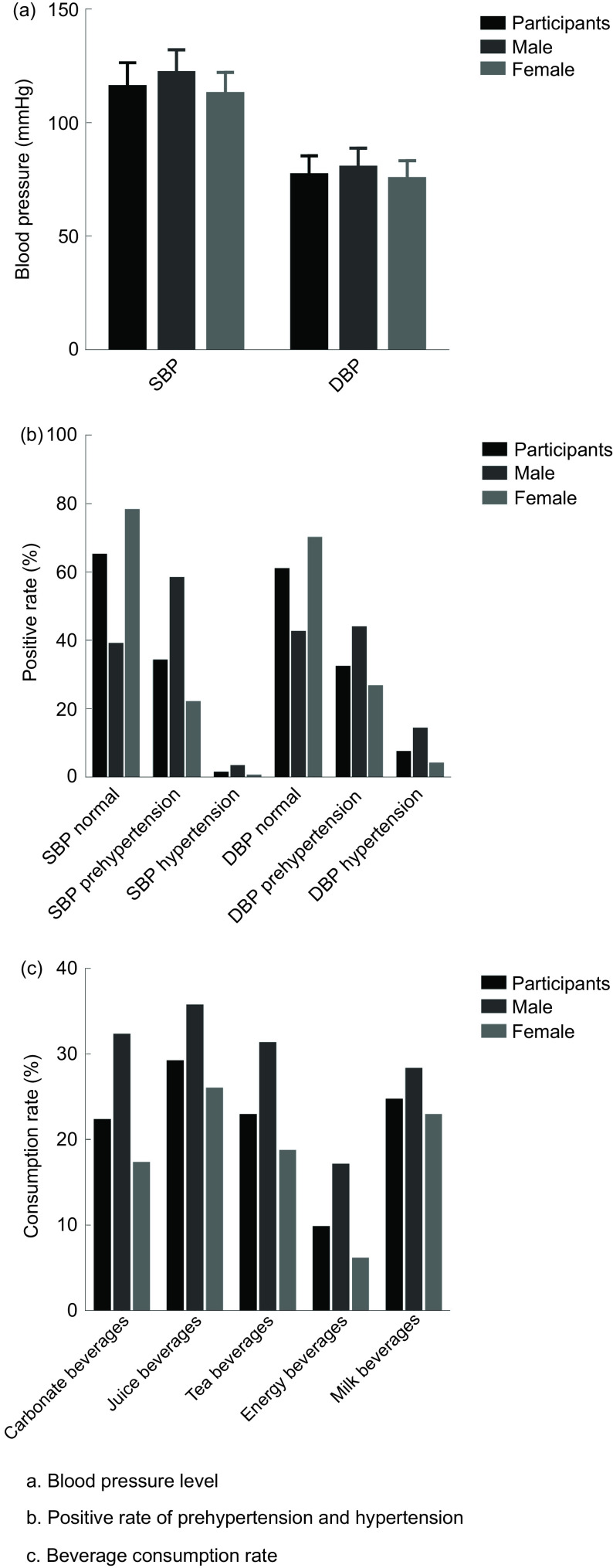
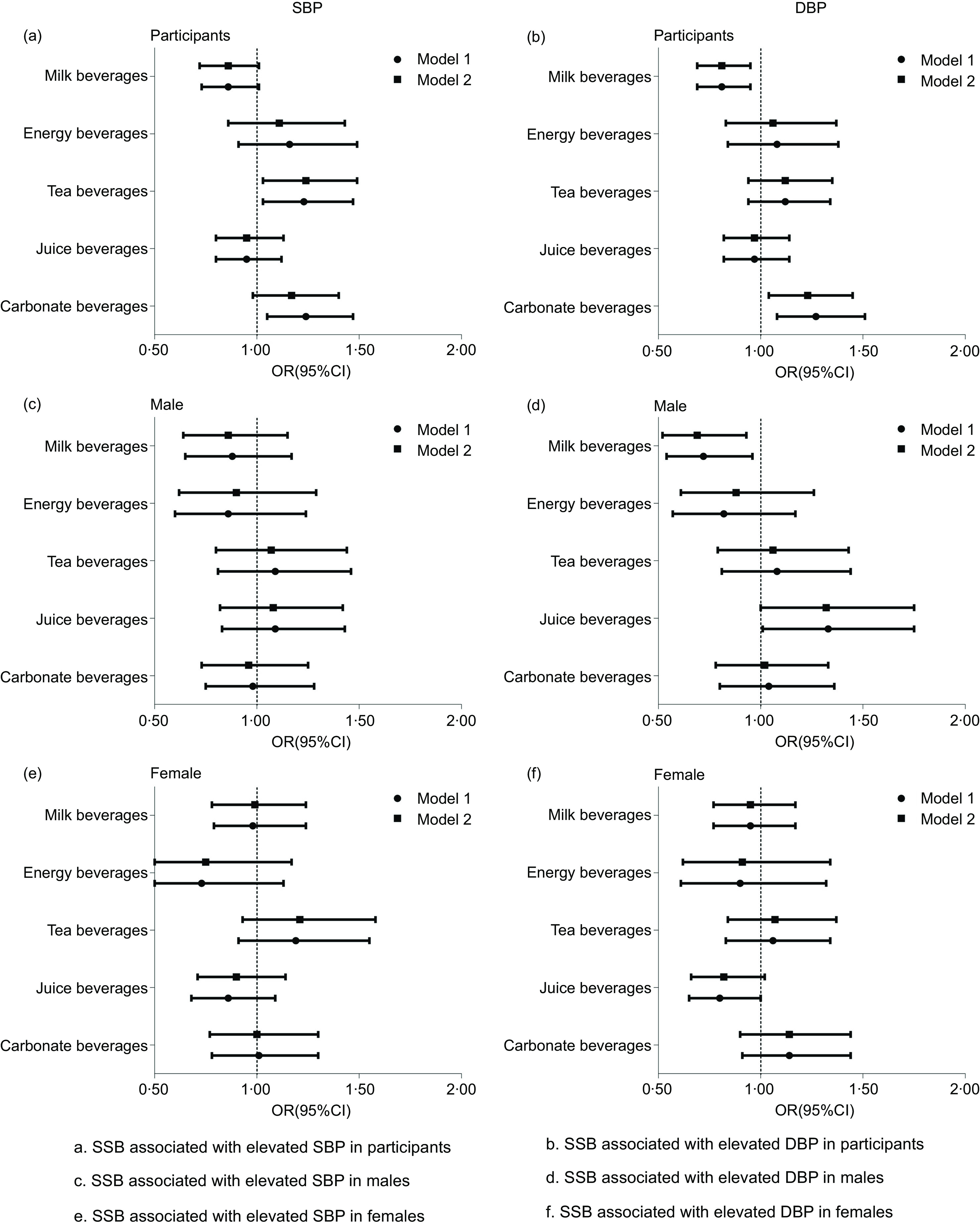
Results: Elevated systolic blood pressure (SBP) and diastolic blood pressure (DBP) were detected in 35·10 % (1678/4781) and 39·34 % (1881/4781) of patients, respectively. After adjusting for confounding variables, tea beverage consumption was associated with elevated SBP (OR = 1·24, 95 % CI: 1·03, 1·49, P = 0·024), and carbonated beverage (OR = 1·23, 95 % CI: 1·04, 1·45, P = 0·019) and milk beverage (OR = 0·81, 95 % CI: 0·69, 0·95, P = 0·010) consumption was associated with elevated DBP in college students. Moreover, fruit beverage (OR = 1·32, 95 % CI: 1·00, 1·75, P = 0·048) and milk beverage consumption (OR = 0·69, 95 % CI: 0·52, 0·93, P = 0·014) was associated with elevated DBP in males.
Conclusion: Our findings indicated that fruit and milk beverage consumption was associated with elevated DBP in males, and no association was observed with EBP in females.
Keywords: Association; College students; Hypertension; Prehypertension; Sugar-sweetened beverages.
Conflict of interest statement
The authors declare that they have no competing interests.
Figures
References
-
- Writing Group of 2018 Chinese Guidelines for the Management of Hypertension (2019) 2018 Chinese guidelines for the management of hypertension. Chin J Cardiovasc Med 24, 24–56.
-
- Ma SJ, Yang L, Zhao M et al. (2020) Changing trends in the levels of blood pressure and prevalence of hypertension among Chinese children and adolescents from 1991 to 2015. Zhonghua Liu Xing Bing Xue Za Zhi 41, 178–183. - PubMed
MeSH terms
Substances
LinkOut - more resources
Full Text Sources
Medical
