


Prefrontal theta-gamma transcranial alternating current stimulation improves non-declarative visuomotor learning in older adults
- PMID: 38418511
- PMCID: PMC10901881
- DOI: 10.1038/s41598-024-55125-2
Prefrontal theta-gamma transcranial alternating current stimulation improves non-declarative visuomotor learning in older adults
Erratum in
-
Author Correction: Prefrontal theta-gamma transcranial alternating current stimulation improves non-declarative visuomotor learning in older adults.Sci Rep. 2024 Apr 9;14(1):8295. doi: 10.1038/s41598-024-58939-2. Sci Rep. 2024. PMID: 38594453 Free PMC article. No abstract available.
Abstract
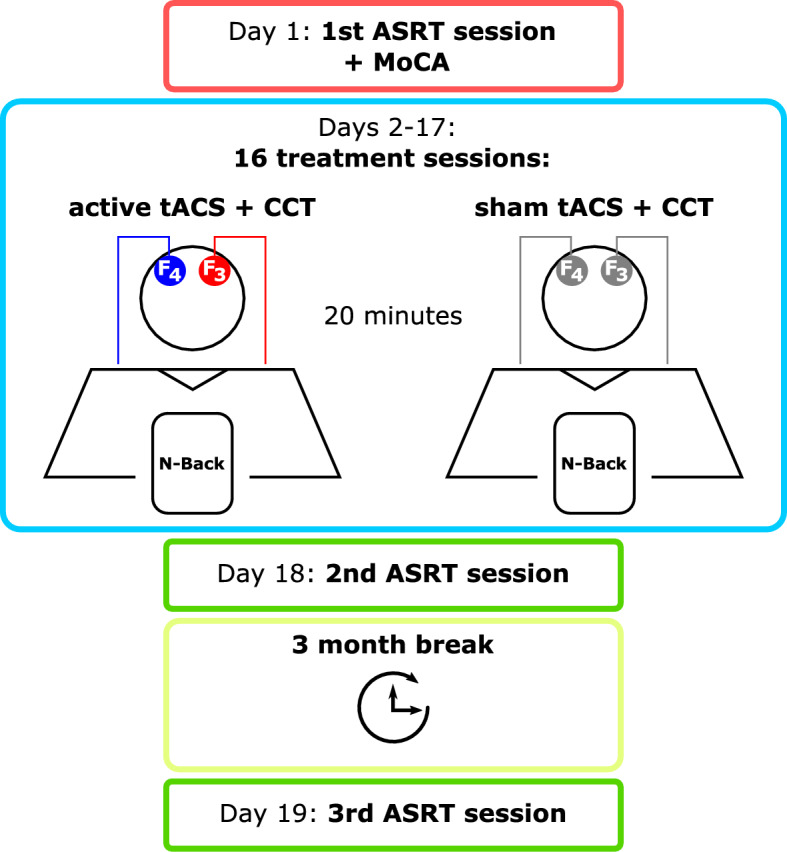
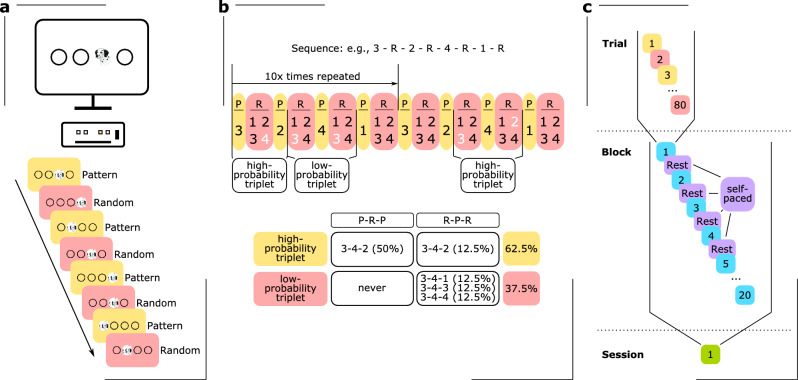
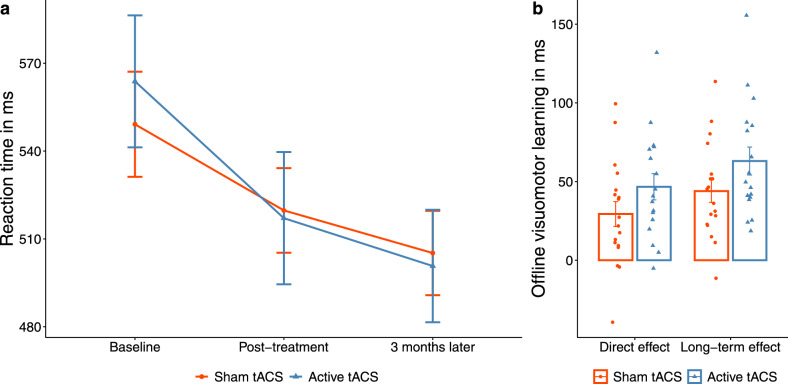
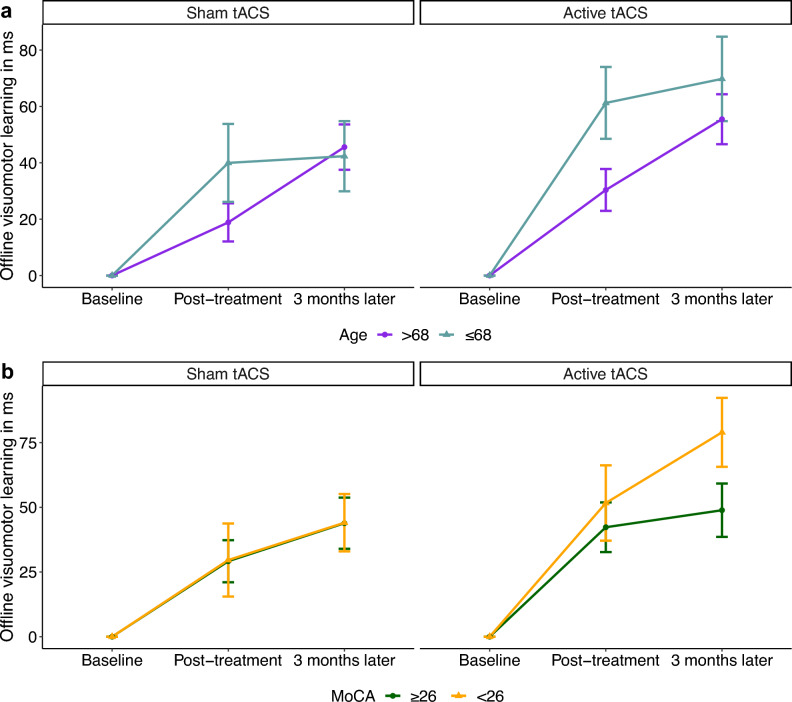
The rise in the global population of older adults underscores the significance to investigate age-related cognitive disorders and develop early treatment modalities. Previous research suggests that non-invasive transcranial Alternating Current Stimulation (tACS) can moderately improve cognitive decline in older adults. However, non-declarative cognition has received relatively less attention. This study investigates whether repeated (16-day) bilateral theta-gamma cross-frequency tACS targeting the Dorsolateral Prefrontal Cortex (DLPFC) enhances non-declarative memory. Computerized cognitive training was applied alongside stimulation to control for the state-of-the-brain. The Alternating Serial Reaction Time (ASRT) task was employed to assess non-declarative functions such as visuomotor skill and probabilistic sequence learning. Results from 35 participants aged 55-82 indicated that active tACS led to more substantial improvements in visuomotor skills immediately after treatment, which persisted 3 months later, compared to sham tACS. Treatment benefit was more pronounced in older adults of younger age and those with pre-existing cognitive decline. However, neither intervention group exhibited modulation of probabilistic sequence learning. These results suggest that repeated theta-gamma tACS can selectively improve distinct non-declarative cognitive aspects when targeting the DLPFC. Our findings highlight the therapeutic potential of tACS in addressing deficits in learning and retaining general skills, which could have a positive impact on the quality of life for cognitively impaired older individuals by preserving independence in daily activities.
Keywords: Aging; Cognition; Cross-frequency coupling; Elderly; Implicit learning; Non-declarative memory; Transcranial alternating current stimulation (tACS).
© 2024. The Author(s).
Conflict of interest statement
L.D., H.K., I.C., T.V., and D.N. declare no conflict of interest associated with the research presented in this scientific paper. A.A. is the vice president of the European Society for Brain Stimulation. A.A. has served as a paid consultant for NeuroConn, Ilmenau, Savir GmbH, Magdeburg, Germany, and is currently a paid advisor by Pulvinar, USA.
Figures
References
-
- Stites SD, Harkins K, Rubright JD, Karlawish J. Relationships between cognitive complaints and quality of life in older adults with mild cognitive impairment, mild Alzheimer disease dementia, and normal cognition. Alzheimer Dis. Assoc. Disord. 2018;32(4):276–283. doi: 10.1097/WAD.0000000000000262. - DOI - PMC - PubMed
MeSH terms
Grants and funding
LinkOut - more resources
Full Text Sources
