. 2024 Feb 28;14(1):4863.
doi: 10.1038/s41598-024-55467-x.

Date fruit melanin is primarily based on (-)-epicatechin proanthocyanidin oligomers

Affiliations

Date fruit melanin is primarily based on (-)-epicatechin proanthocyanidin oligomers

Muneeba Zubair Alam et al. Sci Rep. .

Erratum in

Abstract

Plant-based melanin seems to be abundant, but it did not receive scientific attention despite its importance in plant biology and medicinal applications, e.g. photoprotection, radical scavenging, antimicrobial properties, etc. Date fruit melanin (DM) has complex, graphene-like, polymeric structure that needs characterization to understand its molecular properties and potential applications. This study provides the first investigation of the possible molecular composition of DM. High performance size-exclusion chromatography (HPSEC) suggested that DM contains oligomeric structures (569-3236 Da) and transmission electron microscopy (TEM) showed agglomeration of these structures in granules of low total porosity (10-1000 Å). Nuclear magnetic resonance (NMR) spectroscopy provided evidence for the presence of oligomeric proanthocyanidins and electron paramagnetic resonance (EPR) spectroscopy revealed a g-factor in the range 2.0034-2.005. Density functional theory (DFT) calculations suggested that the EPR signals can be associated with oligomeric proanthocyanidin structures having 4 and above molecular units of (-)-epicatechin. The discovery of edible melanin in date fruits and its characterization are expected to open a new area of research on its significance to nutritional and sensory characteristics of plant-based foods.

Keywords: Phoenix dactylifera L.; (−)-Epicatechin; Date fruit; Melanin; Proanthocyanidins.


Conflict of interest statement

The authors declare no competing interests.

Figures
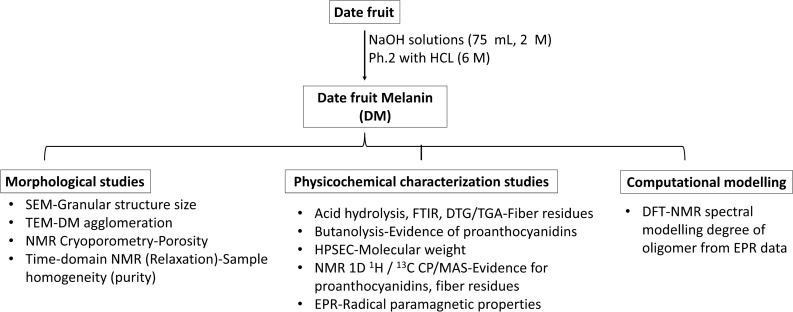
Figure 1
Figure 1
Experimental strategy. SEM: scanning electron microscopy; TEM: transmission electron microscope; NMR: nuclear magnetic resonance; FTIR: Fourier transform infrared spectroscopy; DTG: derivative thermal gravimetric analysis; TGA: thermogravimetric analysis; HPSEC: high performance size exclusion chromatography; 1D 1H NMR: one dimensional proton nuclear magnetic resonance; 13C CP/MAS: carbon-13 cross polarization magic angle spinning; EPR: electron paramagnetic resonance; DFT: density functional theory.
Figure 2
Figure 2
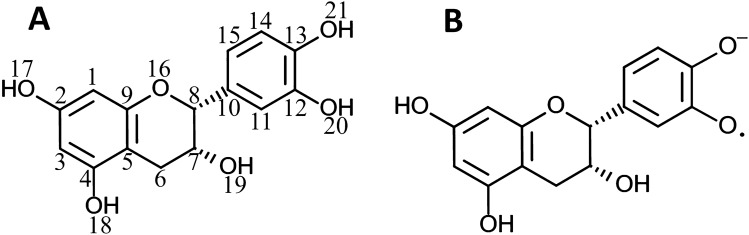
Chemical structures of (A) (−)-epicatechin and (B) (−)-epicatechin radical anion.
Figure 3
Figure 3
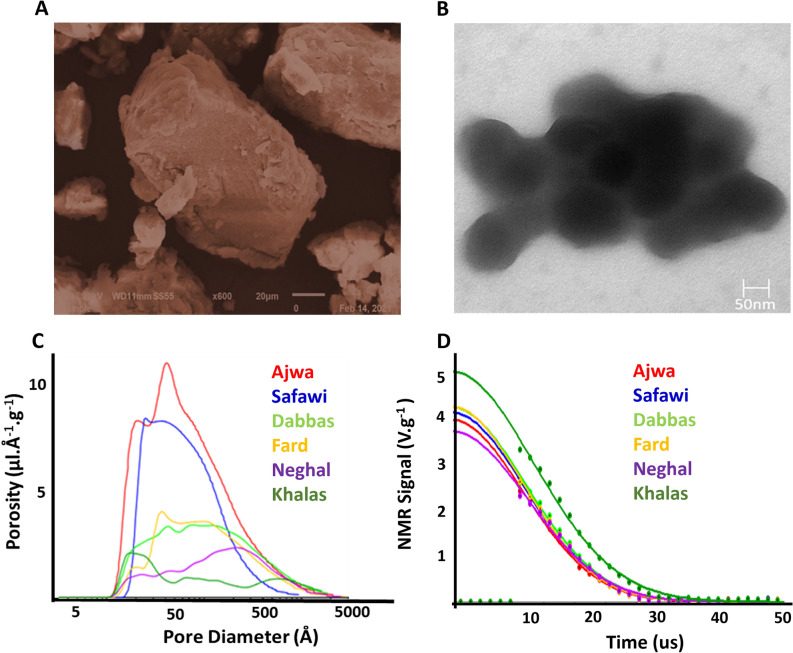
Morphology of the DM granules (A) colored scanning electron microscopic (SEM) images of DM particles (×600 at 20 µm) and (B) transmission electron micrograph (TEM) at 50 nm extracted from Dabbas cultivar, (C) pore distribution graphs for the DM extracted from 6 cultivars obtained by NMR cryoporometry, and (D) NMR relaxation times (T2).
Figure 4
Figure 4
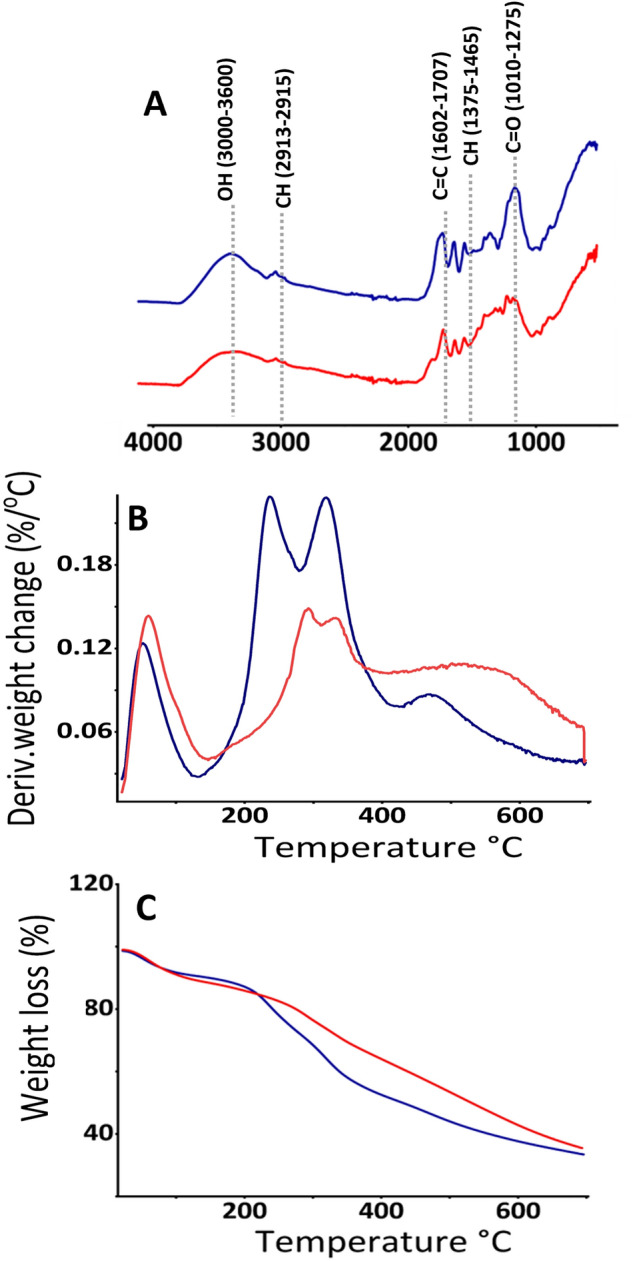
Characteristics of melanin samples before and after acid hydrolysis (6 M HCl) (A) Fourier transform infrared spectroscopy (FTIR), (B) derivative thermogravimetric analysis (DTG), (C) thermogravimetric analysis (TGA). Samples before and after acid hydrolysis are shown in blue and red, respectively.
Figure 5
Figure 5
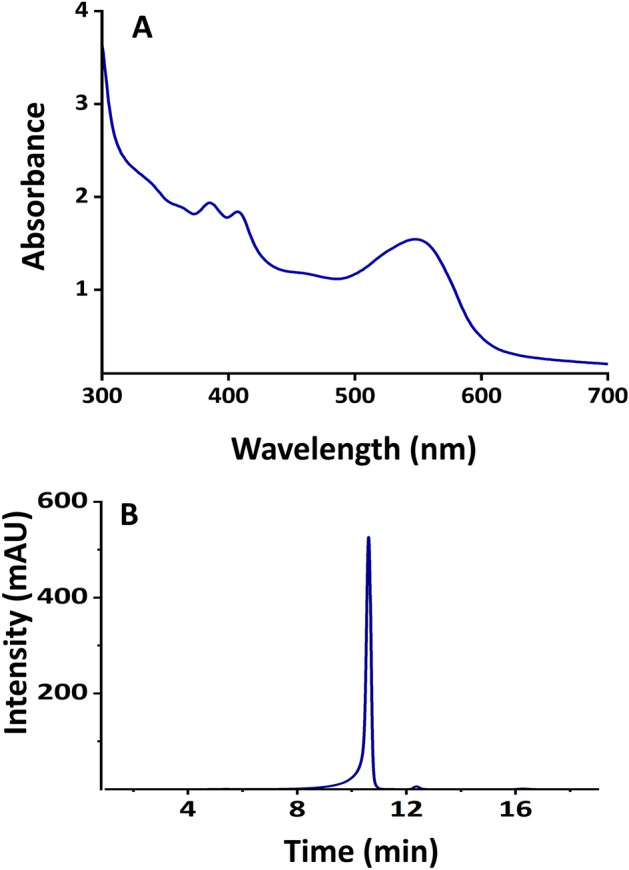
Characteristic of melanin (A) spectrum of cyanidin from acid butanol assay, (B) typical size exclusion chromatogram of DM.
Figure 6
Figure 6
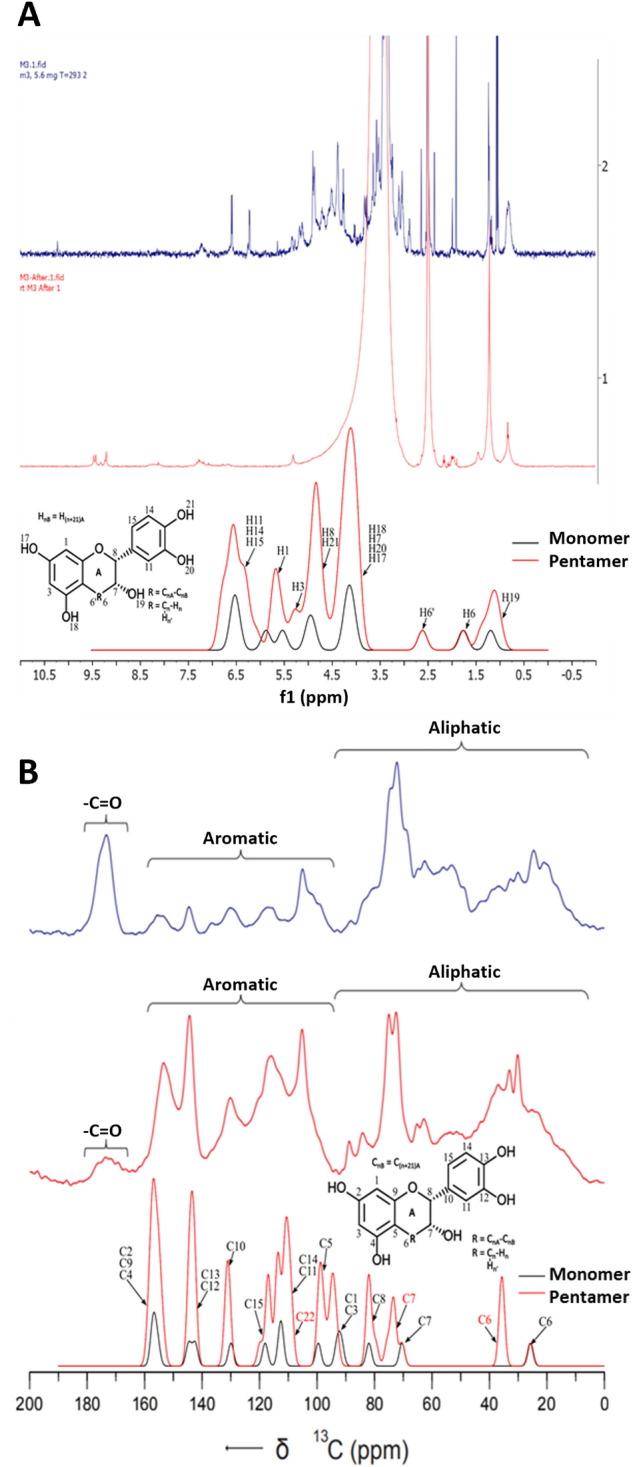
NMR chemical shifts of DM and corrected theoretical chemical shifts (gaussian broadened spectra) obtained for (−)-epicatechin monomer and pentamer in relation to experimental data (A) Solution state 1H-NMR chemical shifts, (B) Solid state 13C-NMR chemical shifts.
Figure 7
Figure 7
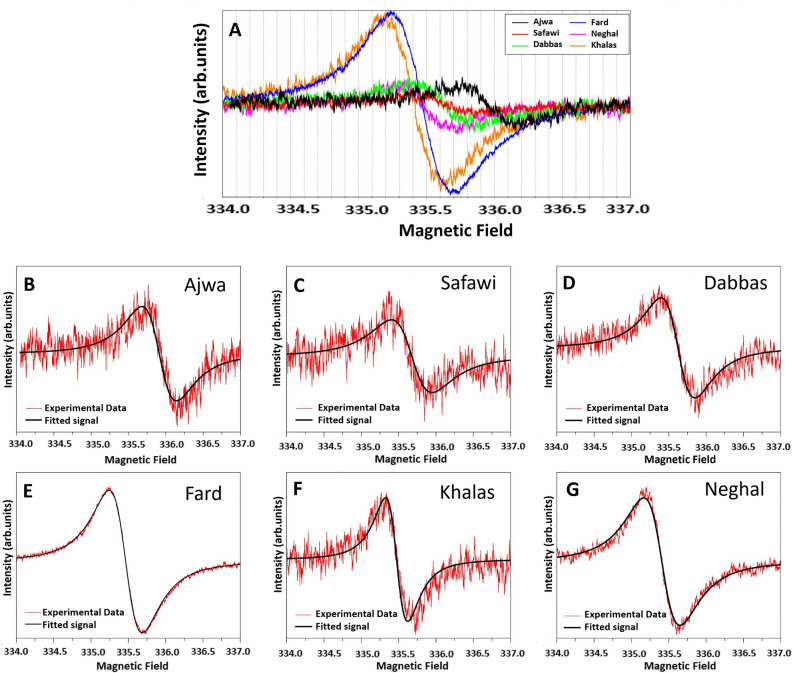
Electron paramagnetic resonance (EPR) spectrum of melanin extracted from six cultivars (A) experimental data, and (BG) fitting of experimental (red lines) with Lorentzian-simulated spectra (black lines).
Figure 8
Figure 8
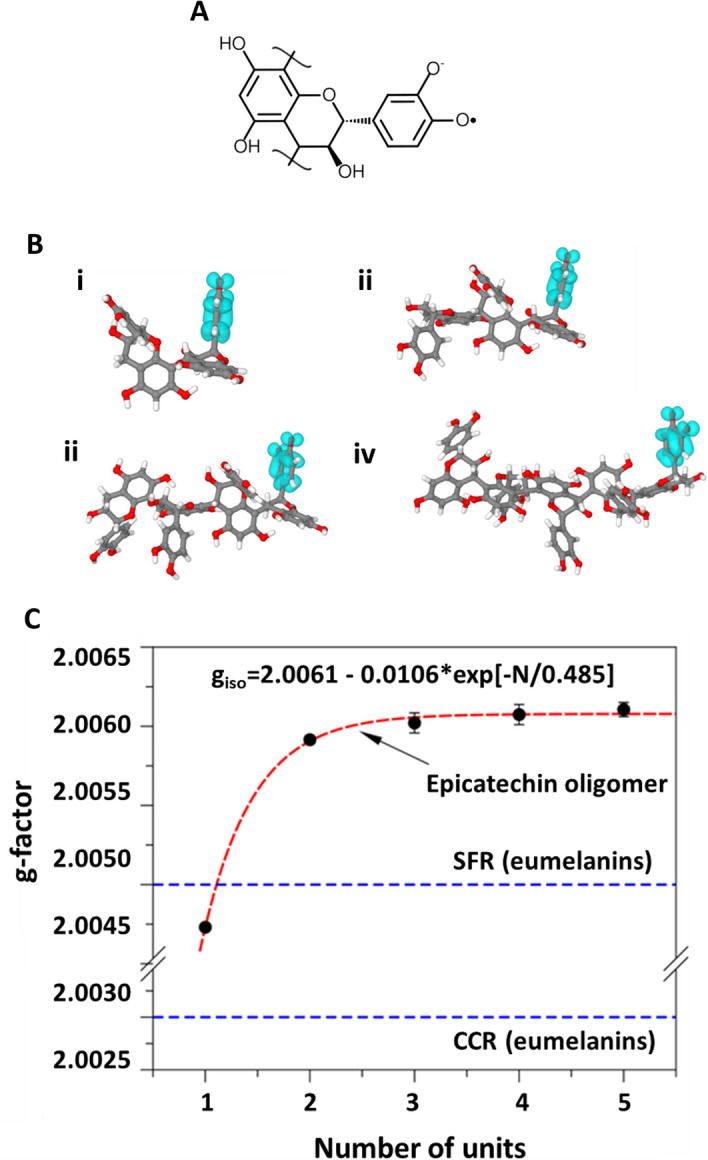
(A) Radical structure of (−)-epicatechin oligomer; (B) electron spin density distribution of (−)-epicatechin oligomers: (i) dimer, (ii) trimer, (iii) tetramer and (iv) pentamer, (C) Influence of the number of repeating units on the g-factor of (−)-epicatechin oligomers.

References

    1. Razem M, Ding Y, Morozova K, Mazzetto F, Scampicchio M. Analysis of phenolic compounds in food by coulometric array detector: A review. Sensors. 2022;22:7498. doi: 10.3390/s22197498. - DOI - PMC - PubMed
    1. Shahidi F, Hossain A. Importance of insoluble-bound phenolics to the antioxidant potential is dictated by source material. Antioxidants. 2023;12:203. doi: 10.3390/antiox12010203. - DOI - PMC - PubMed
    1. Tang Y, et al. Bound phenolics of quinoa seeds released by acid, alkaline, and enzymatic treatments and their antioxidant and α-glucosidase and pancreatic lipase inhibitory effects. J. Agric. Food Chem. 2016;64:1712–1719. doi: 10.1021/acs.jafc.5b05761. - DOI - PubMed
    1. Pralea IE, et al. From extraction to advanced analytical methods: The challenges of melanin analysis. Int. J. Mol. Sci. 2019;20:1–37. doi: 10.3390/ijms20163943. - DOI - PMC - PubMed
    1. Alam MZ, Alhebsi MSR, Ghnimi S, Kamal-Eldin A. Inability of total antioxidant activity assays to accurately assess the phenolic compounds of date palm fruit (Phoenix dactylifera L.) NFS J. 2021;22:32–40. doi: 10.1016/j.nfs.2021.01.001. - DOI