. 2024 Mar 29;383(6690):eabn3263.
doi: 10.1126/science.abn3263. Epub 2024 Mar 29.

Vocal learning-associated convergent evolution in mammalian proteins and regulatory elements

Morgan E Wirthlin #  1   2 Tobias A Schmid #  3 Julie E Elie #  3   4 Xiaomeng Zhang  1 Amanda Kowalczyk  1   2 Ruby Redlich  1 Varvara A Shvareva  5 Ashley Rakuljic  5 Maria B Ji  6 Ninad S Bhat  5 Irene M Kaplow  1   7 Daniel E Schäffer  1 Alyssa J Lawler  2   8 Andrew Z Wang  1 BaDoi N Phan  1   2 Siddharth Annaldasula  1 Ashley R Brown  1   2 Tianyu Lu  1 Byung Kook Lim  9 Eiman Azim  10 Zoonomia ConsortiumNathan L Clark  11 Wynn K Meyer  12 Sergei L Kosakovsky Pond  13 Maria Chikina  7 Michael M Yartsev #  3   4 Andreas R Pfenning #  1   2 Gregory AndrewsJoel C ArmstrongMatteo BianchiBruce W BirrenKevin R BredemeyerAna M BreitMatthew J ChristmasHiram ClawsonJoana DamasFederica Di PalmaMark DiekhansMichael X DongEduardo EizirikKaili FanCornelia FanterNicole M FoleyKarin Forsberg-NilssonCarlos J GarciaJohn GatesySteven GazalDiane P GenereuxLinda GoodmanJenna GrimshawMichaela K HalseyAndrew J HarrisGlenn HickeyMichael HillerAllyson G HindleRobert M HubleyGraham M HughesJeremy JohnsonDavid JuanIrene M KaplowElinor K KarlssonKathleen C KeoughBogdan KirilenkoKlaus-Peter KoepfliJennifer M KorstianAmanda KowalczykSergey V KozyrevAlyssa J LawlerColleen LawlessThomas LehmannDanielle L LevesqueHarris A LewinXue LiAbigail LindKerstin Lindblad-TohAva Mackay-SmithVoichita D MarinescuTomas Marques-BonetVictor C MasonJennifer R S MeadowsWynn K MeyerJill E MooreLucas R MoreiraDiana D Moreno-SantillanKathleen M MorrillGerard MuntanéWilliam J MurphyArcadi NavarroMartin NweeiaSylvia OrtmannAustin OsmanskiBenedict PatenNicole S PaulatAndreas R PfenningBaDoi N PhanKatherine S PollardHenry E PrattDavid A RaySteven K ReillyJeb R RosenIrina RufLouise RyanOliver A RyderPardis C SabetiDaniel E SchäfferAitor SerresBeth ShapiroArian F A SmitMark SpringerChaitanya SrinivasanCynthia SteinerJessica M StorerKevin A M SullivanPatrick F SullivanElisabeth SundströmMegan A SuppleRoss SwoffordJoy-El TalbotEmma TeelingJason Turner-MaierAlejandro ValenzuelaFranziska WagnerOla WallermanChao WangJuehan WangZhiping WengAryn P WilderMorgan E WirthlinJames R XueXiaomeng Zhang
Affiliations

Vocal learning-associated convergent evolution in mammalian proteins and regulatory elements

Morgan E Wirthlin et al. Science. .

Abstract

Vocal production learning ("vocal learning") is a convergently evolved trait in vertebrates. To identify brain genomic elements associated with mammalian vocal learning, we integrated genomic, anatomical, and neurophysiological data from the Egyptian fruit bat (Rousettus aegyptiacus) with analyses of the genomes of 215 placental mammals. First, we identified a set of proteins evolving more slowly in vocal learners. Then, we discovered a vocal motor cortical region in the Egyptian fruit bat, an emergent vocal learner, and leveraged that knowledge to identify active cis-regulatory elements in the motor cortex of vocal learners. Machine learning methods applied to motor cortex open chromatin revealed 50 enhancers robustly associated with vocal learning whose activity tended to be lower in vocal learners. Our research implicates convergent losses of motor cortex regulatory elements in mammalian vocal learning evolution.


Conflict of interest statement

Competing interests: ARP is founder and CEO of Snail Biosciences.

Figures

Figure 1.
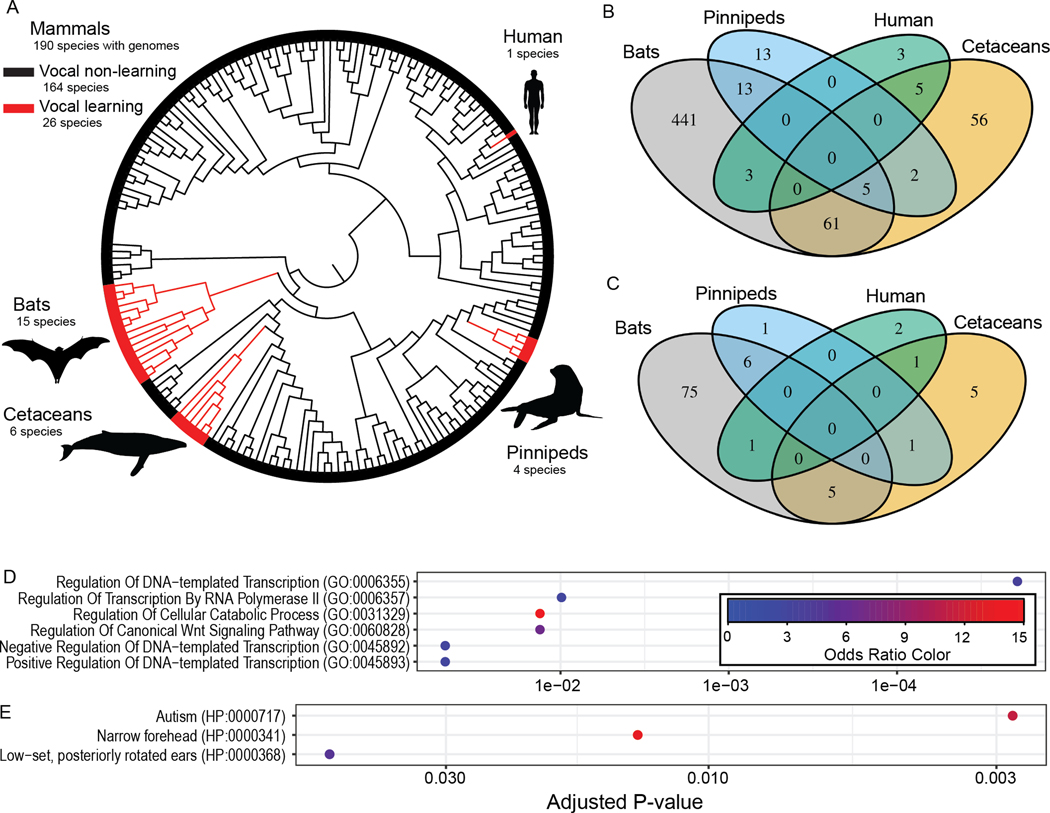
Figure 1.. Convergent changes in protein sequence associated with vocal learning evolution across 215 mammalian species.
(A) A cladogram of mammalian species whose genomes were analyzed in this study highlights the convergent evolution of vocal learning species (in red) relative to non-learners (in black). The phylogenetic tree used in our analyses was derived from (98). Each of the genes implicated by RERconverge with lower (B) or higher (C) evolutionary rates in vocal learners are annotated based on whether or not they show a significant signature within the four vocal learning clades based on a Bayes factor ≥ 5 (18). All significant gene ontology categories (adjusted p < 0.10, EnrichR) are plotted for the 200 genes with conserved (D) and accelerated (E) selection in vocal learning clades, based on the combination of RERconverge and HyPhy RELAX. The points are colored by the odds ratio within the set of implicated genes relative to the genes outside of the set, which corresponds to the degree of enrichment within that set.
Figure 2.
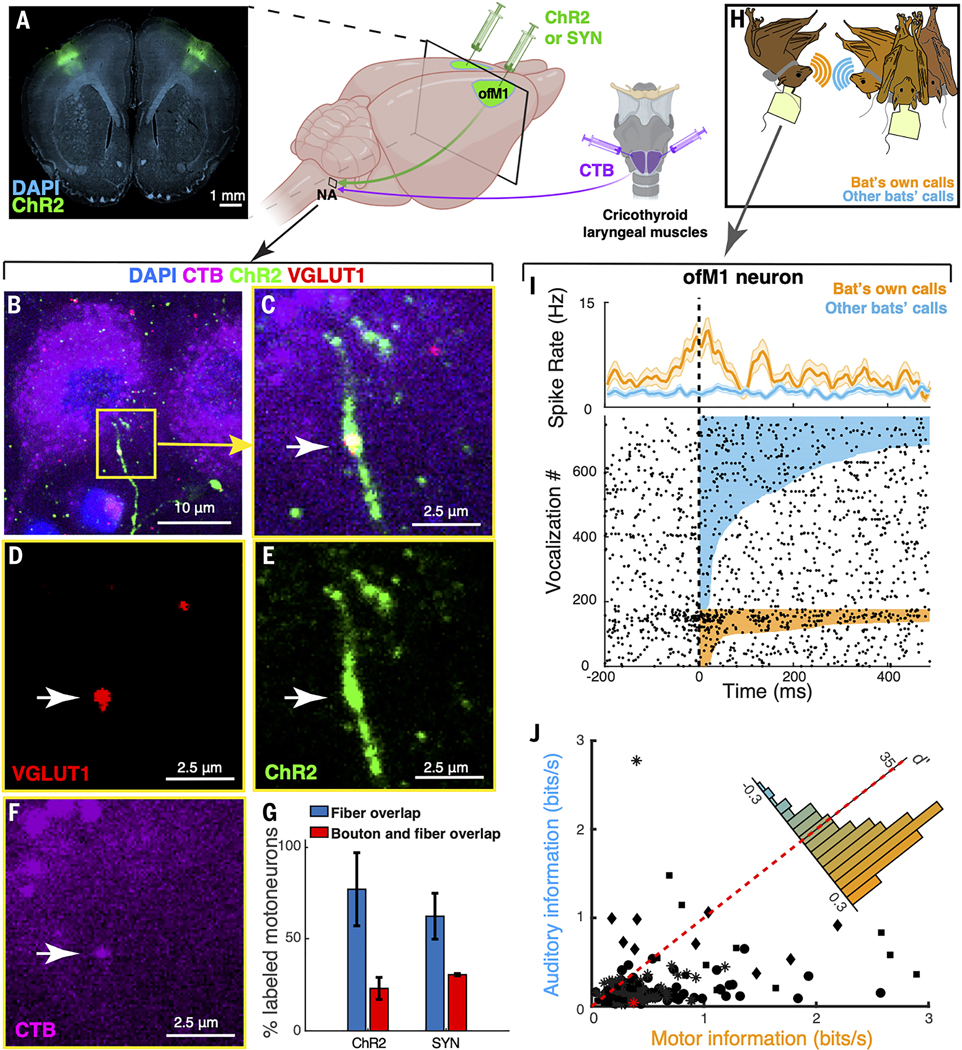
Figure 2.. Identification of an anatomically specialized motor cortical region targeting laryngeal motoneurons in the Egyptian fruit bat.
(A) Right: schematic of anatomical tracing approaches. Retrograde tracer cholera toxin B (CTB, purple) was injected bilaterally into the cricothyroid muscles to label brainstem motoneurons in nucleus ambiguus (NA). Simultaneously, an anterograde viral tracer (channelrhodopsin-2, ChR2, or Synapsin/synaptophysin dual-label, SYN; green) was injected bilaterally into the orofacial motor cortex (ofM1) to label corticobulbar projections into NA. Left: example coronal section showing cortical injection sites with anterograde tracer (ChR2, green) and DAPI labeling (cyan). (B-F) Laryngeal motoneurons in the NA identified using a retrograde tracer (CTB, purple), cortical fibers labeled with ChR2 (green), corticobulbar synapses labeled with VGLUT1 (red), and DAPI (blue). B and C are overlaid images showing colocalization of fibers with a synaptic bouton on the retrograde labeled cell (white arrow). (G) Percentage of laryngeal motoneurons labeled with CTB that are colocalized with cortical fibers (blue) or with both cortical fibers and synaptic boutons (red). Note that both tracing techniques qualitatively yielded similar results: ChR2, n = 51 cells from 3 bats; Synapsin/synaptophysin dual-label virus (SYN), n = 26 cells from 2 bats. (H) Illustration of the experimental setup during which wireless electrophysiological recordings were conducted from the identified cortical region in freely behaving and vocalizing bats. (I) Spiking activity of an example ofM1 neuron aligned to the onset of vocalizations produced (bat’s own calls, orange) or heard (other bats’ calls, blue) by the bat subject. Top row, time varying mean firing rate and corresponding raster plot below. Colored lines in the raster plot show the duration of each vocalization. Note the increased firing rate during vocal production as compared to hearing. (J) Information (see Methods) between the time varying firing rate and the amplitude of produced (x-axis) vs. heard (y-axis) vocalizations for 219 single units (marker shapes indicate bat ID, n=4 bats). The cell shown in (I) is highlighted in red. Inset shows the distribution of D-prime between motor and auditory information for the same cells. Note that the distribution is heavily skewed towards higher motor information rather than auditory information coded in the activity of the recorded neurons. Error bars are mean +/− SEM throughout the figure.
Figure 3.
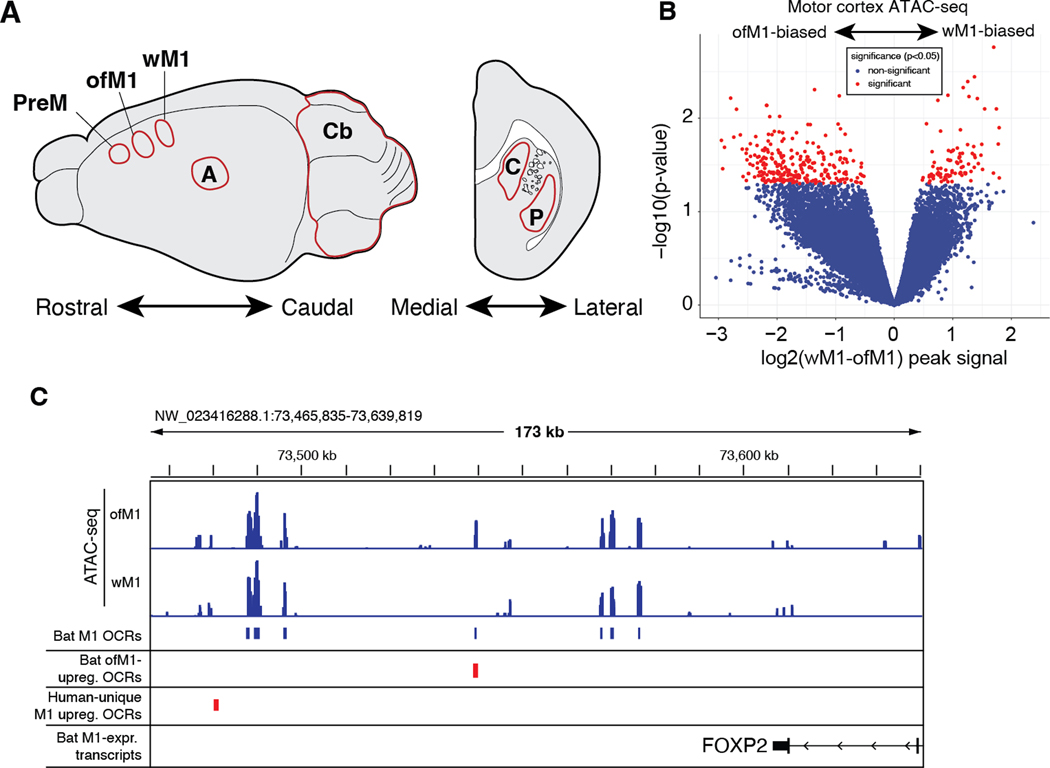
Figure 3.. Differential Open Chromatin in Bat Orofacial M1 relative to Wing M1.
(A) Open chromatin was profiled from 7 dissected brain regions of Egyptian Fruit bats. (B) Volcano plot of ATAC-seq OCRs with differential activity between the orofacial and wing subregions of primary motor cortex (ofM1 and wM1, respectively) of Egyptian fruit bat. (C) Genome browser showing ofM1 and wM1 ATAC-seq traces at the 3’ end of the FOXP2 locus. Reproducible M1 open chromatin regions (OCRs) are indicated in blue, with a differentially active OCR in ofM1 relative to wM1 highlighted in red.
Figure 4.
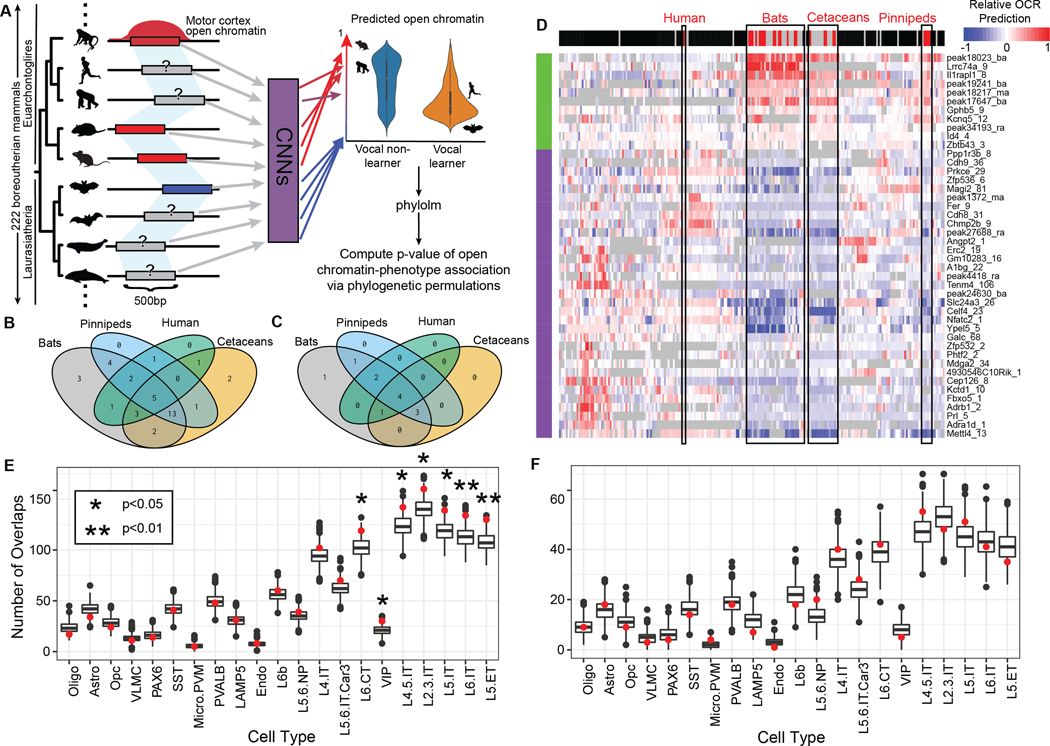
Figure 4.. Vocal learning-associated convergent evolution in motor cortex open chromatin regions implicates specific neuron subtypes.
(A) Overview of applying the Tissue-Aware Conservation Inference Toolkit (TACIT (23)) approach to vocal learning. OCRs (left) identified in motor cortex (M1). Measured open chromatin from M1 (4 species) were used to train convolutional neural networks (CNNs) to predict M1 open chromatin from sequence alone. Red bars and corresponding arrows indicate the presence of a peak while the blue bars represent the absence. The same OCRs were then mapped across 222 mammalian genomes (left) and the identified sequences were used as input to the CNNs to predict open chromatin activity. TACIT identified OCRs whose predicted open chromatin across species was significantly associated with those species’ vocal learning status. (B-C) The 4-way Venn diagrams represent the number of OCRs implicated by TACIT (both M1 and PV+) as displaying low (B) or high (C) activity in each of the vocal learning clades based on a t-test. (D) The heatmap visualizes specific open chromatin regions along the rows (predicted higher in vocal learners in green; predicted lower in vocal learners in purple) across 222 mammals in the columns (vocal learner in red, vocal nonlearner in black, insufficient or conflicting evidence in gray). The color in each cell corresponds to the z-scored predicted open chromatin, with low open chromatin in blue, mean open chromatin in white, and high open chromatin in red. For open chromatin regions predicted to be significantly less (E) or more (F) open in vocal learning species (p<0.05), the red point shows the number of overlapping regions (y-axis) across mouse cortical cell types (x-axis). The bar-plot shows the distribution across 1,000 permutations of the peaks implicated by TACIT. The notches extend 1.58 * IQR / sqrt(n), which gives a roughly 95% confidence).

References

    1. Doupe AJ, Kuhl PK, Birdsong and human speech: common themes and mechanisms. Annu. Rev. Neurosci. 22, 567–631 (1999). - PubMed
    1. Wirthlin M, Chang EF, Knörnschild M, Krubitzer LA, Mello CV, Miller CT, Pfenning AR, Vernes SC, Tchernichovski O, Yartsev MM, A Modular Approach to Vocal Learning: Disentangling the Diversity of a Complex Behavioral Trait. Neuron 104, 87–99 (2019). - PMC - PubMed
    1. Jarvis ED, Learned birdsong and the neurobiology of human language. Ann. N. Y. Acad. Sci. 1016, 749–777 (2004). - PMC - PubMed
    1. Pfenning AR, Hara E, Whitney O, Rivas MV, Wang R, Roulhac PL, Howard JT, Wirthlin M, Lovell PV, Ganapathy G, Mouncastle J, Moseley MA, Thompson JW, Soderblom EJ, Iriki A, Kato M, Gilbert MTP, Zhang G, Bakken T, Bongaarts A, Bernard A, Lein E, Mello CV, Hartemink AJ, Jarvis ED, Convergent transcriptional specializations in the brains of humans and song-learning birds. Science 346, 1256846 (2014). - PMC - PubMed
    1. Arriaga G, Jarvis ED, Mouse vocal communication system: are ultrasounds learned or innate? Brain Lang. 124, 96–116 (2013). - PMC - PubMed

Publication types

MeSH terms