


Trends of hospitalisation among new admission inpatients with oesophagogastric variceal bleeding in cirrhosis from 2014 to 2019 in the Affiliated Hospital of Southwest Medical University: a single-centre time-series analysis
- PMID: 38423766
- PMCID: PMC10910539
- DOI: 10.1136/bmjopen-2023-074608
Trends of hospitalisation among new admission inpatients with oesophagogastric variceal bleeding in cirrhosis from 2014 to 2019 in the Affiliated Hospital of Southwest Medical University: a single-centre time-series analysis
Abstract
Objectives: This study aimed to assess the internal law and time trend of hospitalisation for oesophagogastric variceal bleeding (EGVB) in cirrhosis and develop an effective model to predict the trend of hospitalisation time.
Design: We used a time series covering 72 months to analyse the hospitalisation for EGVB in cirrhosis. The number of inpatients in the first 60 months was used as the training set to establish the autoregressive integrated moving average (ARIMA) model, and the number over the next 12 months was used as the test set to predict and observe their fitting effect.
Setting and data: Case data of patients with EGVB between January 2014 and December 2019 were collected from the Affiliated Hospital of Southwest Medical University.
Outcome measures: The number of monthly hospitalised patients with EGVB in our hospital.
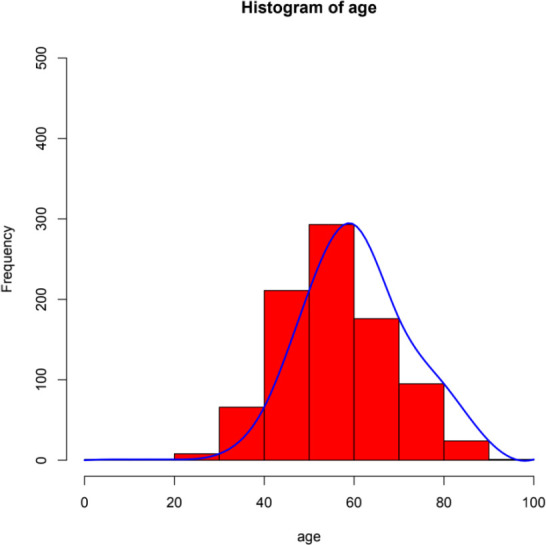
Results: A total of 877 patients were included in the analysis. The proportion of EGVB in patients with cirrhosis was 73% among men and 27% among women. The peak age at hospitalisation was 40-60 years. The incidence of EGVB varied seasonally with two peaks from January to February and October to November, while the lowest number was observed between April and August. Time-series analysis showed that the number of inpatients with EGVB in our hospital increased annually. The sequence after the first-order difference was a stationary series (augmented Dickey-Fuller test p=0.02). ARIMA (0,1,0) (0,1,1)12 with a minimum Akaike Information Criterion value of 260.18 could fit the time trend of EGVB inpatients and had a good short-term prediction effect. The root mean square error and mean absolute error were 2.4347 and 1.9017, respectively.
Conclusions: The number of hospitalised patients with EGVB at our hospital is increasing annually, with seasonal changes. The ARIMA model has a good prediction effect on the number of hospitalised patients with EGVB in cirrhosis.
Keywords: gastroduodenal disease; hepatobiliary disease; hospitalisation; oesophageal disease.
© Author(s) (or their employer(s)) 2024. Re-use permitted under CC BY-NC. No commercial re-use. See rights and permissions. Published by BMJ.
Conflict of interest statement
Competing interests: None declared.
Figures


References
-
- Koya Y, Shibata M, Watanabe T, et al. Influence of gastroesophageal flap valve on esophageal variceal bleeding in patients with liver cirrhosis. Dig Endosc 2021;33:100–9. - PubMed
-
- Chen Y, Li X. New model predicting gastroesophageal varices and variceal hemorrhage in patients with chronic liver disease. Ann Hepatol 2021;21:100275. - PubMed
MeSH terms
LinkOut - more resources
Full Text Sources
Miscellaneous
