


Hepatobiliary Ascariasis in a Piglet
- PMID: 38424402
- PMCID: PMC11001663
- DOI: 10.1007/s11686-024-00813-2
Hepatobiliary Ascariasis in a Piglet
Abstract
Purpose: Ascariasis caused by the helminth Ascaris suum is the most common parasitosis of swine worldwide and it may involve all age categories of pigs. The present study reports an unusual localization of A. suum worms in the biliary system of a piglet slaughtered for human consumption.
Methods: The liver was subjected to ultrasound scan and pathological examination. The isolated worms were morphologically examined and the DNA was extracted for the molecular identification of the species involved.
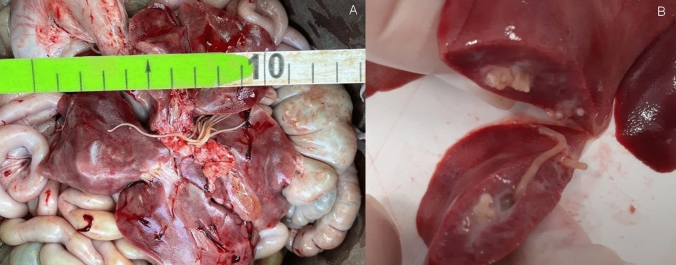
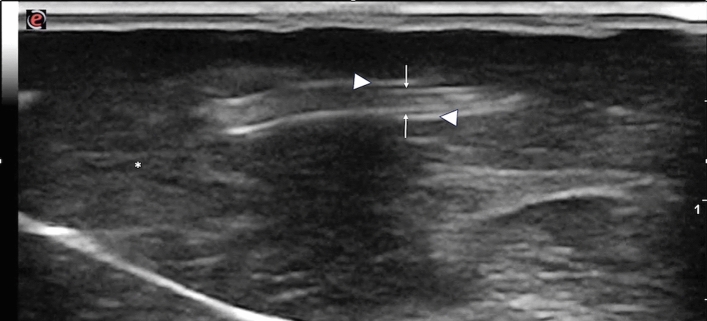
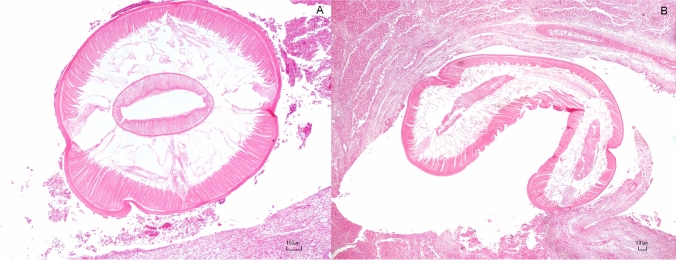
Results: A total of 43 preadult nematodes were found within the gallbladder and the bile ducts. Parasites were morphologically identified as belonging to the genus Ascaris and molecularly as A. suum. At gross examination, the liver was moderately enlarged, with the bile ducts severely dilated. A chronic inflammatory infiltrate was noted, often centered around ectatic bile ducts (up to 5 mm in diameter), lined by hyperplastic epithelium and filled with sections of nematodes. The worm sections showed smooth cuticle, coelomyarian musculature, and an intestinal tract lined by columnar, uninucleated cells within a pseudocoelom. The ex vivo ultrasonographic examination of the liver allowed the visualization of several nematodes in the bile duct lumen and could be suggested for in vivo diagnosis. Unfortunately, the absence of the intestine did not allow to define the pathogenesis of the infection.
Conclusion: Although, given the unusual nature of this finding, it is difficult to identify predisposing factors for this A. suum localization, it suggests that ascariasis should be considered in the differential diagnosis of pigs with hepatobiliary disease.
Keywords: Ascaris suum; Bile ducts; Parasitology; Pig; Ultrasound.
© 2024. The Author(s).
Conflict of interest statement
The authors declare that they have no conflict of interest.
Figures
References
-
- Stewart TB, Hoyt PG. Internal parasites. In: Straw BE, Zimmerman JJ, D’Allaire S, Taylor DJ, editors. Taylor disease of swine. Oxoford: Blakwell publishing; 2013.
-
- Bowman DD. Georgis’ parasitology for veterinarians. London: Saunders; 1999. p. 414.
Publication types
MeSH terms
LinkOut - more resources
Full Text Sources
