


Effects of combined exercise training with sleep education in older adults with obstructive sleep apnea: protocol for a randomized clinical trial
- PMID: 38425564
- PMCID: PMC10902716
- DOI: 10.3389/fpsyg.2024.1322545
Effects of combined exercise training with sleep education in older adults with obstructive sleep apnea: protocol for a randomized clinical trial
Abstract
Background: Obstructive sleep apnea (OSA) is a common disorder that affects approximately 1 billion people worldwide. Advanced age is a significant risk factor. Various treatment options have been explored to reduce the severity of OSA symptoms and physical exercise has emerged as a potential alternative therapy. Therefore, this study aims to investigate the effects of a combined exercise program with sleep education on sleep quality and on the severity of OSA in older adults.
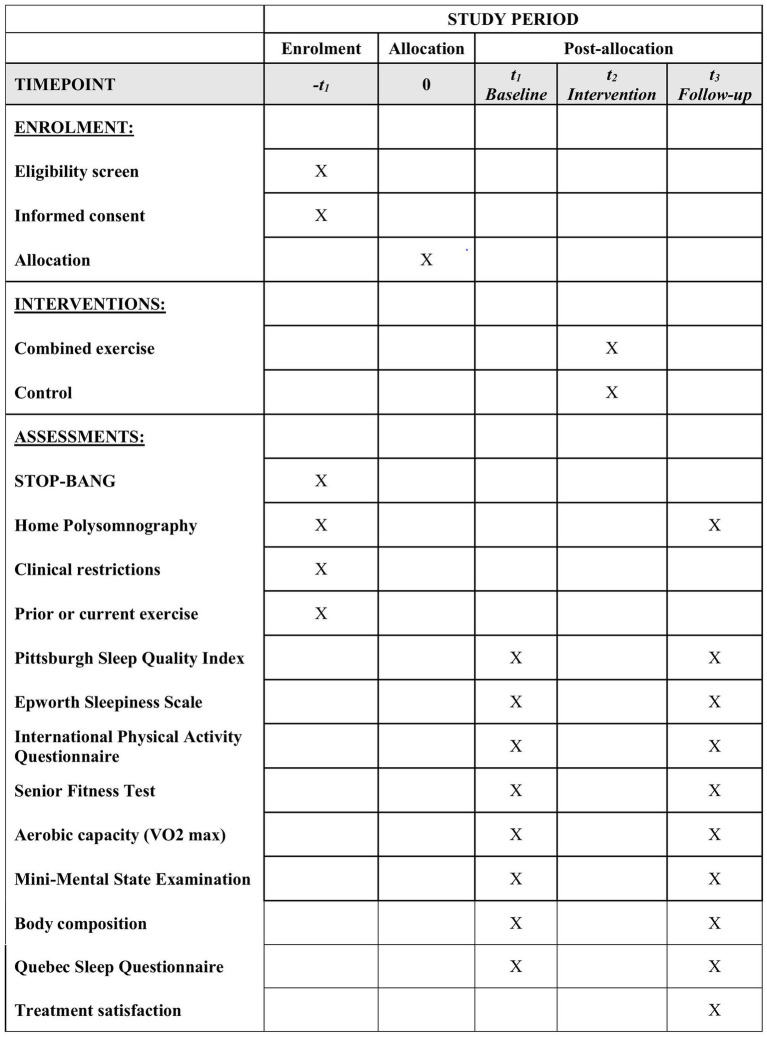
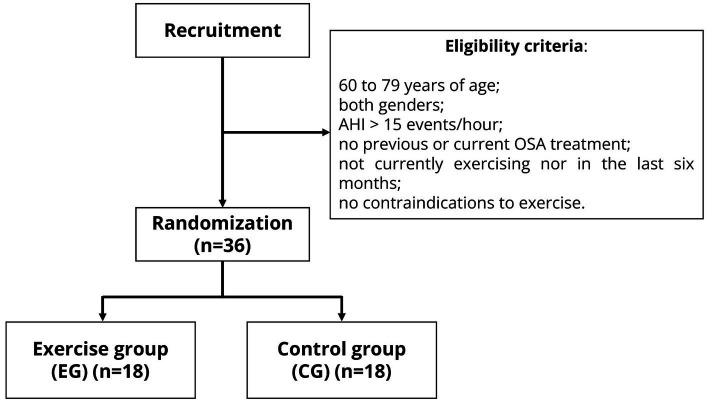
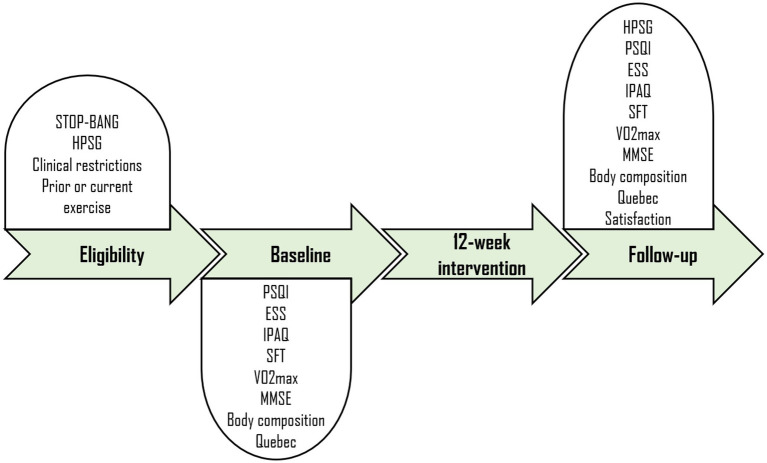
Methods: This is a randomized clinical trial with two parallel groups that will involve individuals of both genders aged between 60 and 79 years who have an apnea-hypopnea index (AHI) of more than 15 events per hour and who have not received or are currently undergoing treatment for OSA. Older adults who have engaged in regular exercise in the last six months and individuals with contraindications to exercise will be excluded. The study will assess outcomes related to OSA, including AHI, oxygen desaturation index, minimum and mean oxyhemoglobin saturation, sleep efficiency, sleep latency, and the type of respiratory events. Additionally, sleep quality-related outcomes, daytime sleepiness, physical activity, physical fitness, aerobic capacity, cognitive status, anthropometric measures, and health-related quality of life will be analyzed. Participants will be randomized to two groups: a combined exercise group (involving both resistance and aerobic training) with sleep education, and a control group that will receive only educational recommendations for managing OSA. The intervention will last 12 weeks and will consist of three sessions per week, totaling 36 exercise sessions. Sample size calculation indicates a minimum number of 36 participants.
Discussion: If the hypothesis is confirmed, this clinical trial will indicate an effective non-pharmacological intervention for treating OSA in older adults. This intervention could be used as an adjunct to existing approaches designed to improve OSA management.
Clinical trail registration: Brazil Clinical Trials Registry (ReBEC), identifier RBR-9hk6pgz.
Keywords: aerobic exercise; combined training; obstructive sleep apnea; older adults; sleep hygiene; strength training.
Copyright © 2024 Fank, Artismo, de Santana, Esteves, Matte and Mazo.
Conflict of interest statement
The authors declare that the research was conducted in the absence of any commercial or financial relationships that could be construed as a potential conflict of interest.
Figures
References
-
- Benedetti T. B., Mazo G. Z., De Barros M. V. G. (2004). Aplicação do Questionário Internacional de Atividades Físicas para avaliação do nível de atividades físicas de mulheres idosas: validade concorrente e reprodutibilidade teste-reteste. Rev. Bras. Ciência e Mov. 12, 25–34.
-
- Benjafield A. V., Ayas N. T., Eastwood P. R., Heinzer R., Ip M. S. M., Morrell M. J., et al. . (2019). Estimation of the global prevalence and burden of obstructive sleep apnoea: a literature-based analysis. Lancet Respir. Med. 7, 687–698. doi: 10.1016/S2213-2600(19)30198-5, PMID: - DOI - PMC - PubMed
LinkOut - more resources
Full Text Sources
