


Efficacy and acceptability of psilocybin for primary or secondary depression: A systematic review and meta-analysis of randomized controlled trials
- PMID: 38426002
- PMCID: PMC10902050
- DOI: 10.3389/fpsyt.2024.1359088
Efficacy and acceptability of psilocybin for primary or secondary depression: A systematic review and meta-analysis of randomized controlled trials
Abstract
Introduction: Psilocybin is a classic psychedelics, which has been shown to have antidepressant effects by many studies in recent years. In this study, we aim to evaluate the efficacy, acceptability and tolerability of psilocybin in the treatment of primary (major depressive disorder) or secondary (experiencing distress related to life-threatening diagnoses and terminal illness) depression.
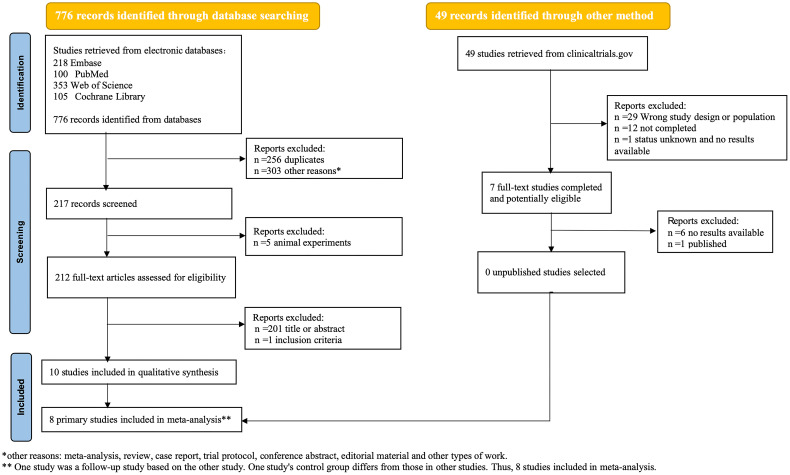
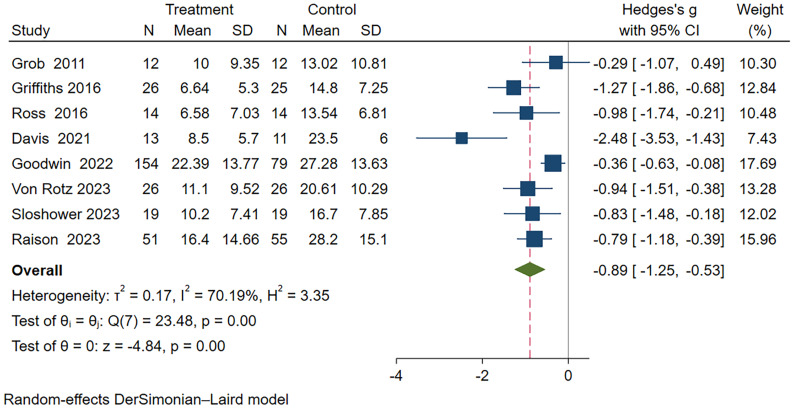
Methods: We searched PubMed, EMBASE, Web of Science, Cochrane Library and ClinicalTrials.gov for clinical trials of psilocybin for depression (updated to 4 October, 2023). Effect size Hedges' g was used as an indicator of efficacy, and other outcomes included response rate, drop-out rate, and adverse events.
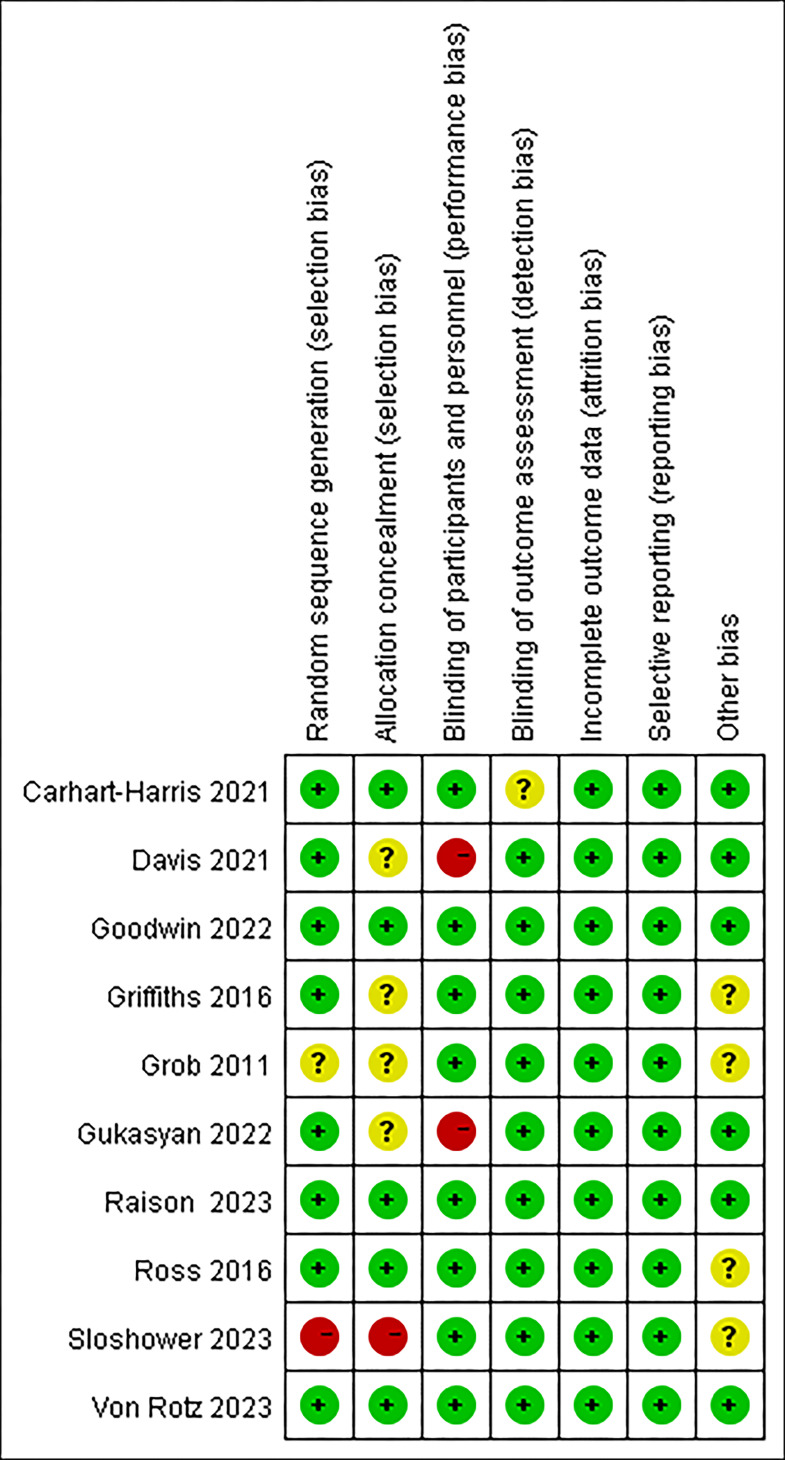
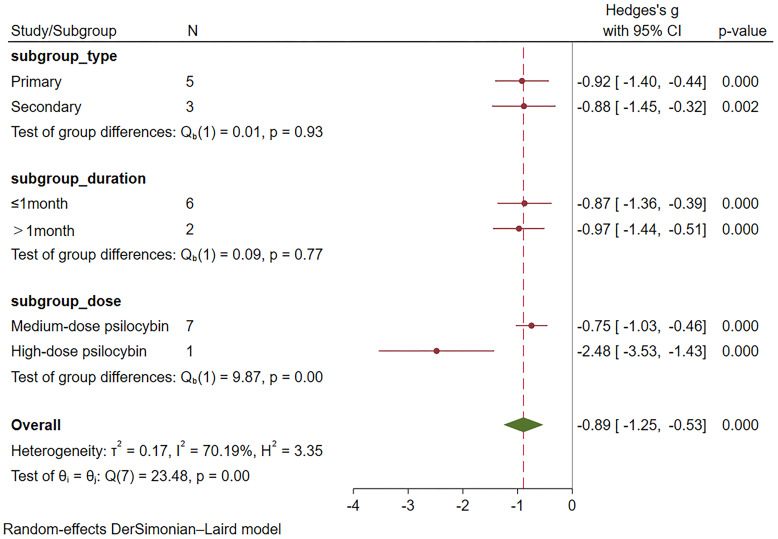
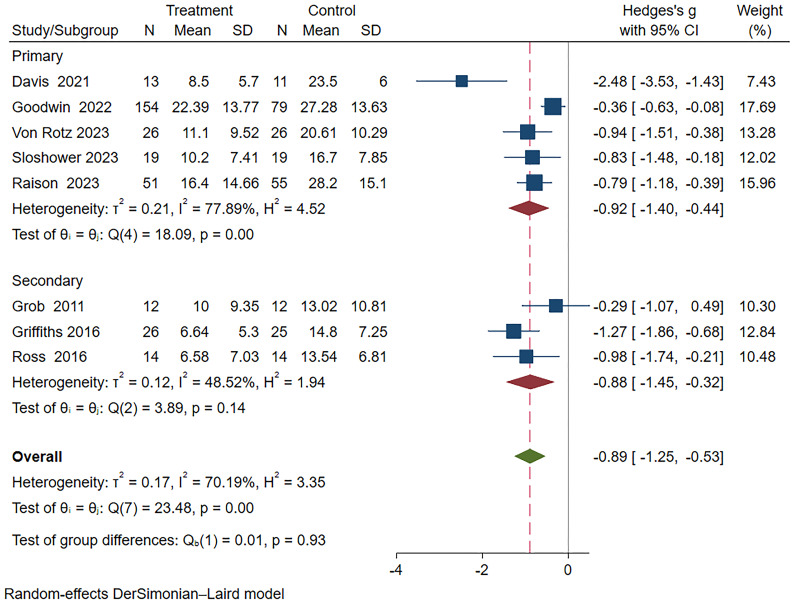
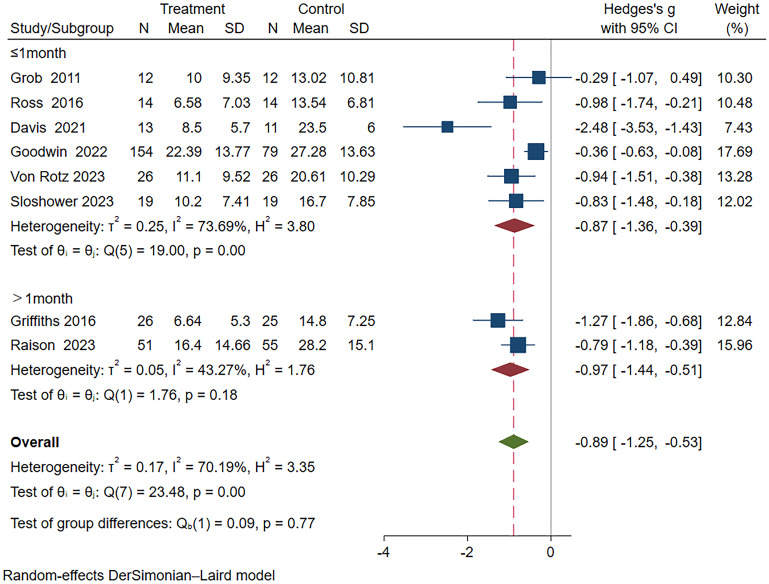
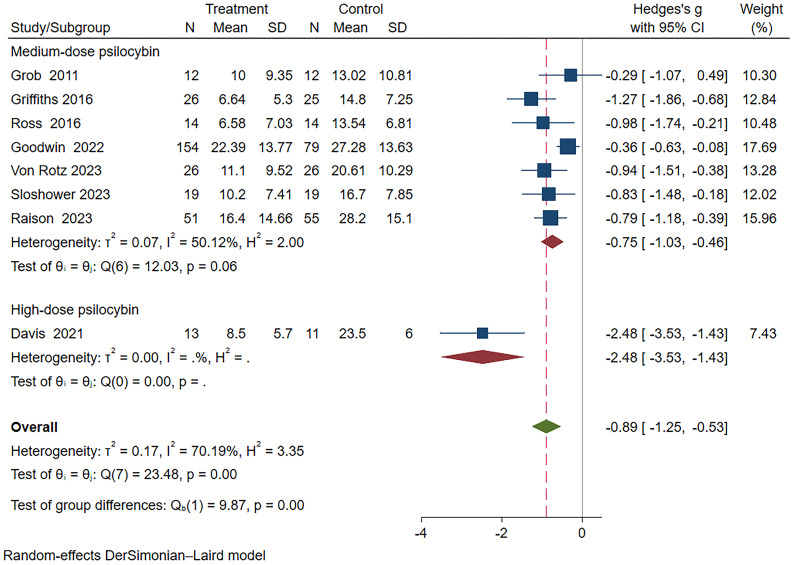
Results: A total of 10 studies were finally included in systematic review. 8 studies were included in the meta-analysis, involving a total of 524 adult patients, and produced a large effect size in favor of psilocybin (Hedge's g =-0.89, 95% CI -1.25~-0.53, I² = 70.19%, P<0.01). The therapeutic effects of psilocybin increase with increasing doses. Adverse events caused by psilocybin are generally transient and reversible, but serious adverse events also may occur.
Discussion: Our study shows that psilocybin has both short-term and long-term antidepressant effects and holds promise as a potential complementary or alternative therapy for depression, probably. Further research may reveal more about its therapeutic potential.
Keywords: acceptability; depression; efficacy; psilocybin; systematic review.
Copyright © 2024 Fang, Yang and Zhang.
Conflict of interest statement
The authors declare that the research was conducted in the absence of any commercial or financial relationships that could be construed as a potential conflict of interest.
Figures
References
-
- World Health Organization . Depression. Available online at: https://www.who.int/health-topics/depression#tab=tab_1 (Accessed April 15, 2023).
-
- World Health Organization . International Classification of Diseases 11th Revision . Available online at: https://icd.who.int/en (Accessed April 18, 2023).
-
- World Health Organization . WHO Director-General’s opening remarks at the Mental Health at Work panel, World Economic Forum – 18 January 2023 . Available online at: https://www.who.int/director-general/speeches/detail/who-director-genera... (Accessed April 20, 2023).
Publication types
LinkOut - more resources
Full Text Sources
