. 2024 Jan 25:11:rbae006.
doi: 10.1093/rb/rbae006. eCollection 2024.

Facile synthesis of nanoparticles-stacked Co3O4 nanoflakes with catalase-like activity for accelerating wound healing

Affiliations

Facile synthesis of nanoparticles-stacked Co3O4 nanoflakes with catalase-like activity for accelerating wound healing

Yanan Huang et al. Regen Biomater. .

Abstract

Delayed wound healing caused by excessive reactive oxygen species (ROS) remains a considerable challenge. In recent years, metal oxide nanozymes have gained significant attention in biomedical research. However, a comprehensive investigation of Co3O4-based nanozymes for enhancing wound healing and tissue regeneration is lacking. This study focuses on developing a facile synthesis method to produce high-stability and cost-effective Co3O4 nanoflakes (NFs) with promising catalase (CAT)-like activity to regulate the oxidative microenvironment and accelerate wound healing. The closely arranged Co3O4 nanoparticles (NPs) within the NFs structure result in a significantly larger surface area, thereby amplifying the enzymatic activity compared to commercially available Co3O4 NPs. Under physiological conditions, it was observed that Co3O4 NFs efficiently break down hydrogen peroxide (H2O2) without generating harmful radicals (·OH). Moreover, they exhibit excellent compatibility with various cells involved in wound healing, promoting fibroblast growth and protecting cells from oxidative stress. In a rat model, Co3O4 NFs facilitate both the hemostatic and proliferative phases of wound healing, consequently accelerating the process. Overall, the promising results of Co3O4 NFs highlight their potential in promoting wound healing and tissue regeneration.

Keywords: Co3O4; nanoflake; nanozyme; reactive oxygen species; wound healing.


Figures

None
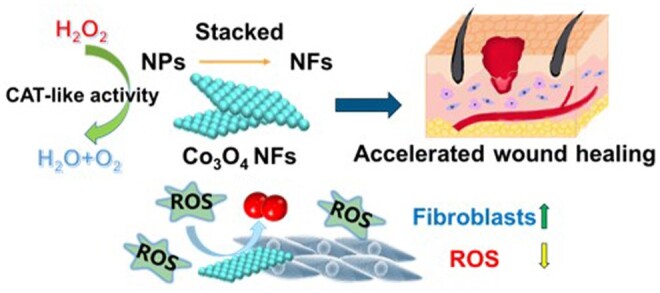
Graphical abstract
Figure 1.
Figure 1.
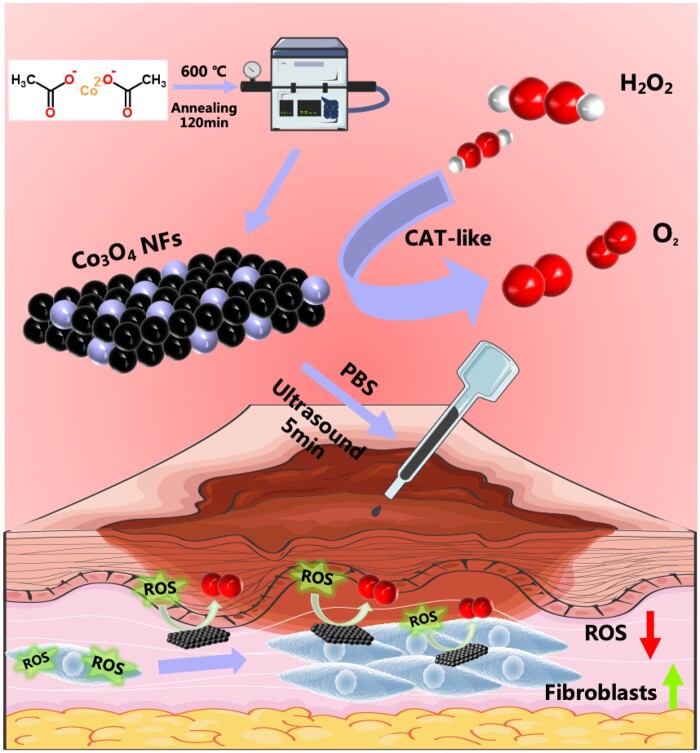
Schematic illustration of the application of Co3O4 NFs with CAT-like activity and excellent cytocompatibility for promoting wound healing.
Figure 2.
Figure 2.
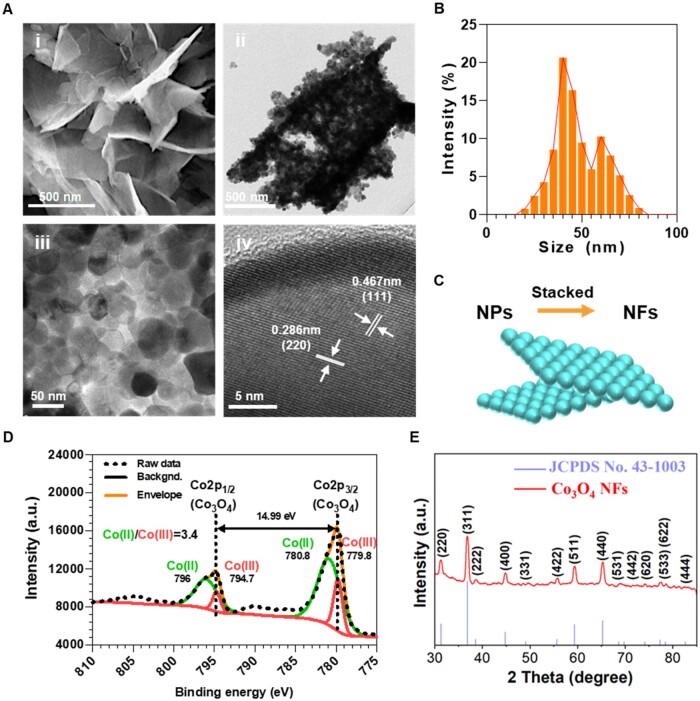
Characterization of Co3O4 NFs. SEM (A-i) and HRTEM (A-ii to A-iv) images of Co3O4 NFs; (B) size statistics; (C) schematic of the stacked Co3O4 NPs to Co3O4 NFs; XPS analysis (D) and XRD spectrum (E) of Co3O4 NFs.
Figure 3.
Figure 3.
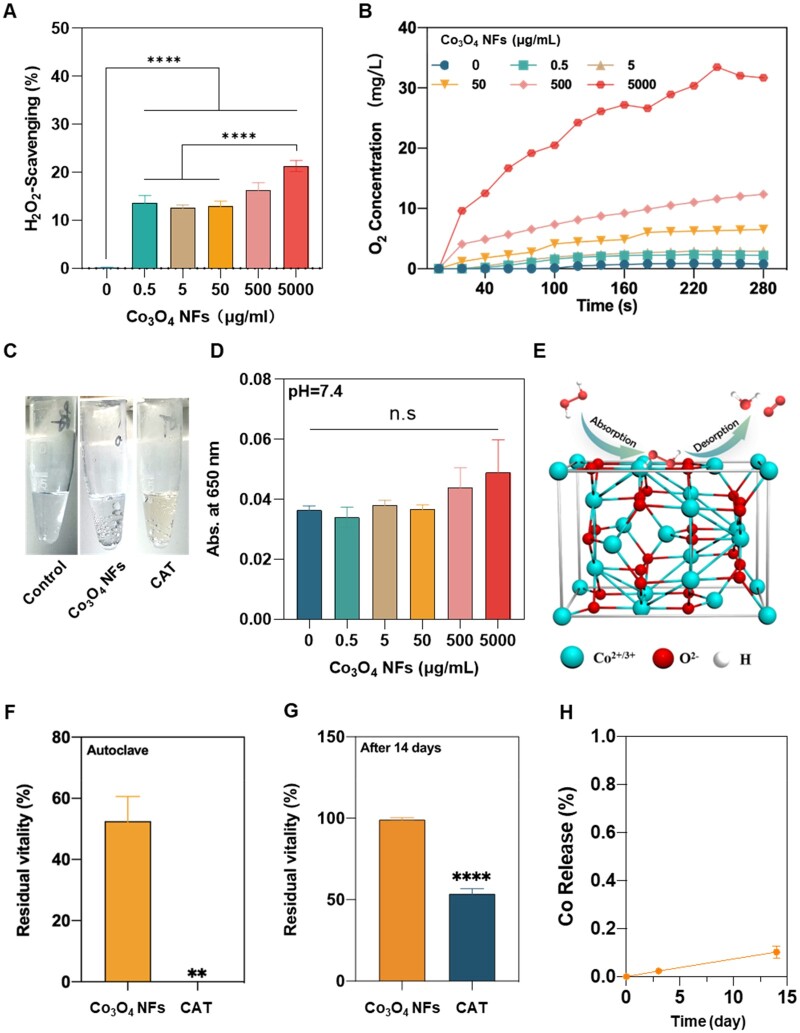
CAT-like ROS-scavenging activities and stability of Co3O4 NFs. (A) Clearance of 10 mM H2O2 by Co3O4 NFs; (B) the generated dissolved oxygen after Co3O4 NFs reacted with 100 mM H2O2; (C) the observed O2 bubble generation; (D) determination of the H2O2 decomposition products ·OH at pH 7.4; (E) schematic diagram of the catalytic mechanism; H2O2 scavenging activity of Co3O4 NFs and CAT after autoclaving (F) and 14 days of incubation (G); (H) Co ion release during 14-d incubation. **p < 0.01, ****p < 0.0001, n.s: no significance.
Figure 4.
Figure 4.
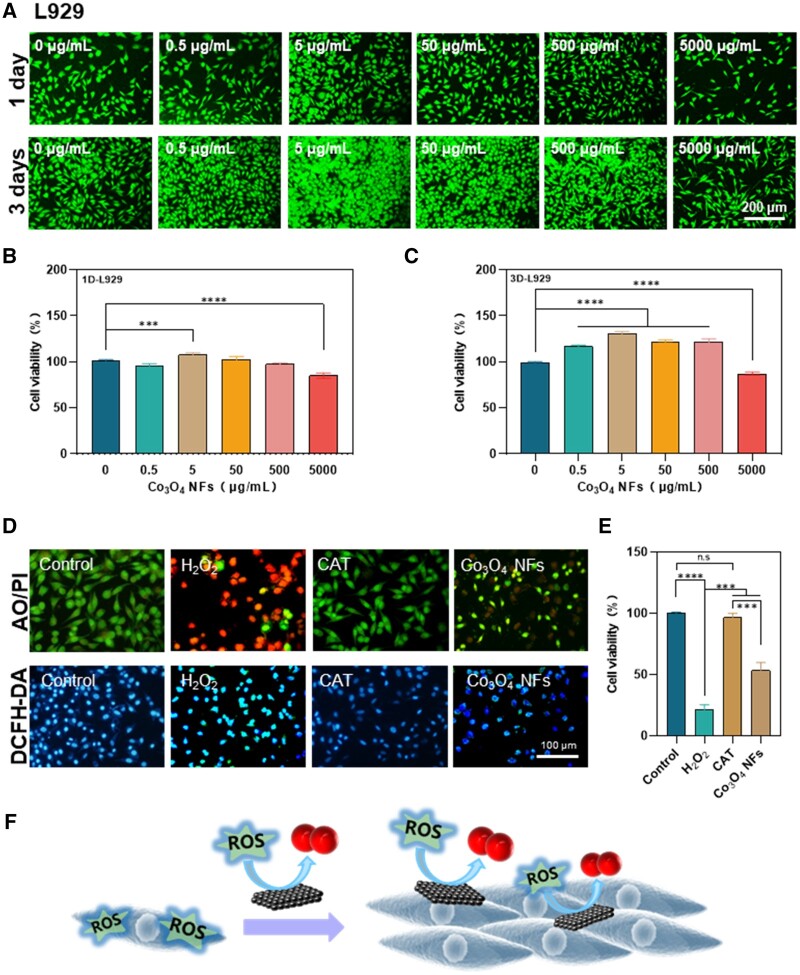
Co3O4 NFs Promote L929 cell proliferation and reduce cellular oxidative stress. (A) Florescent microscopy of L929 cells co-cultured with different concentrations (0, 0.5, 5, 50, 500 and 5000 µg/ml) of Co3O4 NFs for 1 and 3 days; (B, C) cell viability of the co-cultured L929 cells on Day 1 or Day 3, respectively; (D) expression of intracellular ROS (DCFH-DA) and live-dead state (AO/EB) of L929 cells co-cultured with 50 µg/ml Co3O4 NFs and 800 µM H2O2 for 6 h (live cells were represented by green, dead cells by red, nuclei in blue and intracellular ROS in blue-green); (E) statistical analysis of the number of live cells after incubation; (F) schematic illustration of the ROS-scavenging mechanism of Co3O4 NFs. ***p < 0.001, ****p < 0.0001.
Figure 5.
Figure 5.
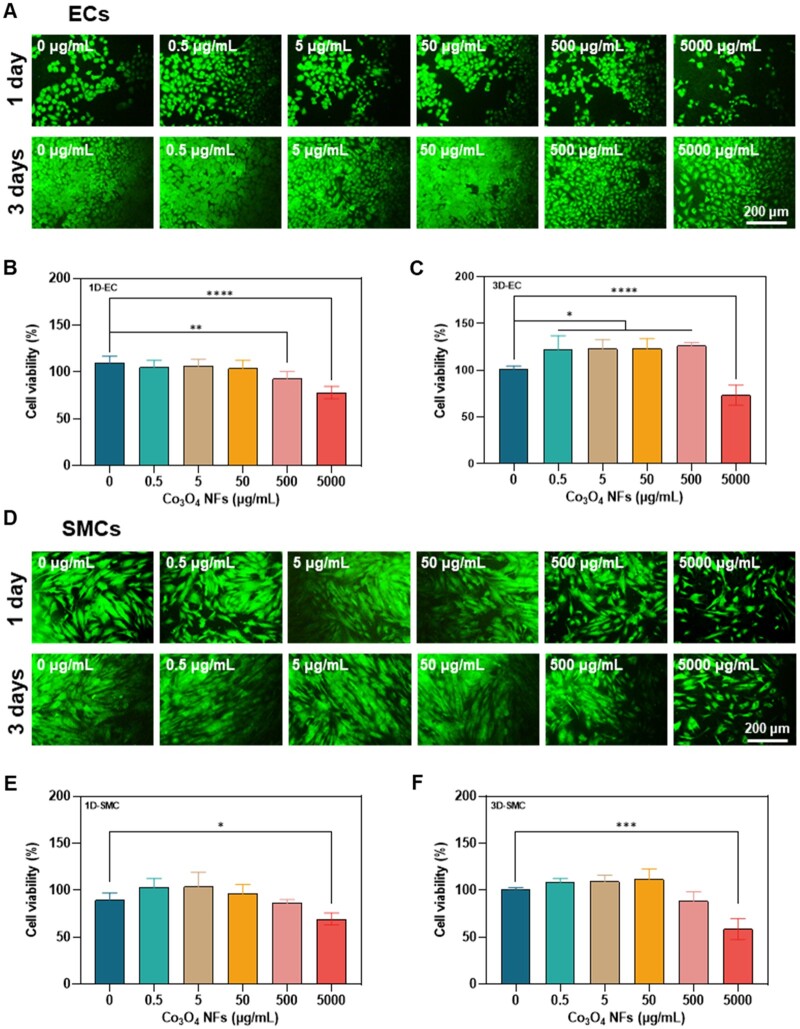
Cytocompatibility assessment of Co3O4 NFs by ECs and SMCs. Florescent microscopy of ECs (A) and SMCs (D) co-cultured with different concentrations (0, 0.5, 5, 50, 500 and 5000 µg/ml) of Co3O4 NFs for 1 and 3 days; cell viability of the co-cultured ECs (B, C) and SMCs (E, F) on Day 1 or Day 3, respectively. *p < 0.05, **p < 0.01, ***p < 0.001, ****p < 0.0001.
Figure 6.
Figure 6.
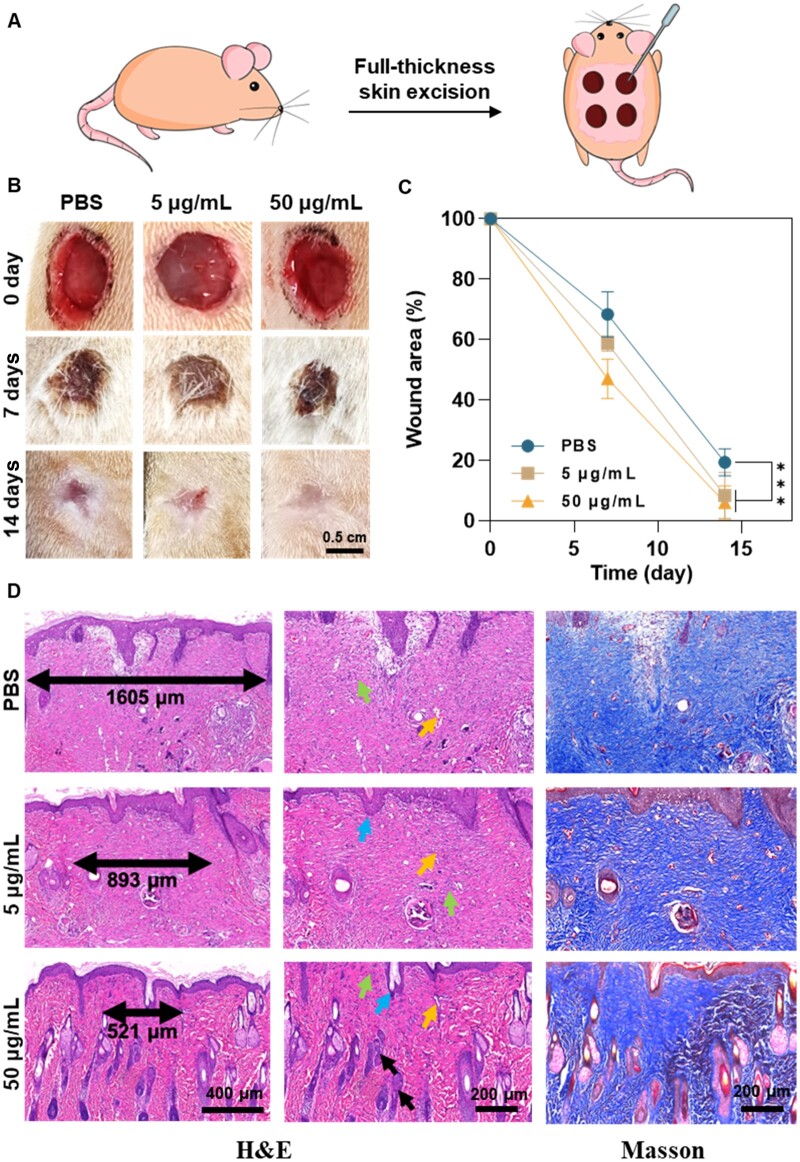
In vitro evaluation of Co3O4 NFs for wound healing. (A) Schematic representation of animal experiments. (B) Representative images of wound repair on the Day 7 and 14 for the PBS group, 5 µg/ml Co3O4 NFs group and 50 µg/ml Co3O4 NFs group. (C) Statistical analysis depicting the wound closure. (D) Histological staining (H&E, Masson) of the wound on Day 14: green arrow: fibroblasts, blue arrow: epithelial tissue, yellow arrows: capillaries, black arrows: hair follicles.

References

    1. Rasik AM, Shukla A.. Antioxidant status in delayed healing type of wounds. Int J Exp Pathol 2000;81:257–63. - PMC - PubMed
    1. Zhao Y, Song S, Ren X, Zhang J, Lin Q, Zhao Y.. Supramolecular adhesive hydrogels for tissue engineering applications. Chem Rev 2022;122:5604–40. - PubMed
    1. Dunnill C, Patton T, Brennan J, Barrett J, Dryden M, Cooke J, Leaper D, Georgopoulos NT.. Reactive oxygen species (ROS) and wound healing: the functional role of ROS and emerging ROS-modulating technologies for augmentation of the healing process. Int Wound J 2017;14:89–96. - PMC - PubMed
    1. Rodriguez PG, Felix FN, Woodley DT, Shim EK.. The role of oxygen in wound healing: a review of the literature. Dermatol Surg 2008;34:1159–69. - PubMed
    1. Zhang H, Zhang W, Qiu H, Zhang G, Li X, Qi H, Guo J, Qian J, Shi X, Gao X, Shi D, Zhang D, Gao R, Ding J.. A biodegradable metal-polymer composite stent safe and effective on physiological and serum-containing biomimetic conditions. Adv Healthc Mater 2022;11:e2201740. - PubMed