Research progress in the pathogenesis of chronic urticaria
- PMID: 38432889
- PMCID: PMC10929888
- DOI: 10.11817/j.issn.1672-7347.2023.230037
Research progress in the pathogenesis of chronic urticaria
Abstract
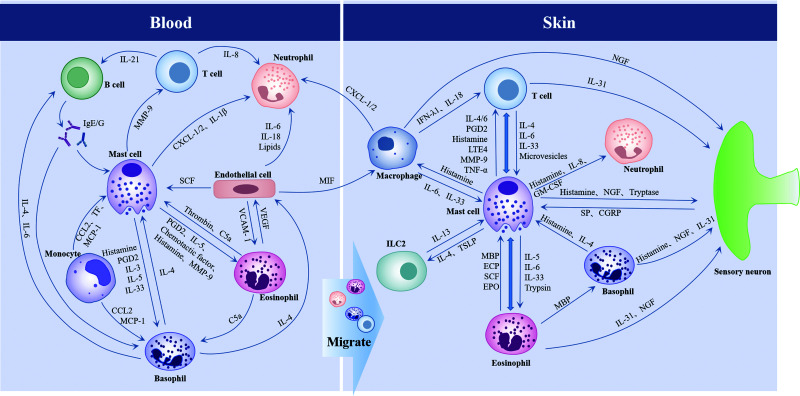
Chronic urticaria is very common in clinic, but its pathogenesis is not fully elucidated. Most patients can't find the exact cause, resulting in misdiagnosis or delayed treatment. Previous studies have found that mast cell activation is the central link in the pathogenesis of chronic urticaria. Genetics, autoimmune, coagulation disorders, and infection may also be involved in the pathophysiological process of chronic urticaria. With the deepening of research, more immune and non-immune mechanisms have been gradually revealed in the pathogenesis of chronic urticaria, such as the interaction of immune cells in the microenvironment of urticaria, intestinal flora and metabolism, neuroimmunity, environmental factors and hormones. Clarifying the pathogenesis of chronic urticaria will help to find more treatment targets and provide more diversified ideas for clinical diagnosis and treatment.
慢性荨麻疹在临床十分常见,但目前关于慢性荨麻疹的发病机制尚未完全阐明。多数患者因找不到确切病因,造成误诊或治疗不及时。既往研究发现肥大细胞活化是慢性荨麻疹发病的中心环节,遗传、自身免疫、凝血功能紊乱和感染等因素也可能参与慢性荨麻疹的病理生理学过程。随着研究的深入,更多的免疫与非免疫机制在慢性荨麻疹发病中的作用逐步被揭示,如荨麻疹微环境中免疫细胞的相互作用、肠道菌群与代谢、神经免疫、环境因素和激素等。阐明慢性荨麻疹的发病机制有助于发现新的治疗靶点,为临床提供多样化的诊疗思路。.
Keywords: autoimmune; chronic urticaria; mast cell; pathogenesis.
Conflict of interest statement
作者声称无任何利益冲突。
Figures
References
-
- 中华医学会皮肤性病学分会荨麻疹研究中心 . 中国荨麻疹诊疗指南(2022版)[J]. 中华皮肤科杂志, 2022, 55(12): 1041-1049. 10.35541/cjd.20220609. - DOI
- Centre for Urticaria Research, Chinese Society of Dermatology . Guideline for diagnosis and treatment of urticaria in China (2022)[J]. Chinese Journal of Dermatology, 2022, 55(12): 1041-1049. 10.35541/cjd.20220609. - DOI
MeSH terms
Grants and funding
LinkOut - more resources
Full Text Sources
Medical